 Fulfillment< @ >HQ Group

Selling online is getting easier.
Building a reliable supply chain is not.
For Shopify and other ecommerce brands, choosing a supplier is often treated as a simple sourcing decision:
Find a product → Get a price → Place an order → Ship to customers.
But that model can become risky as your brand grows.
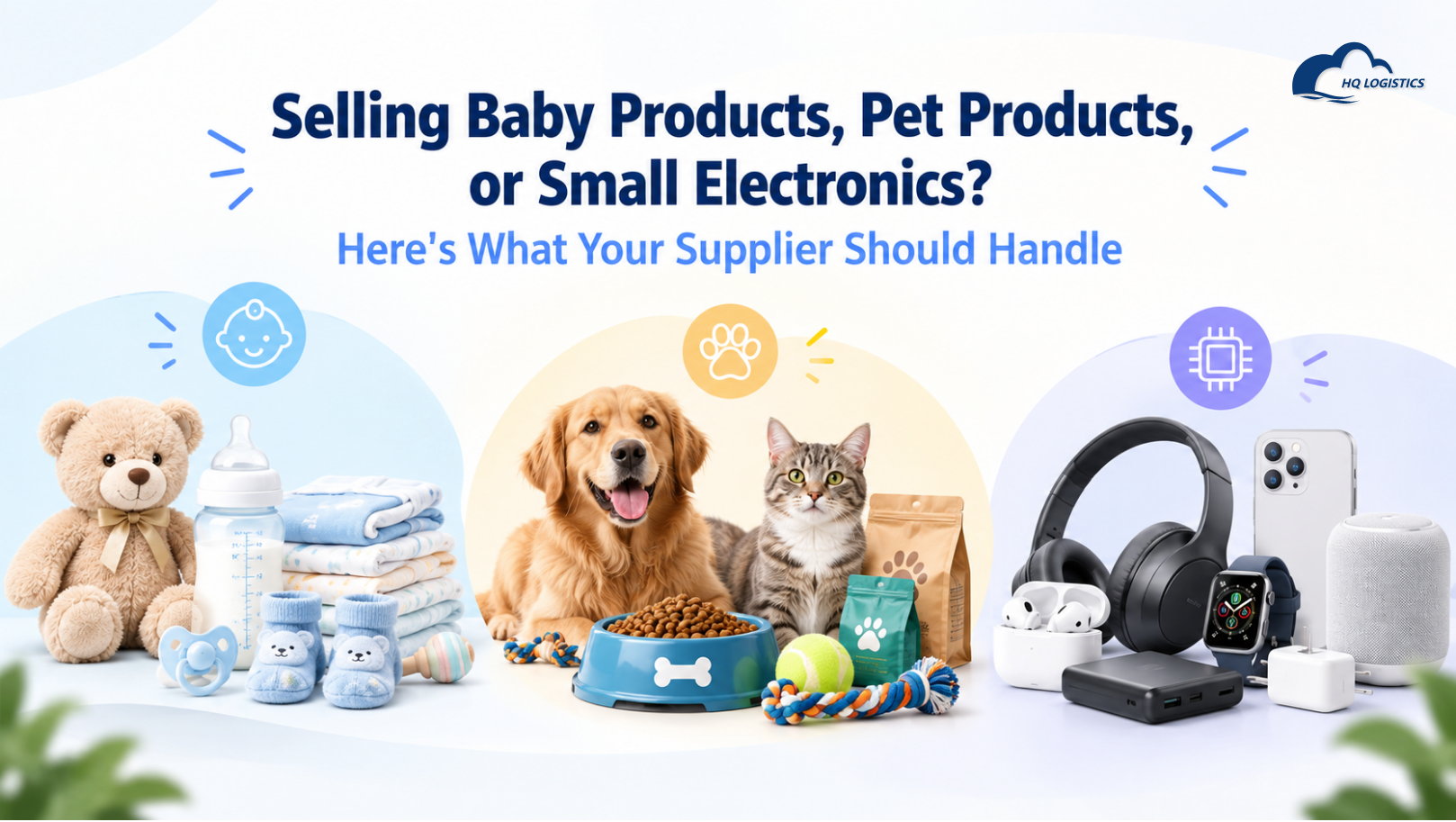
This is especially true when you sell baby products, pet products, or small electronics.
These categories can involve higher quality expectations, more detailed product specifications, specialized packaging, and different shipping requirements.
Your supplier should do more than simply provide products.
They should help you manage the supply chain behind your brand.
So what exactly should your supplier or fulfillment partner handle?
Let's take a closer look.
Price matters.
But the cheapest supplier is not always the best supplier for your brand.
A supplier should help you balance:
Product Cost + Quality + Reliability + Lead Time + Customization + Fulfillment
This is particularly important when selling products that customers may use frequently or rely on.
For example:
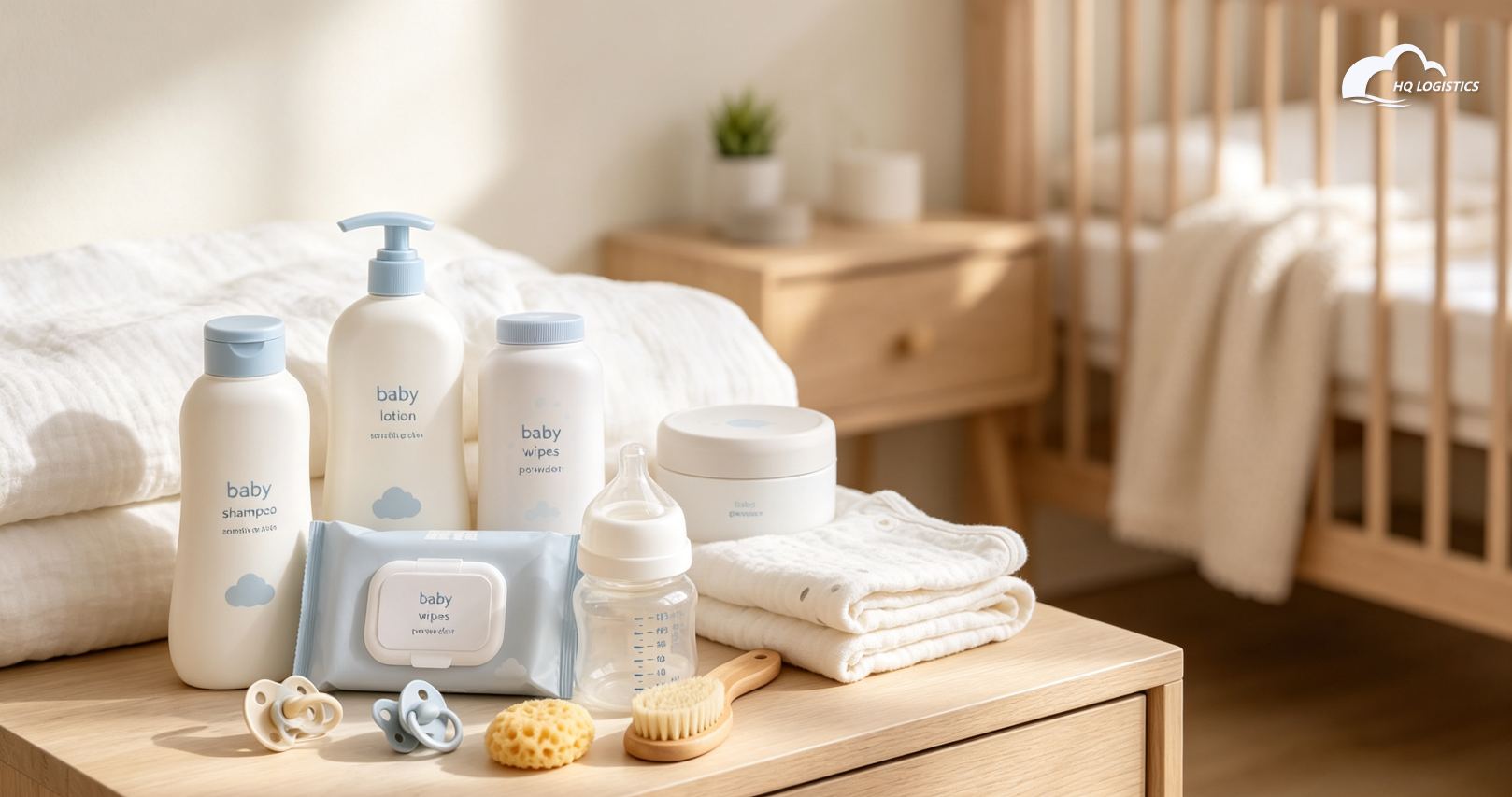
Customers may pay close attention to:
Product materials | Construction quality | Size and dimensions | Product safety information | Packaging | Product consistency
Important considerations may include:
Material quality | Durability | Product dimensions | Functionality | Packaging | Product consistency

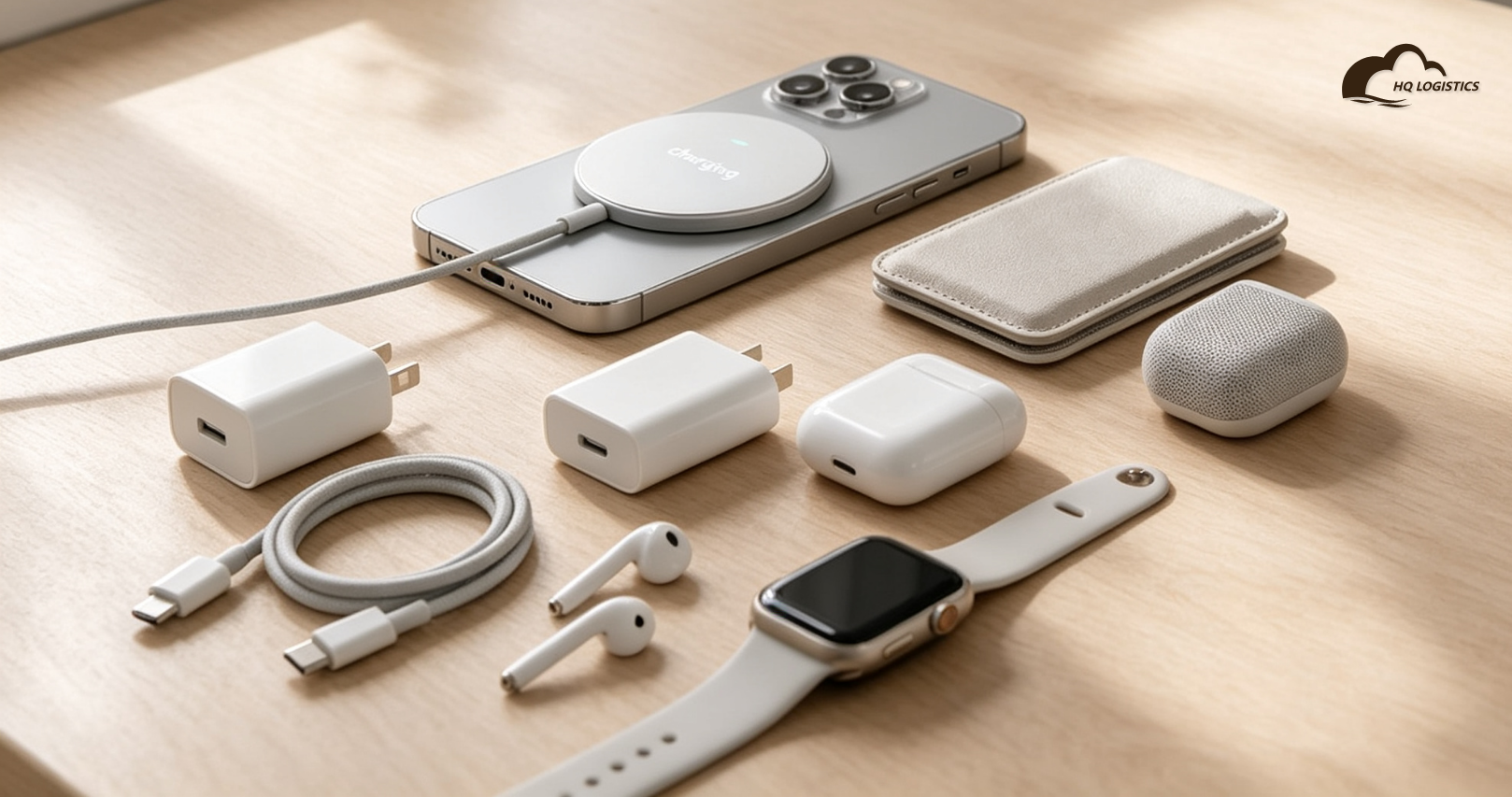
You may need to pay closer attention to:
Product functionality | Components | Battery information | Charging performance | Packaging | Product specifications | Shipping requirements
The supplier's job should not simply be to find a product.
It should be to help you find a product that fits your brand, market, target price, and customer expectations.
Relying on one supplier can create unnecessary supply chain risk.
What happens if your supplier suddenly has:
Inventory shortages | Production delays | Quality issues | Higher prices | Capacity problems | Communication problems
Your store can feel the impact immediately.
That's why growing brands can benefit from access to multiple suppliers.
Instead of:
Your Brand → One Supplier
a stronger model can be:
Your Brand → Multiple Supplier Options → Best-Fit Production
For example, you may have:
Supplier A → Primary Supplier
Supplier B → Backup Supplier
Supplier C → Alternative Product or Production Capacity
You don't necessarily need to manage these relationships yourself.
A capable sourcing and fulfillment partner can help coordinate supplier communication and identify alternative options when necessary.
This can be particularly valuable during Q4, when production capacity and product availability can change quickly.
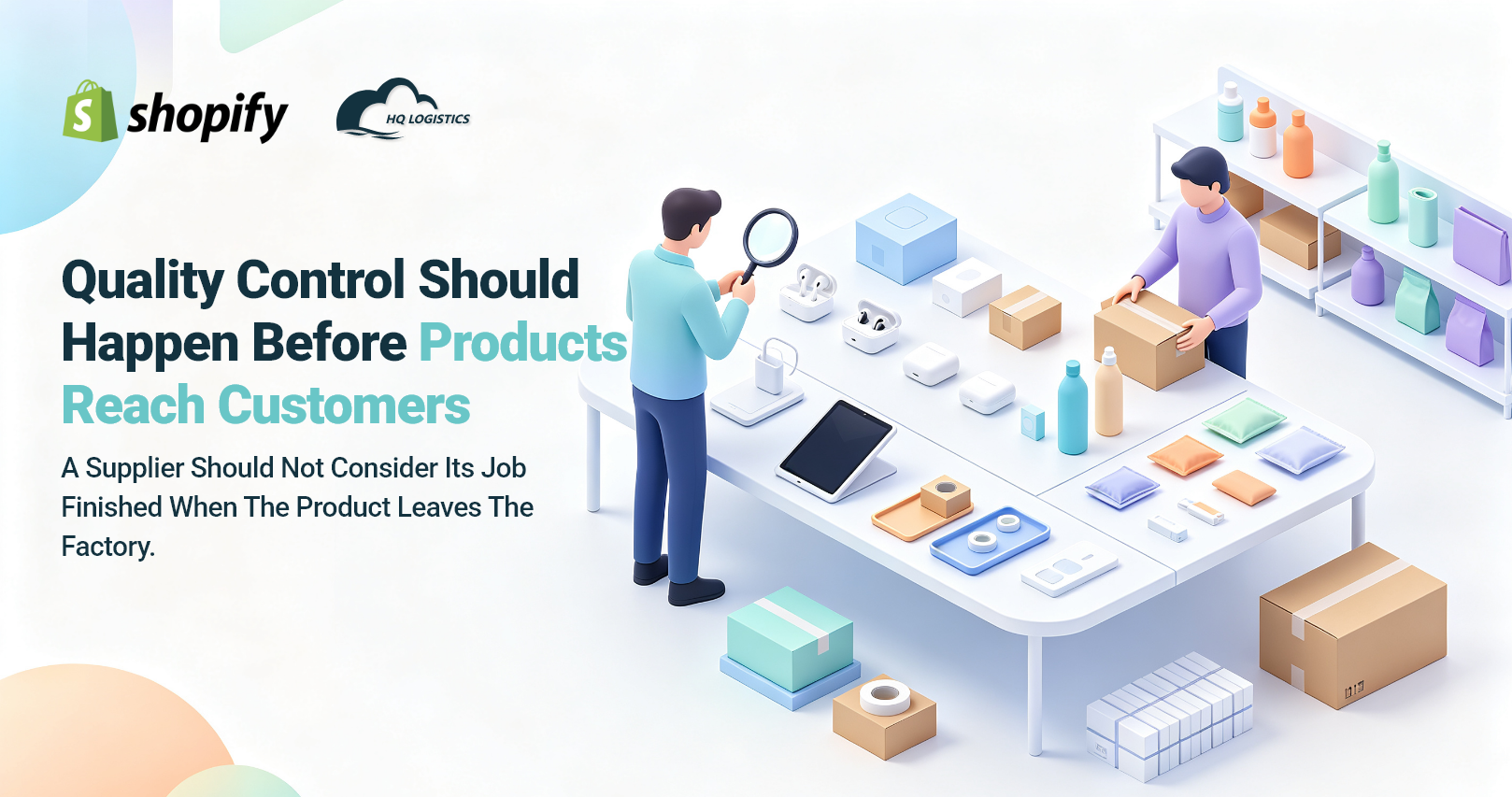
A supplier should not consider its job finished when the product leaves the factory.
For ecommerce brands, quality control is an important part of the customer experience.
A defective product can lead to:
Refunds | Returns | Negative reviews | Customer complaints | Replacement costs | Lower repeat-purchase rates
And the larger your order volume becomes, the more expensive a small quality problem can become.
Depending on the product category, quality inspection may include:
Appearance → Dimensions → Quantity → Functionality → Accessories → Packaging → Labels
For baby products, pet products, and small electronics, inspection can be especially useful because product specifications can have a direct impact on customer satisfaction.
A good fulfillment partner should be able to inspect products before they are shipped and provide inspection information or photos when required.
This gives your brand an opportunity to identify problems before the customer does.
Not every product should be handled in exactly the same way.
A supplier experienced with T-shirts may not necessarily be the best partner for electronics.
A general dropshipping supplier may also not provide the level of product-specific support your brand needs.
Baby products often require careful attention to materials, construction, packaging, product information, and quality consistency.
Your supplier should understand that customers may have higher expectations when purchasing products intended for babies.
Pet products can range from simple accessories to functional products used every day.
Durability, material quality, dimensions, and usability can all influence customer satisfaction.
Small electronics can introduce additional considerations around components, batteries, charging, packaging, and transportation.
Your supplier should understand the product before recommending a fulfillment and shipping solution.
The key is simple:
Different products need different supply chain strategies.
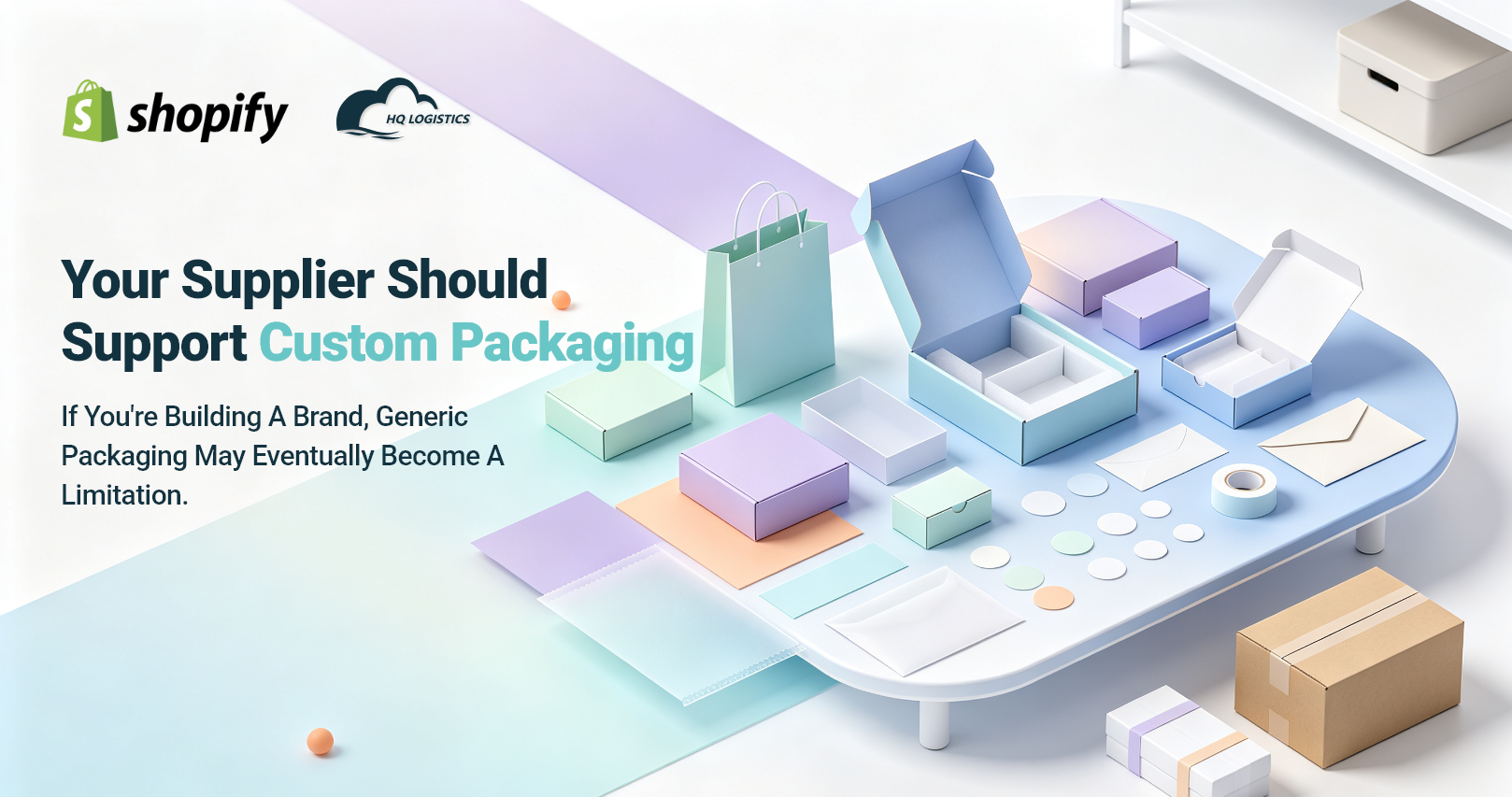
If you're building a brand, generic packaging may eventually become a limitation.
Customers don't only receive your product.
They receive your:
Packaging + Product + Brand Experience
As your store grows, you may want:
Custom boxes | Branded mailers | Custom labels | Thank-you cards | Product inserts | Brand stickers | Custom product packaging | Private-label packaging
This is particularly useful for baby, pet, beauty, lifestyle, and consumer electronics brands where presentation can influence the customer's perception of quality.
For brands selling in Europe, eco-friendly packaging can also be part of the brand strategy where suitable.
Instead of treating packaging as an afterthought, you can make it part of your overall supply chain plan.
A stronger process looks like:
Product Sourcing → Quality Control → Custom Packaging → Fulfillment → Delivery
rather than:
Product → Generic Packaging → Ship
Shipping is not one-size-fits-all.
The best shipping solution can depend on:
Destination | Product weight | Product dimensions | Product category | Delivery requirements | Shipping cost | Customs considerations | Battery or special transportation requirements
This is particularly important for small electronic and battery-powered products.
You may not want to use the exact same logistics solution for:
Baby Products | Pet Accessories | Small Electronics
Each product may have different transportation requirements.
That's why access to multiple shipping channels can provide more flexibility.
Instead of:
One Product → One Shipping Channel
you can build a strategy around:
Product + Destination + Weight + Requirements → Best-Fit Shipping Channel
This allows your fulfillment partner to focus on the right balance of:
Cost + Speed + Reliability
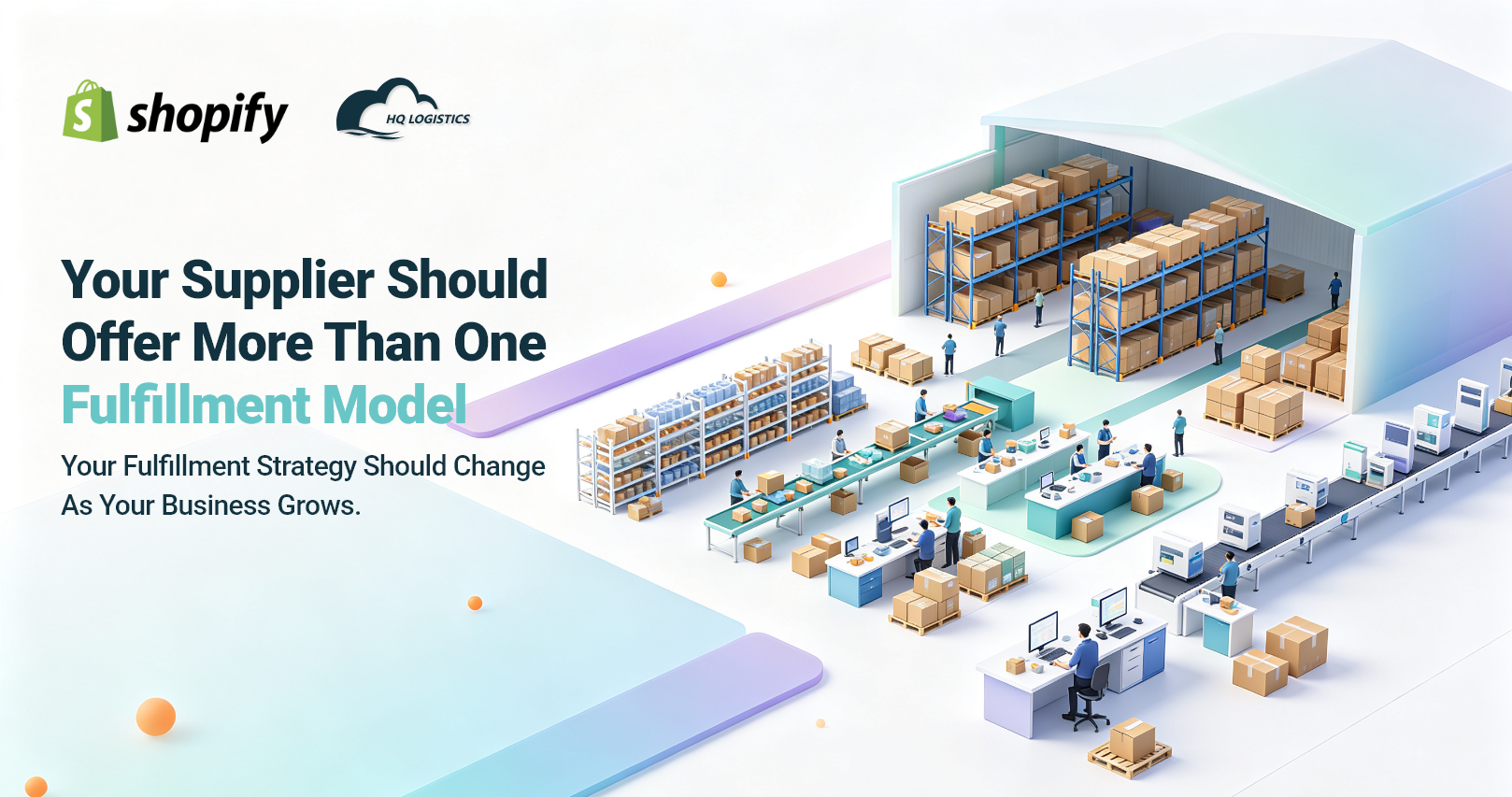
Your fulfillment strategy should change as your business grows.
When you're testing products, China fulfillment may be the most flexible option.
You can keep inventory in China and ship orders as they come in.
But once a product becomes a bestseller, shipping every order internationally may no longer be the most efficient approach.
That's when overseas warehousing can become valuable.
You can consider:
China Inventory → U.S. Warehouse → U.S. Customer
This allows proven products to be pre-stocked in the U.S. and fulfilled domestically.
You can consider:
China Inventory → EU Warehouse → Multiple EU Markets
This can allow one EU inventory hub to support customers across multiple European countries.
The important point is that you don't have to move everything overseas.
A hybrid fulfillment model can often provide greater flexibility.
New products | Low-volume products | Experimental SKUs | Long-tail inventory
Bestsellers | Stable SKUs | High-volume products | Products with predictable demand
This creates a scalable model:
China for Flexibility + Overseas Warehousing for Scale
Q4 can completely change your fulfillment requirements.
Black Friday, Cyber Monday, Christmas, and holiday promotions can generate sudden increases in demand.
A product that sells 30 units per day may suddenly sell several hundred.
If your supplier is not prepared, you may experience:
Stockouts | Production delays | Longer processing times | Shipping delays | Quality problems | Customer complaints
That's why your supplier should help you prepare before peak season arrives.
A good Q4 preparation process can include:
Look at your sales data and identify products with predictable demand.
Estimate how much stock you'll need during the peak period.
Make sure your supplier can support increased demand.
Identify alternative sourcing options for important SKUs.
Confirm that your preferred logistics routes can handle increased volume.
For proven U.S. or EU bestsellers, consider moving inventory closer to customers.
The earlier you prepare, the more options you have.
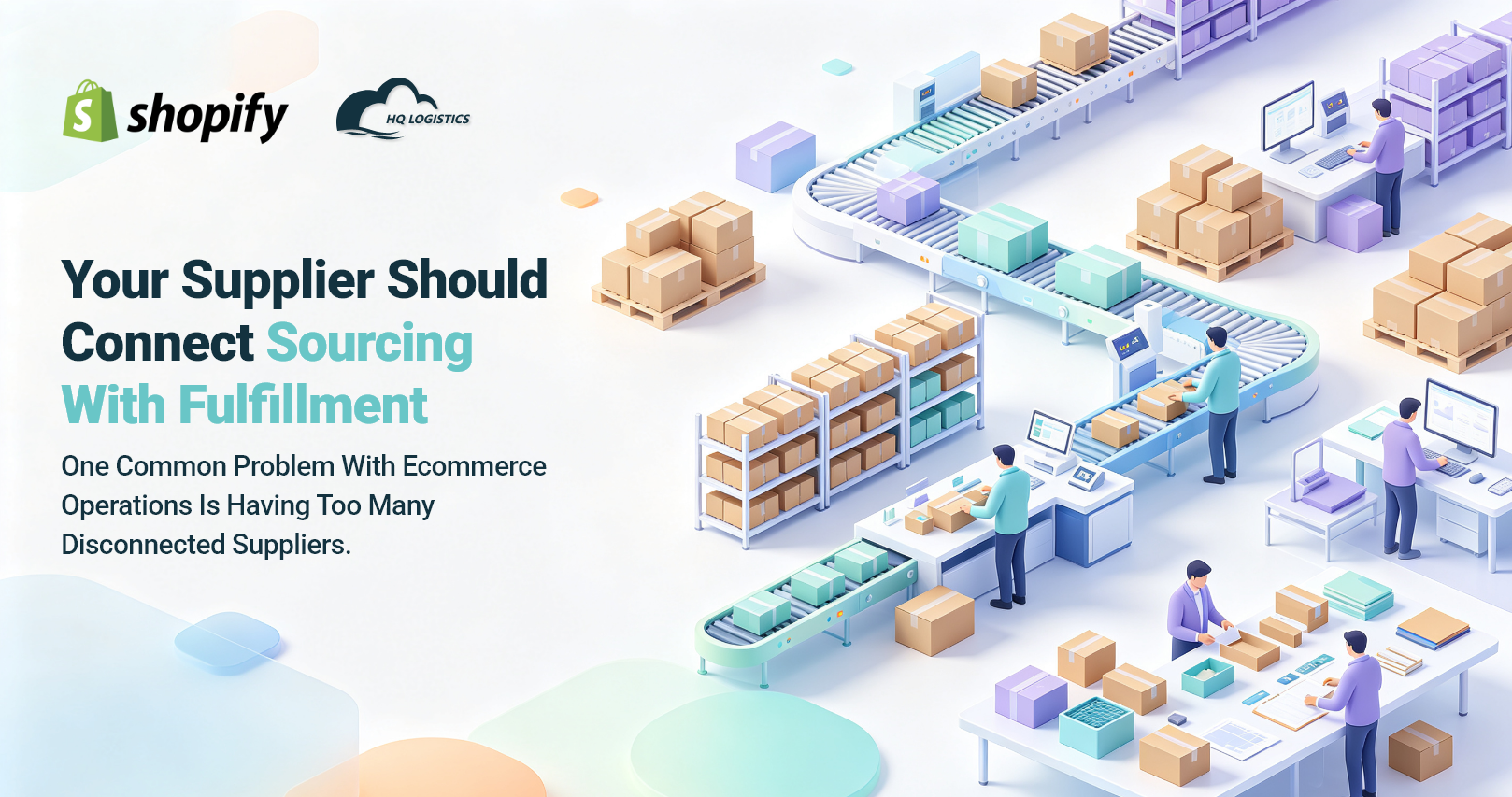
One common problem with ecommerce operations is having too many disconnected suppliers.
You may have:
Supplier A → Product | Supplier B → Packaging | Warehouse C → Fulfillment | Logistics Provider D → Shipping | Software E → Order Management
This can work, but it creates more coordination.
Every additional handoff creates another opportunity for delays or communication problems.
A more integrated model can connect:
Sourcing → QC → Inventory → Packaging → Fulfillment → Shipping
This is one of the major differences between a basic product supplier and an end-to-end fulfillment partner.
Your requirements today may not be the same six months from now.
At the beginning, you may only need:
Product Sourcing + Dropshipping
Later, you may need:
Product Sourcing + QC + Custom Packaging + Warehousing + Fulfillment + Multiple Shipping Channels
Eventually, you may need:
China Supply Chain + U.S. Warehouse + EU Warehouse + Multiple Suppliers + Brand Customization
Your fulfillment partner should be able to grow with you.
Instead of constantly switching providers every time your business reaches a new stage, it can be more efficient to work with a partner that can support multiple stages of growth.
Before choosing or switching suppliers, ask these questions:
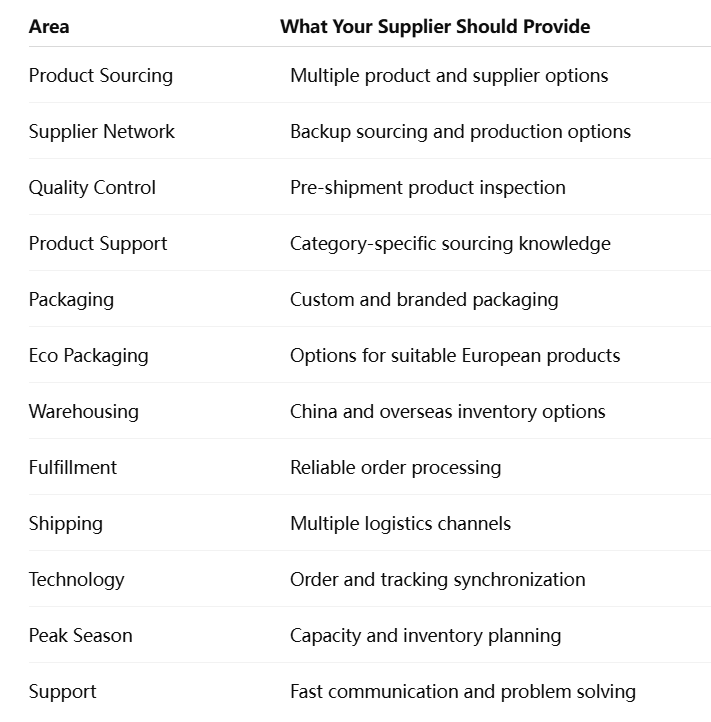
If your supplier can only answer questions about product prices, you may be looking at a product supplier, not a complete supply chain partner.
For growing ecommerce brands, HQ takes a broader approach to supply chain management.
Instead of focusing only on product sourcing, HQ can support the process from:
Sourcing → Quality Inspection → Custom Packaging → Warehousing → Fulfillment → Global Shipping
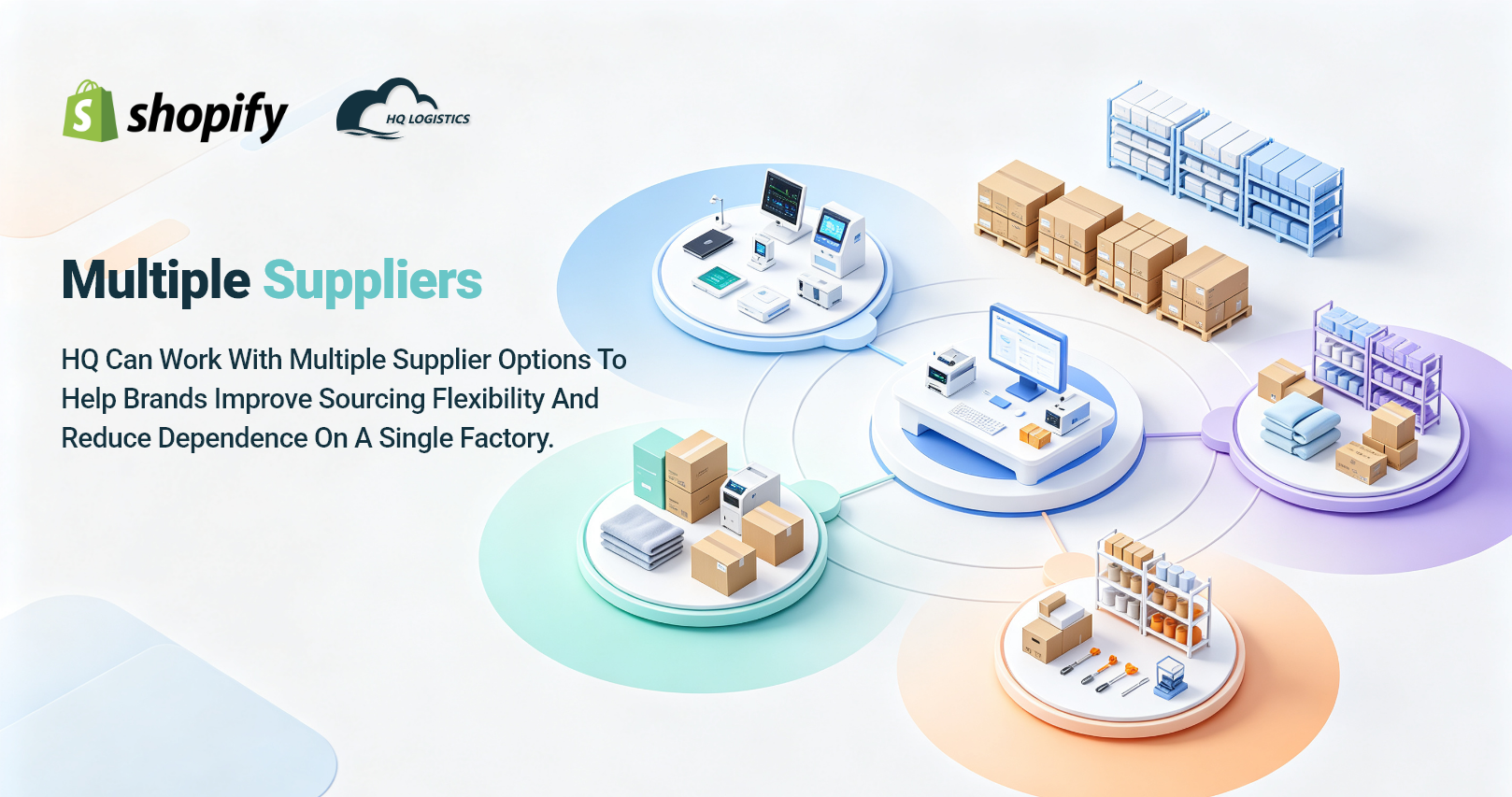
HQ can work with multiple supplier options to help brands improve sourcing flexibility and reduce dependence on a single factory.
This can be especially useful when product demand changes or additional production capacity is needed.
Products can be inspected before fulfillment to help identify quality issues before orders reach customers.
Brands can develop custom packaging, labels, inserts, and other branding elements to create a more consistent customer experience.
For suitable European products, eco-friendly packaging options can also be considered.
For new products and unpredictable SKUs, China fulfillment provides sourcing and inventory flexibility.
For brands with stable U.S. demand, proven products can be positioned in a U.S. warehouse for domestic fulfillment.
For brands expanding across Europe, an EU warehouse can support fulfillment across multiple EU markets from centralized inventory.
HQ can access different logistics options and match shipping solutions based on the product, destination, weight, and delivery requirements.
The goal is not to force every brand into the same fulfillment model.
It's to build a supply chain that fits your product, your customers, and your growth stage.
Different categories may require different priorities.
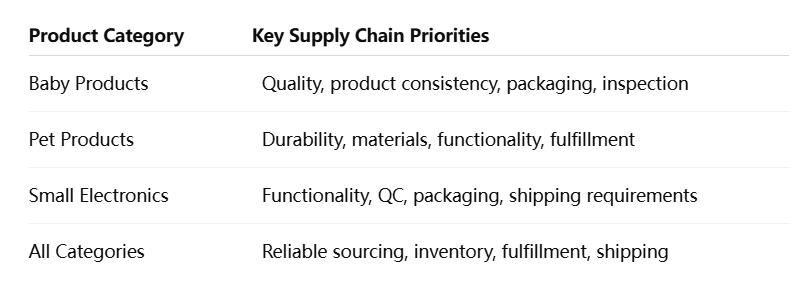
The right supplier should understand these differences.
A strong supply chain is not about finding one solution for every product.
It's about finding the right solution for each product.
Choosing a supplier is one of the most important decisions an ecommerce brand makes.
But the right supplier should provide more than a low product price.
For growing brands selling baby products, pet products, or small electronics, your supply chain partner should ideally help with:
Sourcing | Multiple suppliers | Quality control | Custom packaging | Inventory management | Warehousing | Fulfillment | Multiple shipping channels | Peak-season planning
As your brand grows, the question should change from:
"Where can I buy this product?"
to:
"Who can help me build a reliable supply chain around this product?"
That's the difference between simply selling products and building a scalable ecommerce brand.
Choose a supply chain that fits your brand—not a one-size-fits-all supplier.
Look beyond price. Evaluate product quality, consistency, materials, packaging, supplier reliability, quality inspection capabilities, and fulfillment support.
Not necessarily, but different pet products can have different requirements. Product dimensions, materials, durability, packaging, and shipping costs should all be considered when building a fulfillment strategy.
Pay close attention to product functionality, specifications, components, packaging, battery-related requirements, quality control, and shipping options.
Multiple suppliers can provide greater sourcing flexibility and reduce dependence on a single supplier. A fulfillment partner can help coordinate different suppliers and provide alternative sourcing options.
A U.S. warehouse can be worth considering when you have stable U.S. demand, predictable bestsellers, growing order volume, and a meaningful share of your costs coming from international shipping.
Yes. An end-to-end fulfillment partner can connect sourcing, quality control, inventory, packaging, warehousing, fulfillment, and shipping into one supply chain.
📩 Email: zoye@fulfillment-cn.com
Previous Recommendations


Primary Keyword: baby pet electronics supplier, baby product sourcing, pet product sourcing, small electronics supplier, ecommerce supplier, Shopify supplier, product sourcing, quality control, custom packaging, China supplier, dropshipping supplier, ecommerce fulfillment, U.S. fulfillment, EU fulfillment, overseas warehouse, multiple suppliers, shipping channels, Selling baby products, pet products, or small electronics? Learn what your supplier should handle, from sourcing and quality control to custom packaging, multiple suppliers, overseas warehousing, and fulfillment.



Don't wait until next year, grab the chance on 2025. Here are some recommended ecommerce topic you can choose.
Thanks to the support and trust from our customers. Flashback with our beloved partners.