 Fulfillment< @ >HQ Group

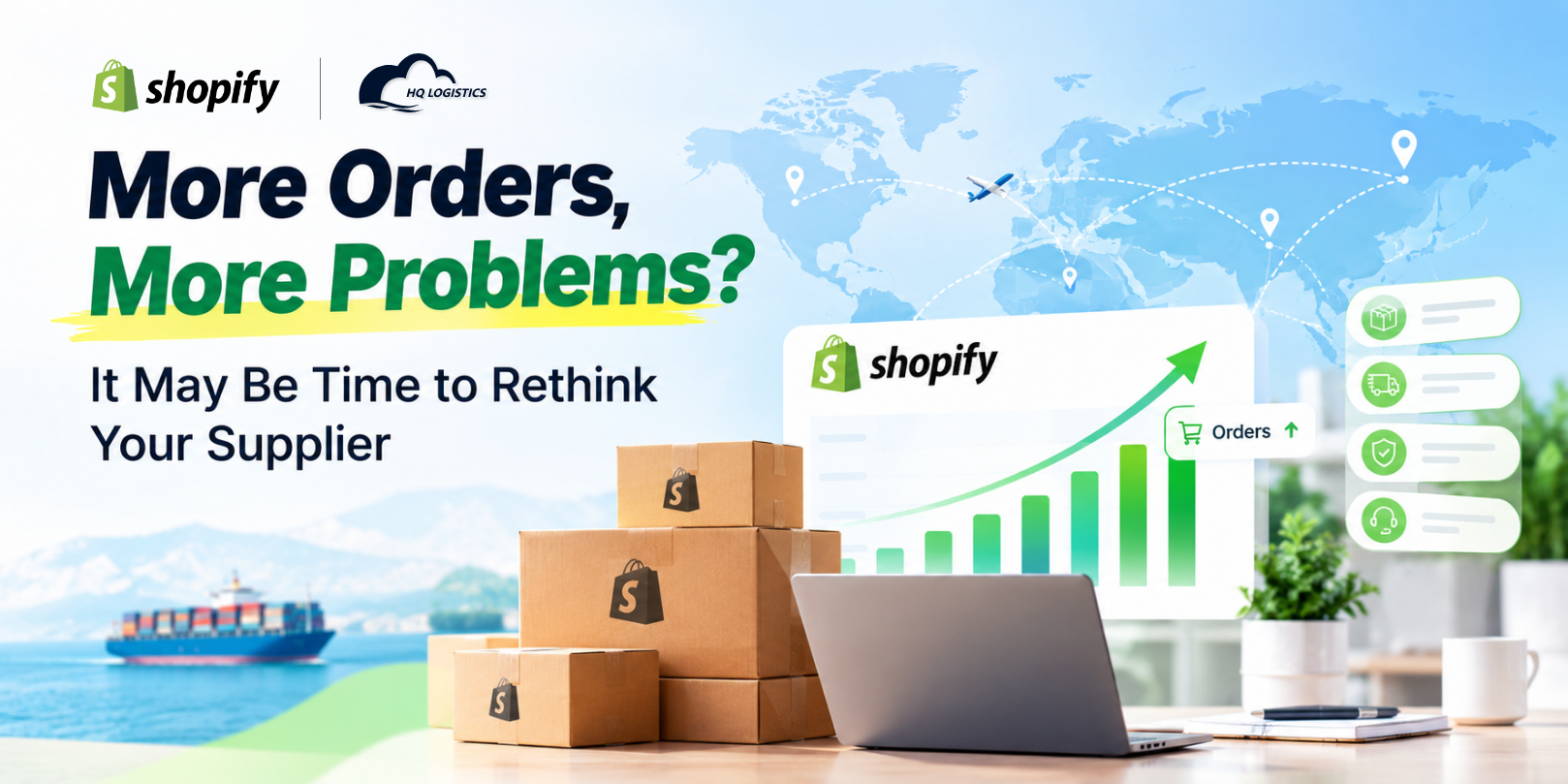
More orders should mean more growth.
But for many growing ecommerce brands, more orders can also expose problems they didn't have when the business was smaller.
Orders increase.
Inventory becomes harder to manage.
Suppliers take longer to respond.
Quality issues become more expensive.
Shipping costs start eating into margins.
And suddenly, the supplier that worked perfectly at 5 orders a day may struggle at 50 or 100.
This doesn't always mean your supplier is bad.
It may simply mean your business has outgrown the supply chain model you started with.
At that point, it may be time to rethink your supplier strategy.
More Orders → More Complexity → Better Supply Chain Needed
When your store is small, almost any reliable supplier can seem like a good supplier.
You may only need:
Product Sourcing → Order Fulfillment → Shipping
But as order volume grows, your requirements change.
You may suddenly need:
Multiple Suppliers | Quality Control | Custom Packaging | Inventory Planning | Faster Fulfillment | Multiple Shipping Channels | Overseas Warehousing
The challenge is that growth puts pressure on every part of your supply chain.
For example:
10 Orders/Day → Simple Fulfillment
50 Orders/Day → Inventory & Supplier Coordination
100+ Orders/Day → Supply Chain Management
Your supplier needs to grow with you.
If they can't, your sales growth can actually create operational problems.
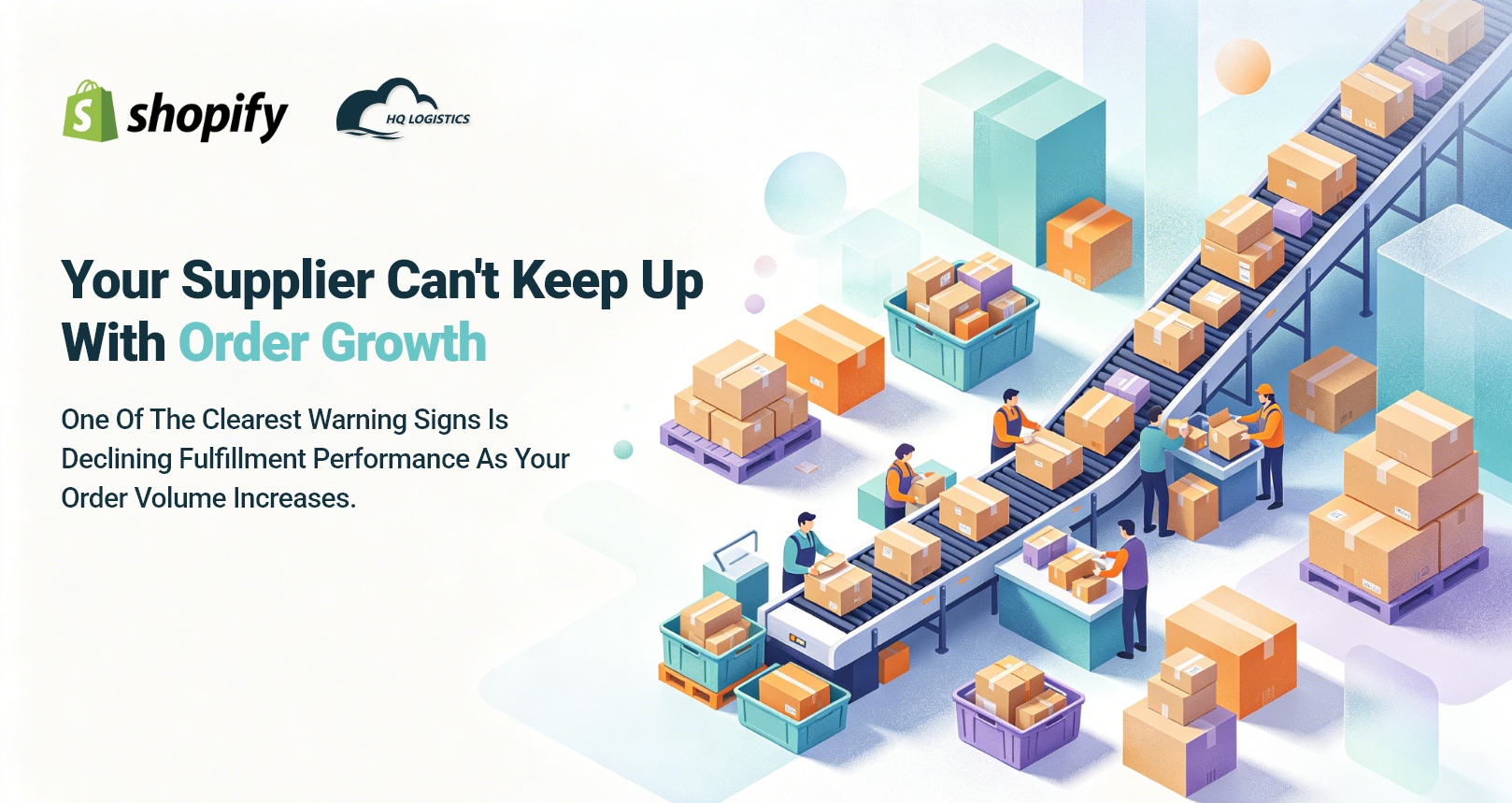
One of the clearest warning signs is declining fulfillment performance as your order volume increases.
Maybe your supplier handled 10 orders per day without problems.
Then your store grows to 50 or 100 orders per day.
Suddenly:
Processing Gets Slower
Inventory Runs Out More Often
Orders Are Delayed
Customer Complaints Increase
This is a serious signal.
A supplier should not only support your current order volume.
They should have a realistic plan for your next stage of growth.
Running out of inventory can be especially damaging when you have a winning product.
Imagine your product starts trending.
Your daily orders go from:
20 → 50 → 100
But your supplier doesn't have enough inventory.
Now you have a problem.
You can't fulfill orders.
You may lose sales.
Your advertising becomes less efficient.
Customers may receive orders late.
A stronger supply chain should give you better visibility into:
Inventory Levels → Supplier Capacity → Replenishment → Warehouse Stock
For growing brands, inventory planning should happen before a product becomes a bestseller.
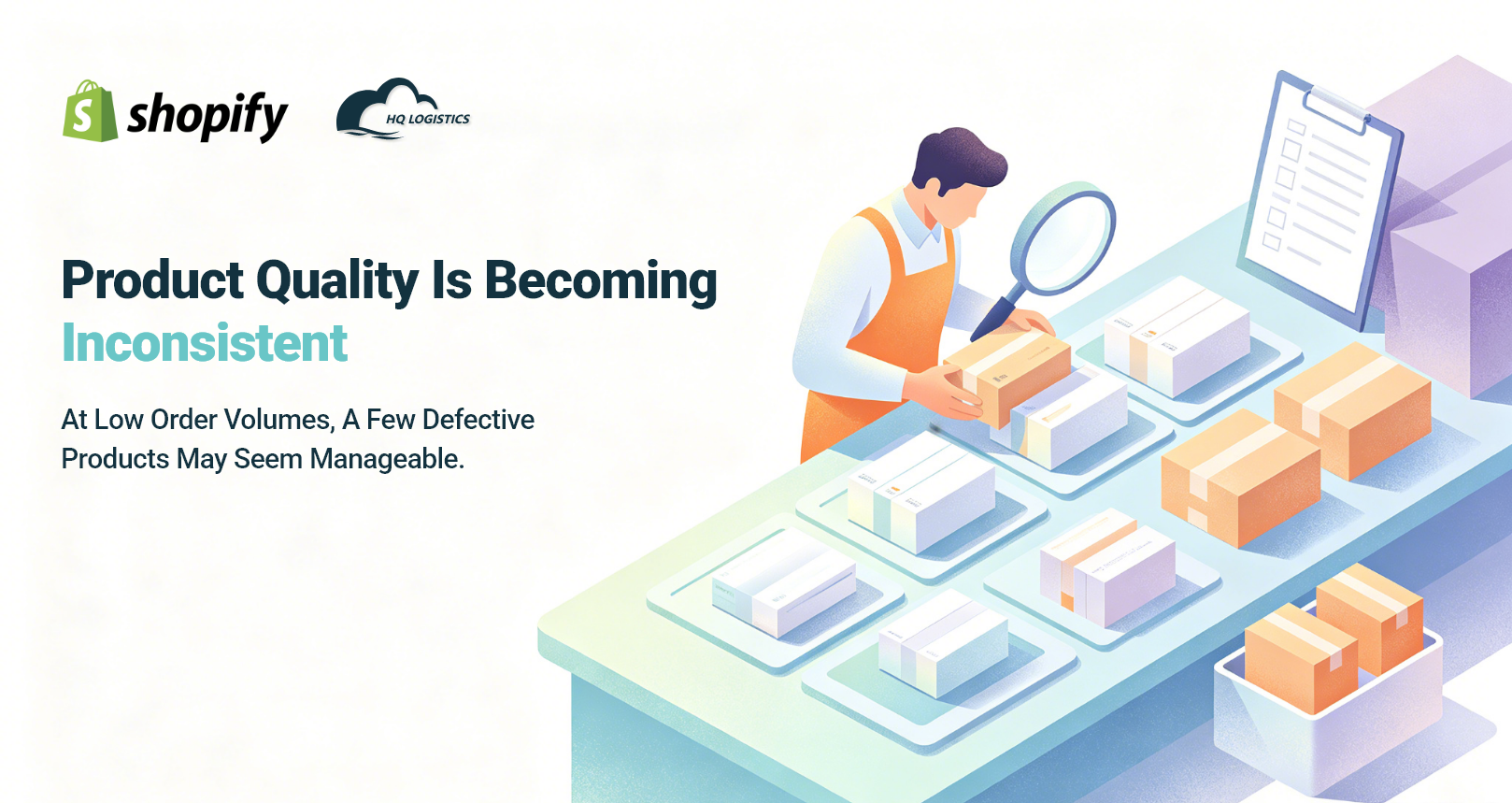
At low order volumes, a few defective products may seem manageable.
At higher volumes, the same defect rate can create hundreds of customer complaints.
For example:
1% Quality Issue × 100 Orders = 1 Problem
1% Quality Issue × 1,000 Orders = 10 Problems
That's why quality control becomes increasingly important as your store grows.
A professional supply chain should include:
Supplier Selection → Product Inspection → Quality Check → Fulfillment
Instead of discovering quality problems after customers receive the products, brands should try to identify them earlier.
Maybe you started with generic packaging.
That's completely normal.
But as your business becomes a real brand, generic packaging may no longer fit your positioning.
Customers increasingly see packaging as part of the overall buying experience.
You may want:
Custom Boxes
Branded Bags
Thank-You Cards
Product Inserts
Labels
Hangtags
Custom Packaging
If your current supplier can't support these requirements efficiently, it may be a sign that your business needs a more capable supply chain partner.
The goal is to move from:
Generic Product → Generic Packaging to: Branded Product → Branded Experience
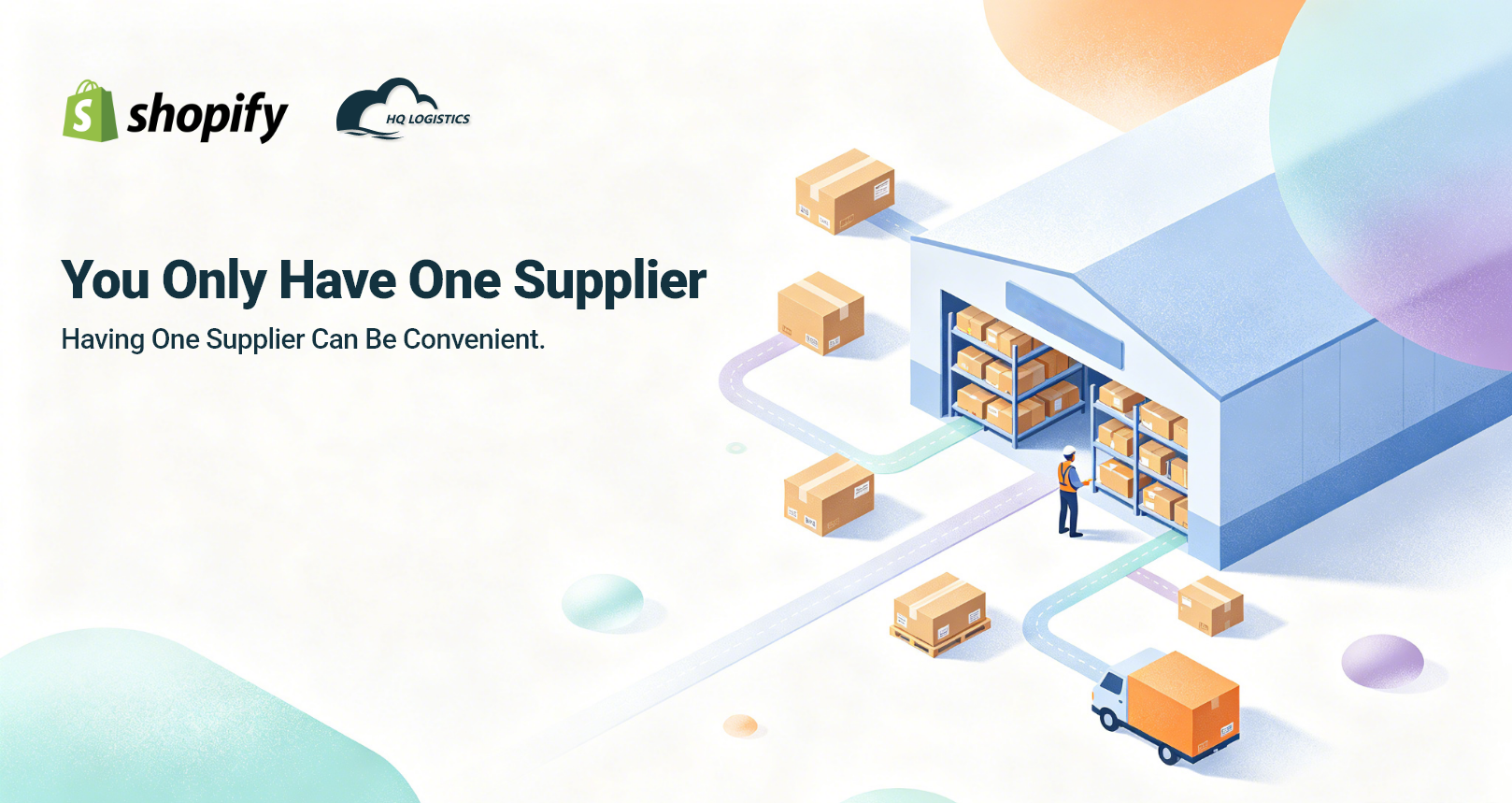
Having one supplier can be convenient.
But as your order volume increases, it can also create risk.
What happens if:
Your Supplier Runs Out of Stock?
Production Is Delayed?
Quality Changes?
Prices Increase?
Demand Suddenly Surges?
Depending completely on one supplier can make your business vulnerable.
A more flexible approach is:
Supplier A → Primary Source
Supplier B → Alternative Source
Supplier C → Backup Capacity
Multiple suppliers don't mean you need to split every order between them.
Instead, you can maintain alternative sourcing options for important products.
This gives you more flexibility when demand changes.
The same problem can happen with logistics.
When your store is small, you may use one shipping method for almost everything.
But different products and destinations may require different solutions.
For example:
Small Products → Standard Ecommerce Line
Battery Products → Specialized Channel
U.S. Orders → U.S. Fulfillment
EU Orders → EU Fulfillment
Urgent Orders → Faster Shipping Option
As your product range and customer base expand, having multiple shipping channels can make your fulfillment strategy more flexible.
The goal isn't simply to find the cheapest shipping method.
It's to choose the right channel based on:
Product + Destination + Cost + Delivery Time + Shipping Requirements
This may be the biggest sign of all.
A basic supplier may simply:
Receive Order → Pick Product → Ship Order
But growing brands often need more.
You may need someone who can help coordinate:
Sourcing → Suppliers → QC → Inventory → Packaging → Warehousing → Fulfillment → Logistics
This is where the difference between basic dropshipping and a more complete fulfillment model becomes important.
Your supplier shouldn't just help you ship more orders.
They should help you manage the complexity created by more orders.
Many ecommerce founders focus heavily on:
Marketing
Ads
Product Research
Conversion Rates
Customer Acquisition
But when sales grow, supply chain problems can become the new growth bottleneck.
You may have:
More Traffic
More Customers
More Orders
But also:
More Stockouts
More Quality Issues
More Shipping Problems
More Customer Service Tickets
This creates a frustrating situation:
Your Marketing Is Growing Faster Than Your Supply Chain.
If that happens, the solution may not be to slow down your marketing.
It may be time to upgrade your supply chain.
There is no universal answer to whether every brand needs multiple suppliers.
But for growing brands, having multiple sourcing options can provide useful flexibility.
Working with one supplier offers simple management, easy communication, and less coordination. However, it can also create higher dependency, limited backup options, and greater supply risk.
Working with multiple suppliers provides more sourcing options, backup capacity, greater product flexibility, and potentially better negotiation opportunities. However, it also requires more coordination, additional quality control, and more inventory management.
The best approach depends on your business.
For many growing brands, the goal isn't to work with as many suppliers as possible.
It's to build the right supplier network for the products that matter most.
When choosing a new supplier, price is important.
But it shouldn't be the only factor.
A supplier offering a product for $0.30 less may not actually save you money if they create:
More Defects
More Delays
More Stockouts
Higher Shipping Costs
More Customer Complaints
Instead, compare the total fulfillment cost.
Consider:
Product Cost + Packaging + QC + Fulfillment + Shipping + Returns + Customer Service
A slightly higher product price can sometimes produce a better overall result if the supply chain is more reliable.
Before switching suppliers, create a checklist.
A strong partner should ideally support:
Can they find suitable products and alternative suppliers?
Can they inspect products before fulfillment?
Can they help you track and plan inventory?
Can they support your branding requirements?
Can they handle increasing order volumes?
Can they provide multiple logistics options?
Can they support China fulfillment as well as overseas warehousing when needed?
Can you get fast answers when something goes wrong?
The more your business grows, the more important these capabilities become.
You don't need to wait until something goes seriously wrong.
Consider reviewing your supplier when:
Your Daily Orders Are Increasing
Your Bestselling Products Frequently Go Out of Stock
Quality Problems Are Increasing
Shipping Costs Are Hurting Your Margins
Your Customers Expect Faster Delivery
You Want Custom Branding
You Are Entering New Markets
You Are Preparing for Q4
You Need More Than One Supplier
You Want Overseas Warehousing
A supplier review can help you identify problems before they become expensive.
Peak season can expose weaknesses very quickly.
During Q4, your store may experience:
More Traffic → More Orders → Higher Inventory Demand → Greater Fulfillment Pressure
If your supplier struggles during normal periods, peak season may make the problem much worse.
Before Black Friday and the holiday shopping season, review:
Supplier Capacity
Inventory Availability
Quality Control
Packaging
Shipping Channels
Warehouse Capacity
Replenishment Speed
Customer Support
Don't wait until your best product sells out during peak season to discover that your supplier can't replenish it.
You also don't have to choose between China fulfillment and overseas warehousing for every product.
A hybrid model can provide more flexibility.
China Sourcing → China Fulfillment → Test Demand
China → U.S. Warehouse → U.S. Customer
China → EU Warehouse → EU Customer
This approach allows you to keep new products flexible while positioning proven products closer to customers.
It's especially useful for brands that have:
Stable Bestsellers
Predictable Demand
Growing International Orders
Multiple Target Markets
For growing brands, HQ goes beyond basic order fulfillment.
The goal is to connect the major parts of your supply chain:
Sourcing → Supplier Management → QC → Packaging → Warehousing → Fulfillment → Shipping
HQ can help brands access multiple supplier options rather than relying entirely on a single source.
This can provide more flexibility for bestsellers and products with changing demand.
Products can be inspected before fulfillment to help identify quality problems earlier.
Build a more recognizable customer experience with:
Custom Packaging | Labels | Inserts | Thank-You Cards | Hangtags
Keep new products and lower-volume SKUs flexible while testing demand.
For proven products with stable U.S. demand, inventory can be positioned in the U.S. for domestic fulfillment.
For brands selling across Europe, EU warehousing can support fulfillment across multiple European markets.
Choose logistics solutions based on:
Product → Destination → Weight → Cost → Delivery Requirements
This creates a more flexible supply chain that can adapt as your business grows.
Before making a switch, compare your current supplier against your future requirements.
Ask:
Can they source the products I want?
Can they handle my expected order volume?
Do they have a reliable QC process?
Can they help prevent stockouts?
Can they support custom packaging?
Do they offer multiple shipping options?
Can they support overseas fulfillment when I need it?
Can their service grow with my brand?
If you keep answering "no," your business may have outgrown your current supplier.
Switching suppliers shouldn't be the goal by itself.
The real goal is to build a better supply chain.
Think beyond:
"Who can give me the lowest product price?"
Instead ask:
"Who can help my brand grow reliably?"
That means looking at:
Product Quality, Supplier Capacity, Inventory, Packaging, Fulfillment, Shipping, Warehousing, and Customer Experience
A good supply chain should support your growth rather than create new problems every time your order volume increases.
More Orders, More Problems? It May Be Time to Rethink Your Supplier.
If your store is growing but your supplier is becoming a bottleneck, don't wait until peak season or a major stockout forces you to react.
Review your current setup.
Identify the weak points.
Compare alternative suppliers.
Build backup sourcing options.
Consider multiple shipping channels.
Use overseas warehousing for proven products when it makes sense.
And most importantly, choose a supply chain partner that fits where your brand is going, not just where it is today.
Because the right supplier should do more than process your orders.
They should help you move from:
More Orders → More Complexity
to:
More Orders → Better Systems → Sustainable Growth
For growing ecommerce brands, the right supplier isn't simply the one that can fulfill today's orders. It's the one that can help you handle tomorrow's growth.
Common signs include frequent stockouts, slower fulfillment, inconsistent product quality, rising shipping costs, limited customization, poor communication, and difficulty handling increased order volume.
Not every store needs multiple suppliers. However, having alternative suppliers for key products can reduce dependence on a single source and provide more flexibility when demand or supplier capacity changes.
It can be if your current supplier is limiting growth or creating recurring operational problems. Before switching, compare total costs, product quality, fulfillment performance, shipping options, communication, and scalability.
Look beyond product price. Consider sourcing capabilities, supplier capacity, quality control, inventory management, custom packaging, fulfillment, shipping channels, warehousing, and customer support.
If your current supplier already struggles with inventory, fulfillment, quality, or communication, reviewing alternatives before Q4 can reduce peak-season risk.
Yes. A hybrid strategy can be useful. New or lower-volume products can remain in China, while proven products can be pre-stocked in U.S. or EU warehouses based on demand.
Different products and destinations may require different logistics solutions. Multiple channels can give brands more flexibility when balancing shipping cost, delivery time, product requirements, and peak-season capacity.
📩 Email: zoye@fulfillment-cn.com
Previous Recommendations


rethink your supplier, ecommerce supplier, Shopify supplier, supplier for growing brands, change ecommerce supplier, switch supplier, dropshipping supplier, fulfillment supplier, reliable ecommerce supplier, multiple suppliers ecommerce, supplier management, Shopify fulfillment, ecommerce fulfillment, supplier problems, scaling ecommerce business, Q4 supplier, overseas warehouse, China sourcing, custom packaging, More orders but more supplier problems? Learn 7 signs your ecommerce brand has outgrown its current supplier and how to build a more reliable sourcing, fulfillment, and shipping strategy.



Don't wait until next year, grab the chance on 2025. Here are some recommended ecommerce topic you can choose.
Thanks to the support and trust from our customers. Flashback with our beloved partners.