 Fulfillment< @ >HQ Group

Shipping products from China can be straightforward—when you choose the right shipping channel and prepare the shipment correctly.
But for Shopify sellers and cross-border ecommerce brands, booking freight involves more than comparing prices.
A shipment may be delayed because the product was classified incorrectly, the declared weight or dimensions were inaccurate, the packaging was unsuitable, or the required shipping documents were incomplete.
Even ordinary products can create unexpected shipping problems if important details are overlooked.
That's why checking your cargo details before booking can help reduce avoidable delays, unexpected charges, and fulfillment disruptions.
In this guide, we'll explain what ecommerce sellers should check before arranging general cargo shipping from China, how to compare shipping options, and how to prepare shipments for more reliable international fulfillment.
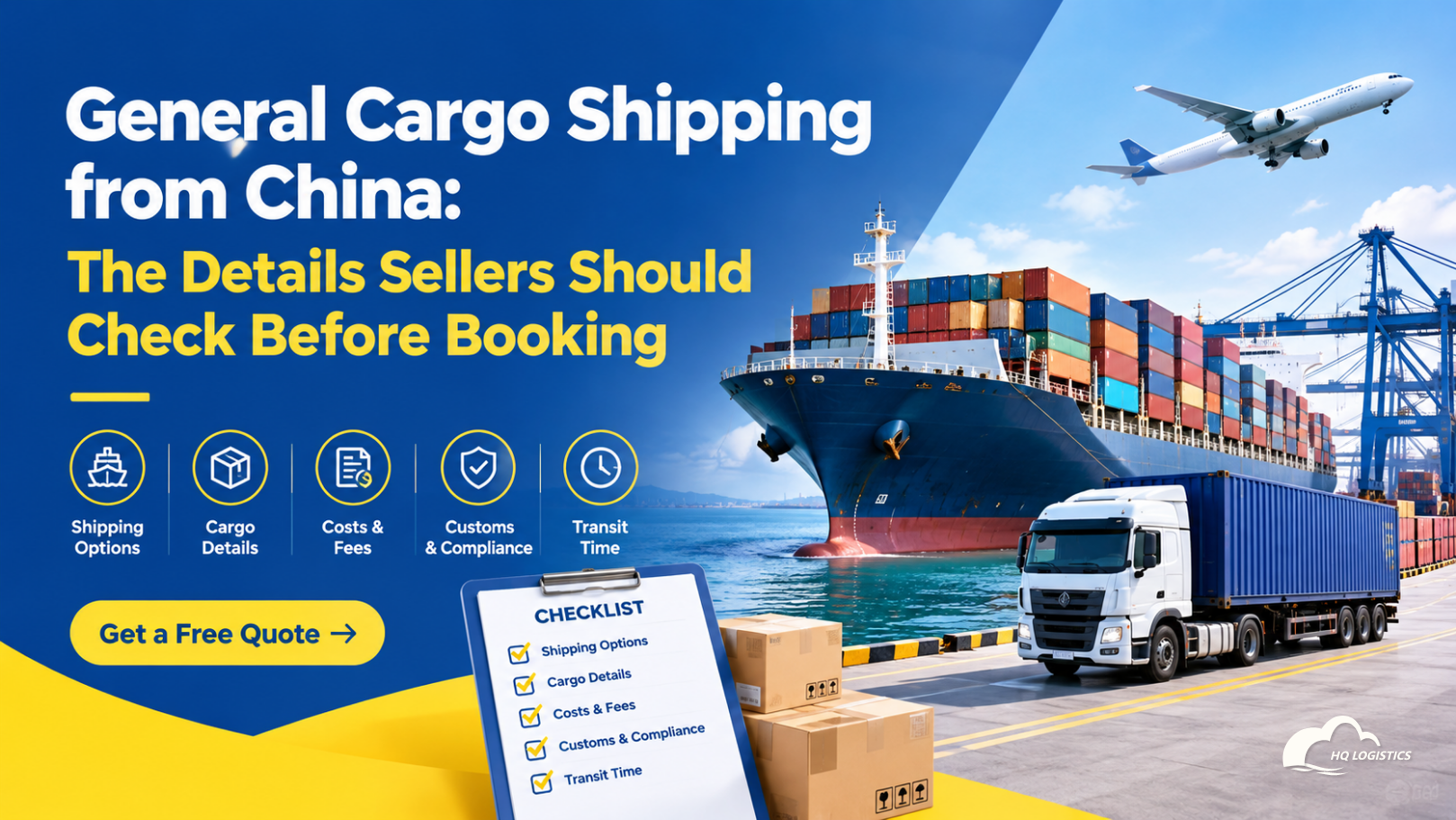
General cargo usually refers to ordinary goods that can be transported through standard logistics channels, subject to the carrier's rules, destination-country regulations, and the requirements of the specific route.
Depending on the shipping provider and service, examples may include clothing, household accessories, stationery, non-electronic accessories, and other eligible consumer products.
However, not every product that appears ordinary is automatically accepted as general cargo.
Products containing batteries, liquids, powders, magnets, aerosols, or other regulated or restricted materials may require special handling or a different shipping channel.
Before booking, confirm the product's classification with your shipping provider rather than relying only on its retail description.
The first step is to provide an accurate description of the goods.
A product name alone may not give the shipping provider enough information to determine the appropriate route.
Prepare details such as:
Product name and intended use
Main materials and components
Whether the product contains a battery
Whether it includes liquids, powders, magnets, or other special materials
Product photos or a specification sheet, if requested
Any relevant safety or transportation documentation
For example, a fabric accessory may qualify for a standard cargo route, while a similar-looking product containing a built-in battery may require additional checks.
The same principle applies to cosmetics, supplements, electronic accessories, and other products whose ingredients or components can affect transport eligibility.
Before booking, ask your shipping provider to confirm the exact product and route eligibility.
This is especially important when sourcing products from multiple suppliers, because similar-looking products may have different materials or components.
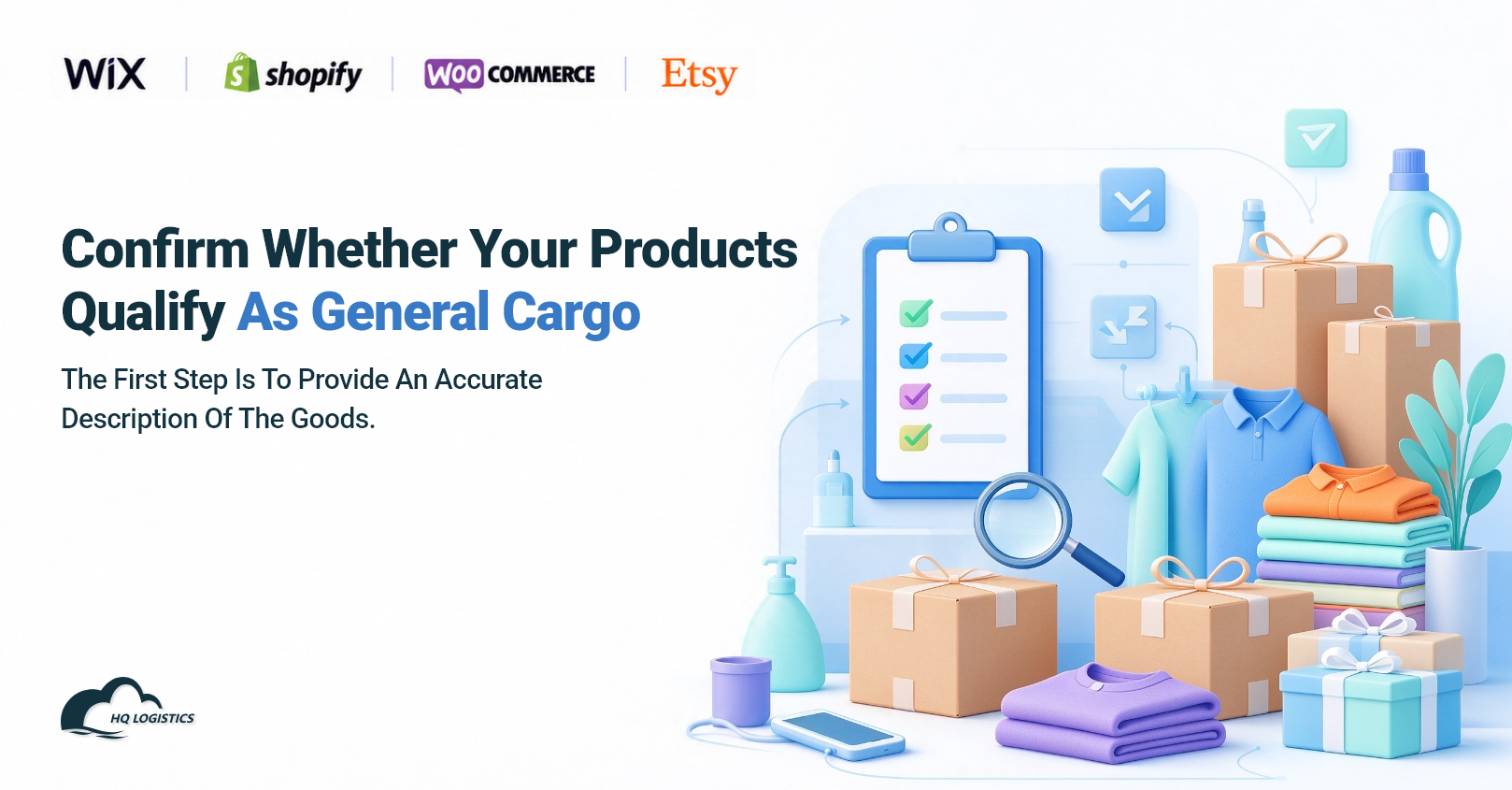
Weight and dimensions can directly affect shipping costs.
Depending on the carrier and service, charges may be based on actual weight, volumetric weight, or whichever is higher.
This means a lightweight but bulky package may cost more to ship than expected.
Before booking, confirm:
Actual Weight:
The measured weight of the packed shipment.
Package Dimensions:
The length, width, and height of each carton or parcel.
Carton Quantity:
The total number of packages in the shipment.
Chargeable Weight:
The weight used by the shipping provider to calculate the freight charge.
For bulk shipments, also confirm whether the quote is based on individual cartons, total shipment weight, palletized cargo, or another measurement method.
A package occupies physical space in a vehicle or aircraft, even when the product itself is lightweight.
Shipping providers may therefore use a volumetric-weight formula to account for the space occupied by the shipment.
The exact formula and divisor vary by route and service, so confirm the applicable calculation before comparing quotes.
For accurate pricing, provide the final packed dimensions whenever possible—not just the product's dimensions.
There is no single shipping method that works best for every shipment.
The right choice depends on your cargo characteristics, shipment size, budget, delivery deadline, and destination.
Express services may be suitable for smaller, urgent shipments where delivery speed is a priority.
Before booking, check the service's product restrictions, chargeable-weight rules, delivery estimate, and any remote-area or additional handling charges.
Air freight may be worth considering for larger shipments that need to arrive faster than many ocean-freight options allow.
However, the total cost may include more than the main transportation charge. Confirm origin handling, destination handling, customs-related charges, and final delivery arrangements.
Ocean freight can be suitable for larger shipments when there is sufficient lead time and the shipment economics justify it.
Check whether the quote covers port-to-port or door-to-door transportation, and confirm any origin, destination, customs, or last-mile costs that are excluded.
Some products or destinations may require a specific shipping service because of product characteristics, customs arrangements, or carrier restrictions.
Confirm eligibility before booking. Do not assume that a route accepting general cargo will also accept batteries, liquids, powders, or other special-category goods.
Compare the total shipping cost and expected delivery timeline—not just the headline freight rate.
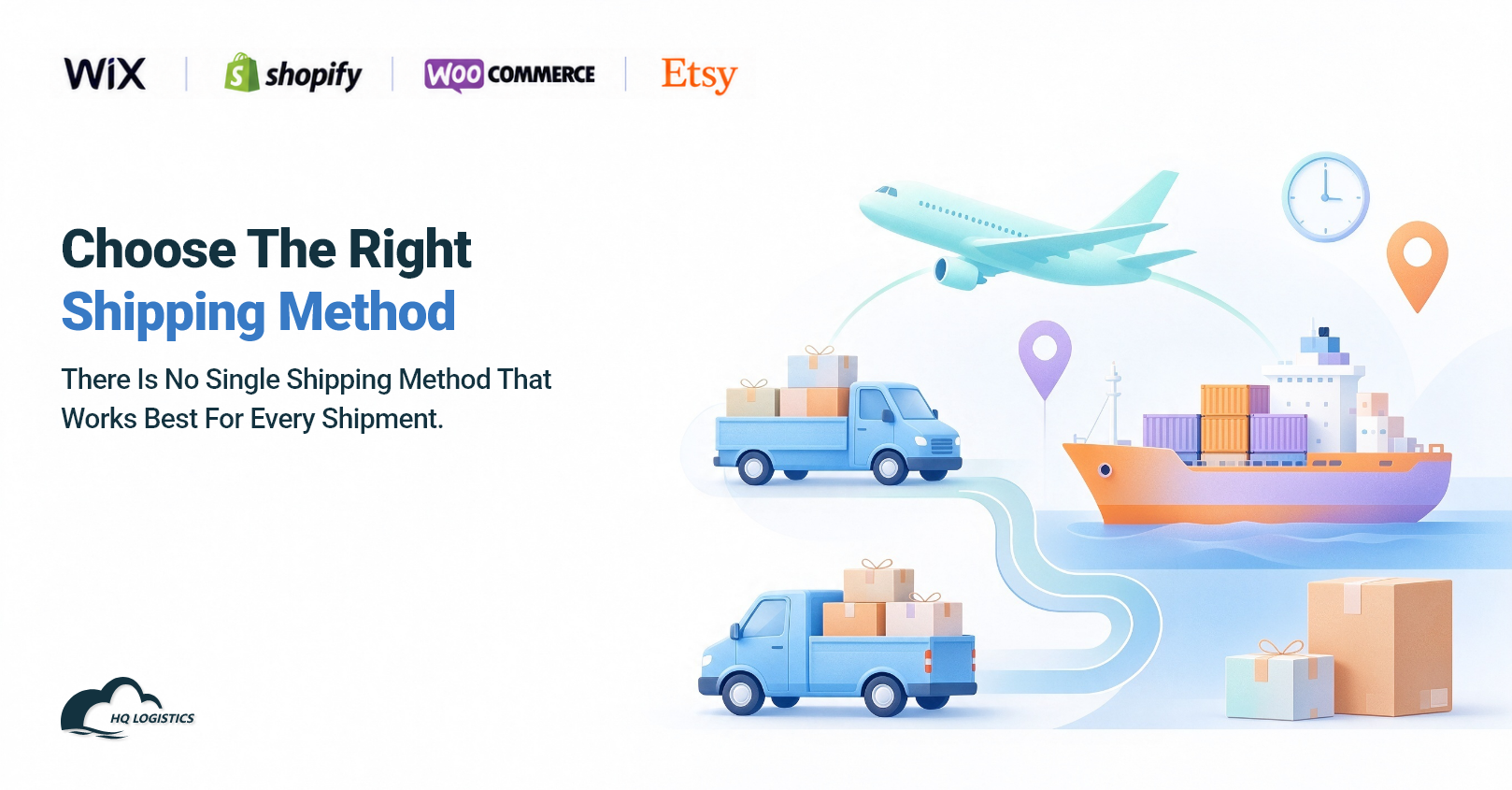
The destination can influence route availability, transit time, customs procedures, and final delivery costs.
Before requesting a quote, provide the correct destination country and the level of delivery required.
For example, confirm whether the shipment is going to:
A residential or commercial address
A warehouse or fulfillment center
A port, airport, or other logistics facility
A location that may be classified as remote by the carrier
For warehouse deliveries, check the receiving requirements in advance. Some facilities may require appointments, pallet specifications, carton labels, or advance shipment information.
For residential deliveries, confirm whether the selected service includes final-mile delivery and whether additional charges may apply to oversized or remote-area shipments.
Accurate destination information helps your shipping provider recommend a suitable service and prepare a more realistic quote.
Incomplete or inconsistent shipment information can create additional checks and delays.
Before booking, confirm which documents and data are required for your specific product, route, and shipping method.
Depending on the shipment, the provider may request:
Commercial invoice
Packing list
Accurate product description
Quantity and declared value
Country of origin
Applicable HS code
Consignee and shipper details
Additional product-specific documents, where required
The exact requirements vary by destination and cargo type.
Do not use a vague description such as "accessories" if a more precise description is required. The product description should accurately reflect the goods being shipped.
Similarly, declared values and customs classifications should be accurate and consistent with the shipment.
Do not guess HS codes, understate shipment values, or use inaccurate product descriptions to obtain a lower shipping price.
Ask your shipping provider or customs professional for guidance when classification is unclear.
Also confirm who is responsible for customs clearance, duties, taxes, and any destination-side charges under the selected service.
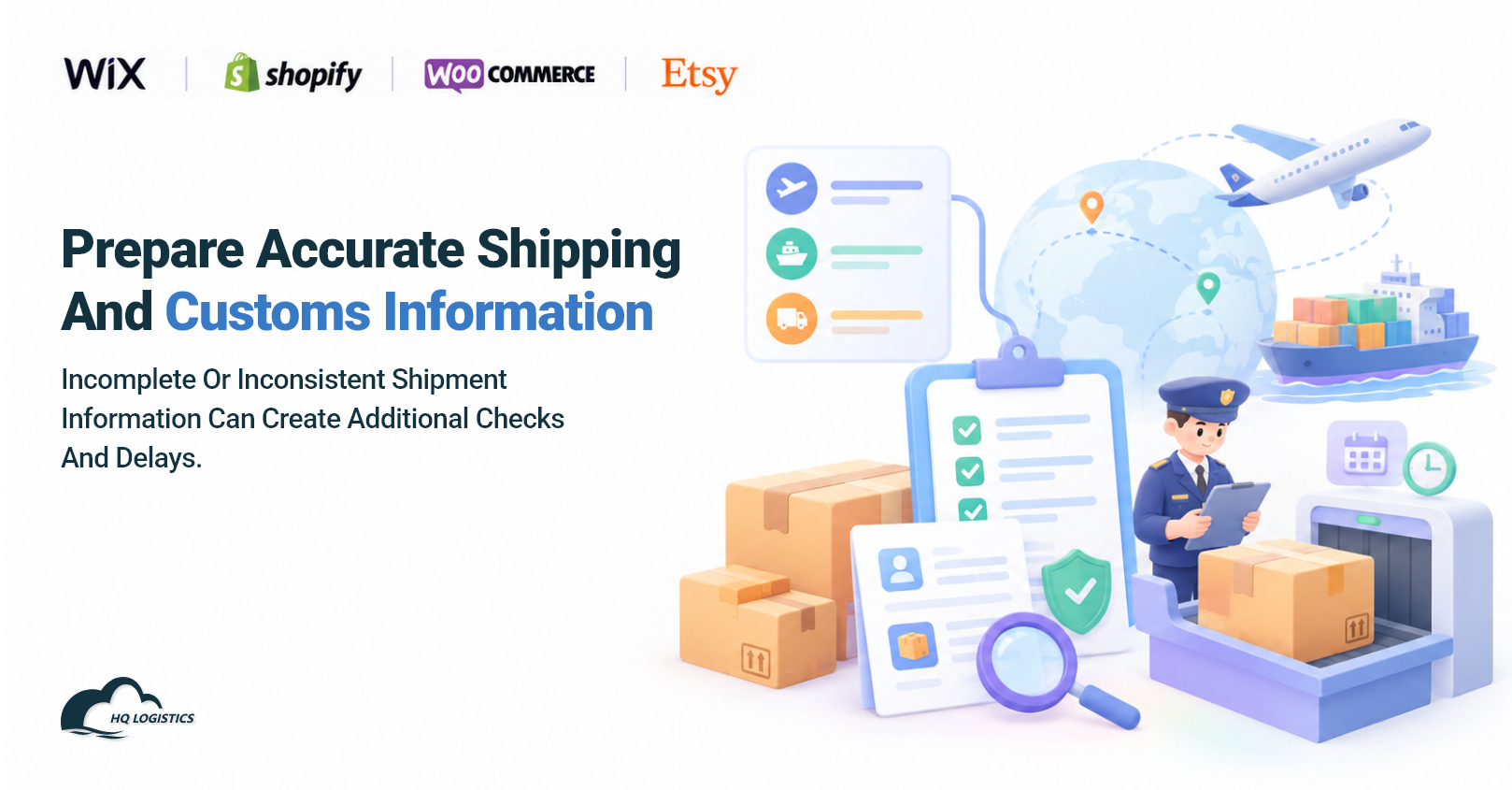
Packaging affects both product protection and shipping efficiency.
Poor packaging can result in damaged goods, while oversized packaging can increase chargeable weight or volumetric weight on some routes.
Before booking, review:
Product Protection:
Can the packaging withstand normal handling and transportation?
Carton Strength:
Are cartons suitable for the shipment's weight and stacking requirements?
Inner Packaging:
Are fragile or delicate items adequately protected?
Labels:
Are carton labels and shipping marks accurate and readable?
Package Dimensions:
Are the final measurements recorded correctly?
Custom Packaging:
If branded packaging is required, has it been produced and checked?
For fragile products, electronics, or goods with delicate finishes, agree on suitable protection with your supplier or fulfillment partner before dispatch.
If you are shipping multiple SKUs together, make sure quantities and carton contents match the packing list.
A final packaging check can help prevent problems that are more difficult to resolve after the shipment has left the origin.
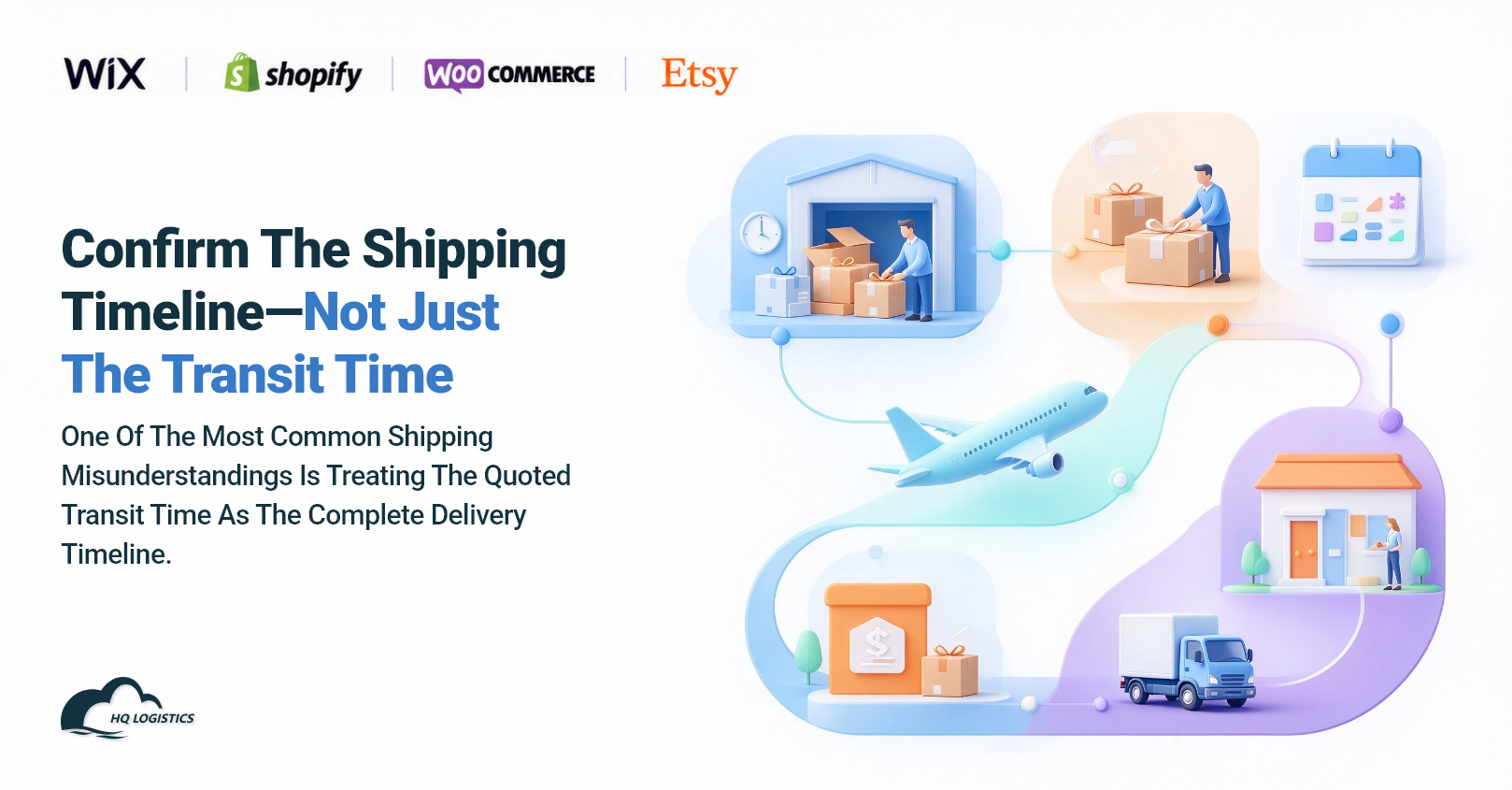
One of the most common shipping misunderstandings is treating the quoted transit time as the complete delivery timeline.
In reality, a shipment may pass through several stages:
Supplier Preparation → Warehouse Receiving → Export Processing → Main Transportation → Customs Clearance → Destination Handling → Final Delivery
A quoted transit time may cover only some of these stages.
Before booking, ask:
When will the shipment be ready for pickup?
How long will warehouse receiving and processing take?
When is the estimated departure date?
Does the quoted transit time include customs clearance?
Is final delivery included?
Are weekends or public holidays likely to affect the schedule?
What happens if the shipment is selected for additional inspection?
For ecommerce sellers preparing for promotions or seasonal demand, work backward from the required arrival date and allow a reasonable buffer.
If inventory must reach a warehouse before a campaign launches, the relevant deadline is the date the stock must be available for fulfillment—not merely the date the freight is expected to arrive at a port or airport.
A low initial quote does not always mean a low total shipping cost.
Additional charges may apply depending on the service, cargo, destination, and delivery requirements.
Before confirming the booking, ask whether the quotation includes:
Pickup or origin transportation
Export handling
Main freight
Fuel or peak-season surcharges
Customs clearance services
Duties and taxes, where applicable
Destination handling
Residential or remote-area delivery
Warehouse receiving or appointment fees, if relevant
Other applicable service charges
Not every shipment will incur every fee. The important point is to understand what is included and what is excluded from the quotation.
Also clarify the payment terms, quotation validity, and circumstances that may lead to a rate adjustment—for example, if the final packed dimensions differ from the information provided.
For a fair comparison, request quotes based on the same cargo details, destination, delivery scope, and service requirements.
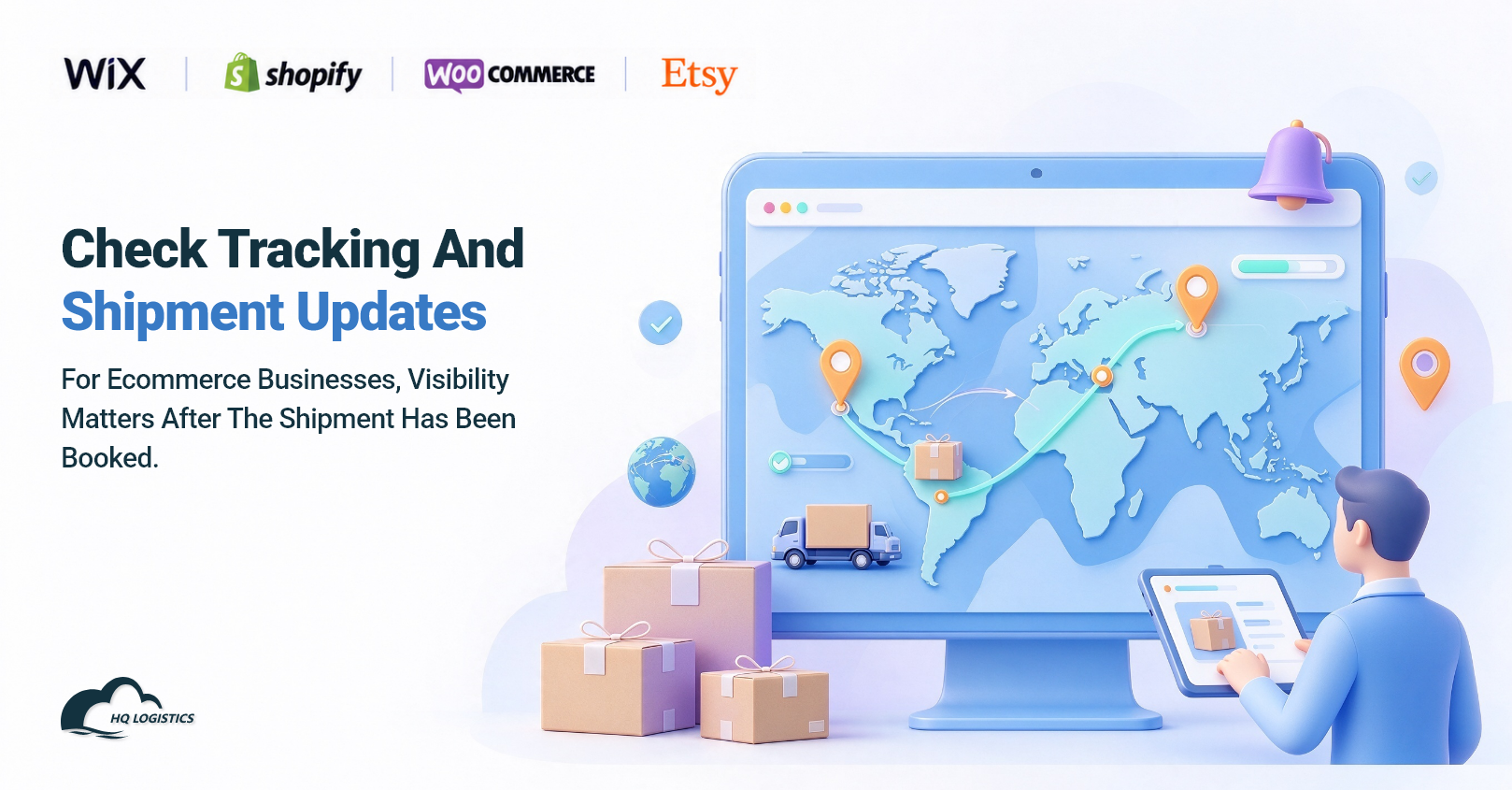
For ecommerce businesses, visibility matters after the shipment has been booked.
You need to know whether goods have been collected, dispatched, cleared, and delivered.
Before choosing a service, confirm what tracking information is available and how frequently it is updated.
Ask your provider:
Is a tracking number provided after dispatch?
Can shipment milestones be monitored?
Who should be contacted if tracking stops updating?
How are customs holds or delivery exceptions communicated?
Can tracking information be synchronized with your ecommerce or fulfillment system?
For Shopify sellers, connected order and tracking workflows can reduce manual updates and make it easier to communicate delivery information to customers.
Keep in mind that tracking visibility and update frequency vary by carrier and service. A tracking number does not guarantee that every stage will update in real time.
Even well-prepared shipments can encounter unexpected issues.
Carrier capacity, weather, customs inspections, supplier delays, and seasonal congestion can all affect delivery schedules.
For important products, consider preparing alternatives before a disruption occurs.
You can:
Identify alternative shipping services for eligible cargo
Maintain safety stock for proven bestsellers
Avoid relying on one route for every shipment
Confirm whether another supplier can replenish critical products
Keep shipment documents and product specifications organized
Communicate delivery changes to your fulfillment team promptly
A backup plan does not mean you need to use multiple shipping providers for every shipment.
It means you understand your options before you urgently need them.
For Q4 or other peak sales periods, early planning generally gives sellers more flexibility than last-minute booking.
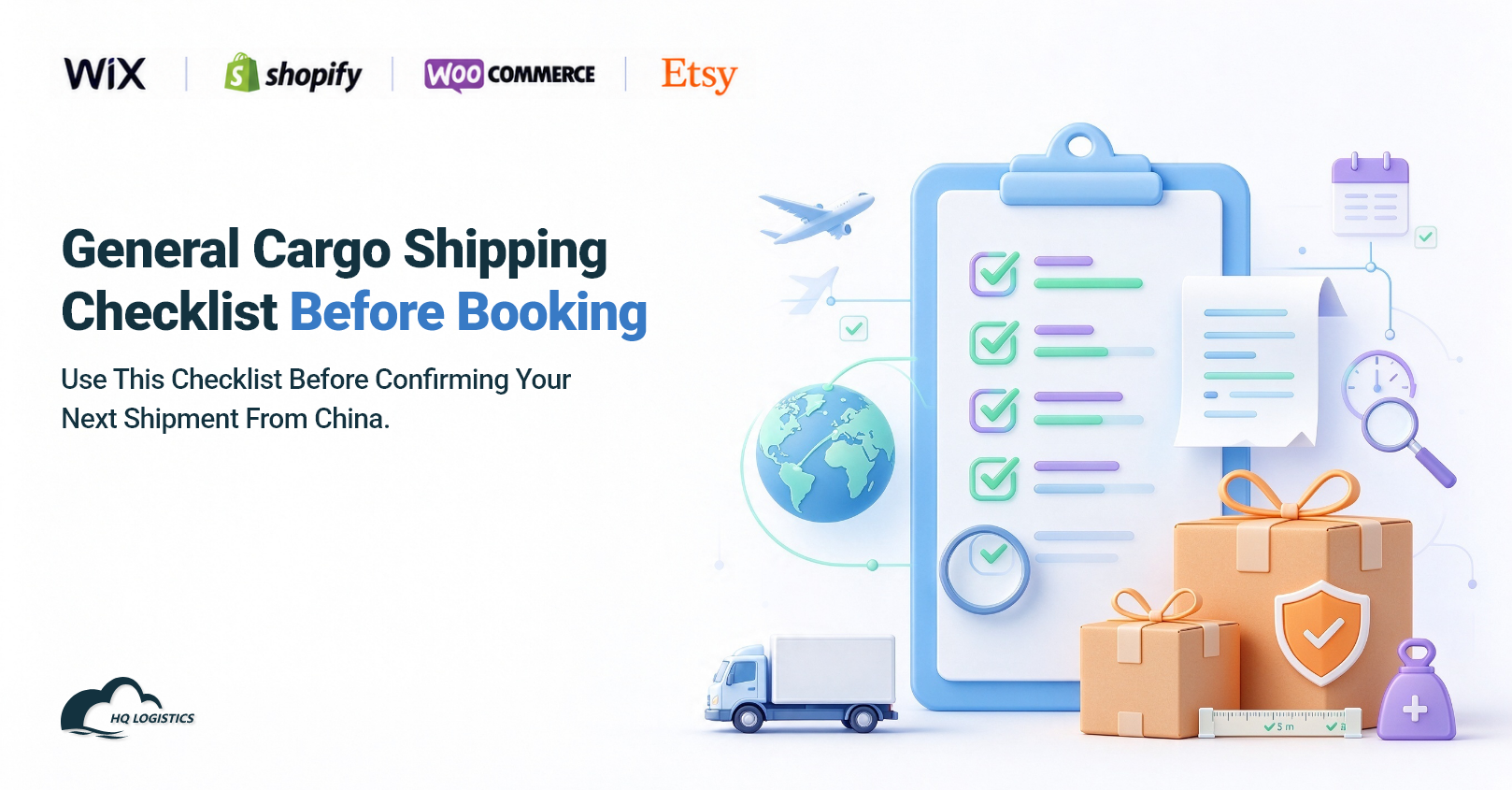
Use this checklist before confirming your next shipment from China.
| Item | What to Confirm |
|---|---|
| Product classification | Does the exact product qualify for the selected route? |
| Cargo details | Are product descriptions and components accurate? |
| Weight and dimensions | Are final packed measurements available? |
| Shipment quantity | Are carton counts and quantities confirmed? |
| Destination | Is the address complete and the delivery scope clear? |
| Shipping method | Does the route fit the budget and deadline? |
| Customs documents | Are the required documents and declarations prepared? |
| Packaging | Is the shipment protected and correctly labeled? |
| Transit timeline | Are processing, transportation, clearance, and delivery accounted for? |
| Total cost | Are inclusions, exclusions, and possible surcharges understood? |
| Tracking | Is shipment visibility available for the selected service? |
| Backup plan | Are alternatives available for critical inventory? |
The more accurate your shipment information is before booking, the easier it becomes to compare services and reduce avoidable surprises.
For ecommerce sellers, arranging freight is only one part of the supply chain.
Products may need to be sourced, checked, consolidated, packed, stored, and shipped before they reach customers.
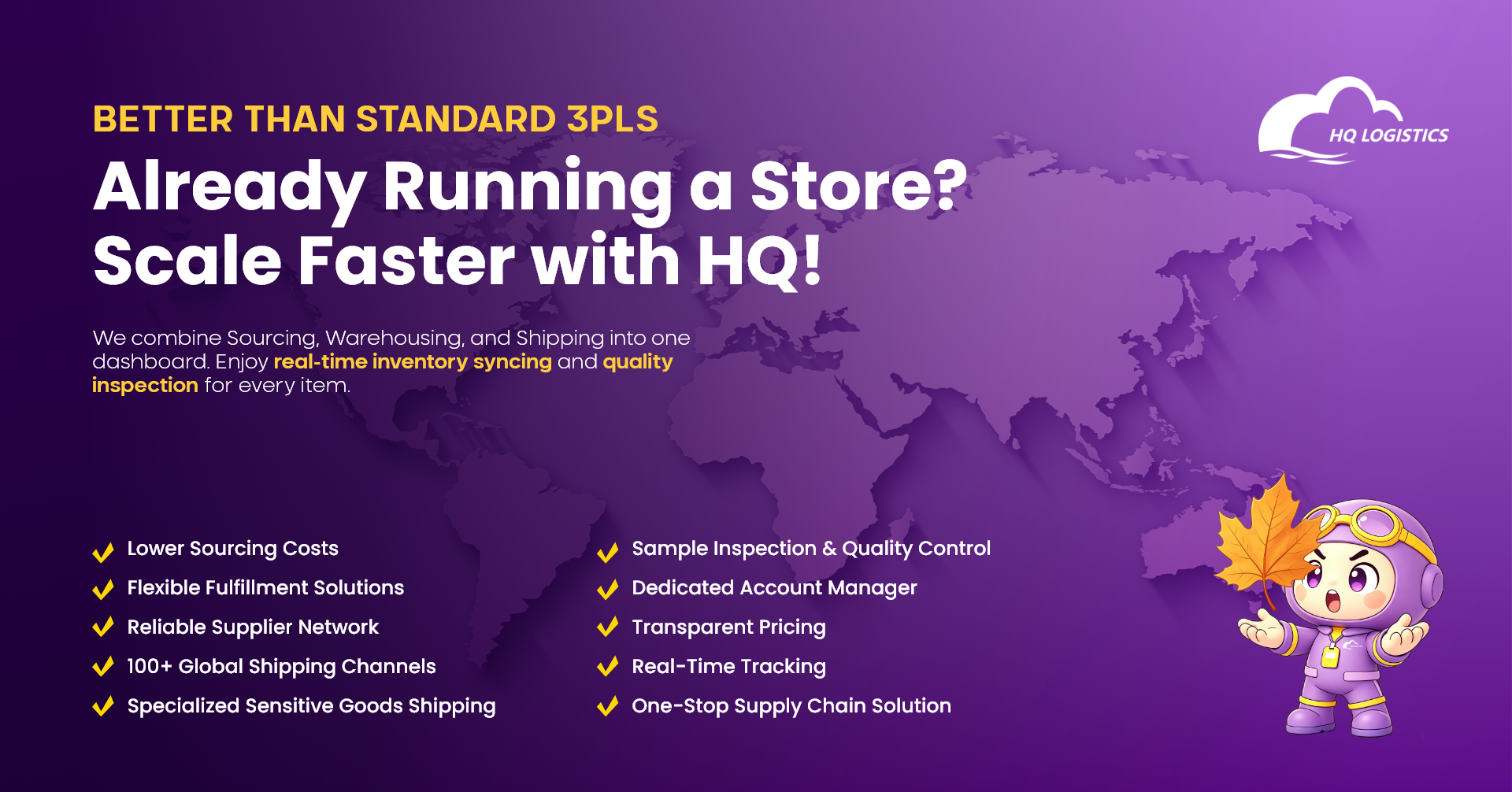
HQ can help connect these stages through a coordinated workflow, depending on the product and service requirements.
Identify supplier options based on product specifications, target pricing, and quality requirements.
Check products against agreed specifications before inventory enters fulfillment or leaves the origin.
Coordinate eligible products from different suppliers to help organize shipments and prepare the required cargo information.
Support China-based inventory and order fulfillment, with overseas warehousing options for suitable products and markets.
Review product characteristics, destination, shipment size, budget, and delivery requirements to identify suitable available shipping options.
Connect eligible order workflows and synchronize tracking information to reduce manual work for ecommerce sellers.
For brands with stable demand in the U.S., pre-stocking eligible products in a U.S. warehouse may also be worth evaluating. For European sellers, EU fulfillment may help position proven inventory closer to customers.
The right solution depends on your cargo, sales pattern, destination, and overall fulfillment economics.
Before booking, share your product details and destination with HQ so the team can help review suitable shipping and fulfillment options.
Route availability, transit estimates, and product eligibility should be confirmed for each shipment.
General cargo shipping from China is not just about finding the lowest freight rate.
A successful booking starts with accurate product information, correct weight and dimensions, suitable packaging, complete documents, and a clear understanding of the shipping timeline and total cost.
Before confirming your next shipment, take time to check the details that matter most:
Confirm the Cargo. Choose the Right Route. Check the Total Cost. Prepare the Documents. Track the Shipment.
For Shopify and cross-border ecommerce sellers, these steps can help reduce avoidable shipping problems and make inventory planning more predictable.
When sourcing, quality control, warehousing, and shipping are coordinated, it becomes easier to build a fulfillment process that supports your business as it grows.

General cargo shipping typically covers ordinary goods accepted by a standard shipping service. Eligibility depends on the product's materials, components, destination, carrier rules, and selected route.
Products containing batteries, liquids, powders, aerosols, magnets, or other restricted materials may require special handling or a different route. Confirm the exact product's eligibility before booking.
Costs may depend on actual weight, volumetric weight, dimensions, destination, shipping method, delivery scope, and applicable surcharges. Ask for a quote based on final packed measurements and the full delivery requirements.
Requirements vary by product, destination, and shipping method. Common documents or data may include a commercial invoice, packing list, accurate product description, declared value, origin information, and applicable HS code. Confirm the exact requirements with your shipping provider or customs professional.
Consider the shipment size, budget, delivery deadline, product eligibility, and total cost. Express may suit urgent small shipments, air freight may suit time-sensitive bulk shipments, and ocean freight may suit larger shipments with more lead time.
Not always. Ask whether the estimate covers origin processing, main transportation, customs clearance, destination handling, and final delivery. The service scope should be clear before booking.
HQ can help review sourcing, quality inspection, consolidation, warehousing, fulfillment, and available shipping options, subject to product eligibility and service requirements. Confirm route availability, documentation, and estimated delivery time before booking.
📩 Email: zoye@fulfillment-cn.com
Previous Recommendations


General Cargo Shipping from China,general cargo shipping, shipping from China, China international shipping, China freight shipping, ecommerce shipping, Shopify shipping, international freight, China air freight, China ocean freight, express shipping from China, shipping documents, chargeable weight, volumetric weight, cargo packaging, cross-border fulfillment, China fulfillment services,Learn what to check before booking general cargo shipping from China, including product eligibility, weight, dimensions, packaging, customs documents, shipping methods, transit times, and total costs.




Don't wait until next year, grab the chance on 2025. Here are some recommended ecommerce topic you can choose.

Thanks to the support and trust from our customers. Flashback with our beloved partners.