 Fulfillment< @ >HQ Group


Europe-bound ecommerce orders can be challenging to manage. A shipping route that works well for lightweight accessories may not be the best option for cosmetics, supplements, electronics, or other products with special shipping requirements.
For cross-border ecommerce brands, choosing the right shipping route means looking beyond the advertised delivery time. Product type, parcel weight, destination country, customs requirements, shipping costs, and tracking quality all influence the final decision.
In this guide, we’ll explain how to match shipping routes to different product categories, what to check before shipping to Europe, and how the right fulfillment partner can help you build a more reliable logistics strategy.
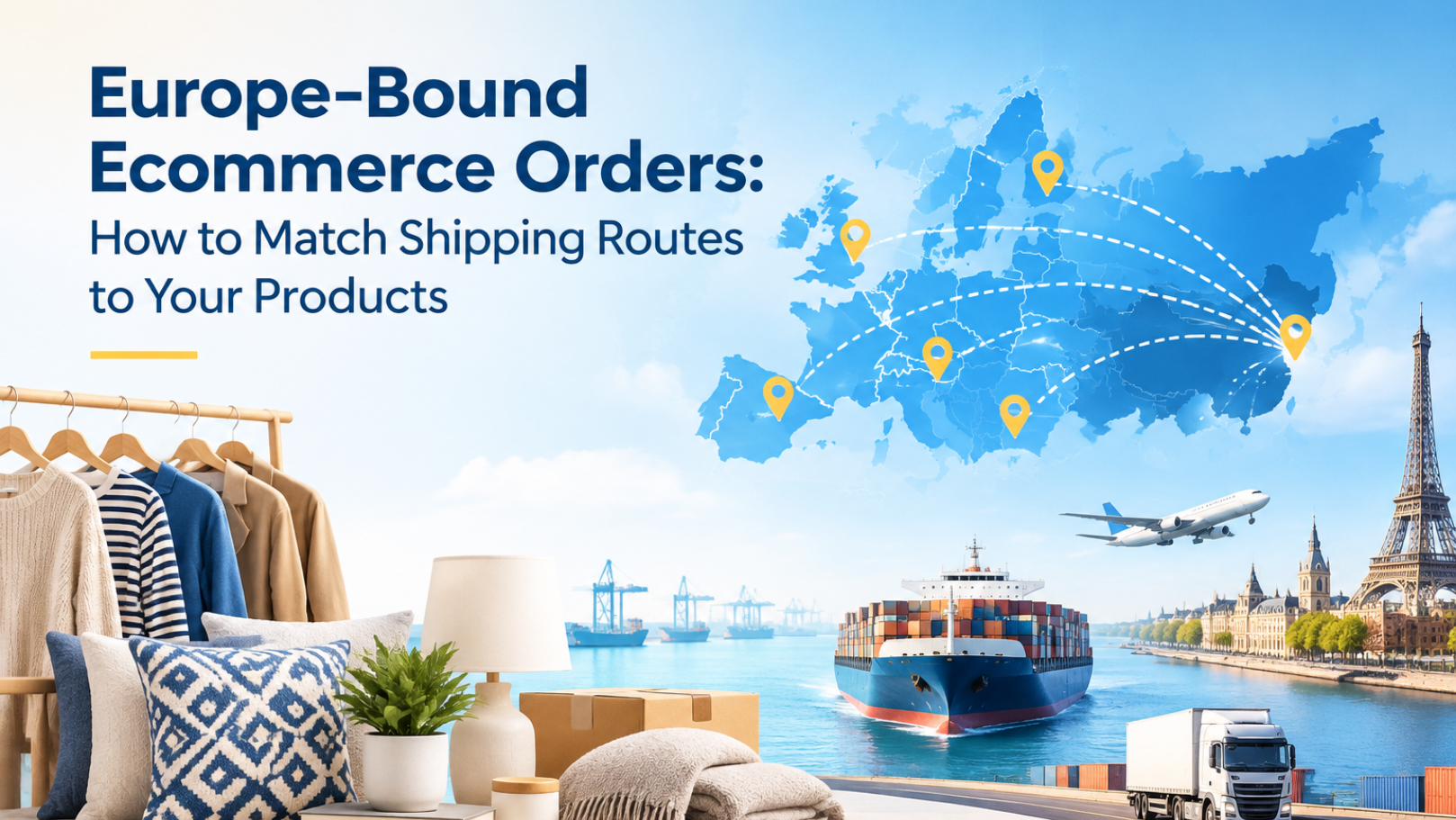
Not every product can travel through the same shipping channel. Carriers and logistics providers may apply different rules depending on the product’s materials, ingredients, battery configuration, packaging, and destination.
Before selecting a route, identify your product category and confirm which shipping options are available for it.
Examples include phone cases, simple home accessories, stationery, and non-electronic fashion accessories.
These products are often easier to ship because they generally have fewer special handling requirements. For lightweight orders, however, shipping costs can still vary significantly depending on the carrier’s minimum charge and billable weight.
What to check:
Parcel weight and dimensions:
Oversized packaging can increase the billable weight.
Delivery coverage:
Confirm that the route serves your target European countries.
Tracking availability:
Look for tracking that remains accessible after the parcel enters the destination country.
Total shipping cost:
Compare the complete charge, not just the price per kilogram.
For stores shipping many small parcels, even a small difference in the average cost per order can have a meaningful impact on profit margins.
Fashion products can be relatively straightforward to ship, but packaging and order characteristics still matter.
For example, a lightweight T-shirt and a structured handbag may have very different parcel dimensions. If a shipping provider calculates charges using dimensional weight, bulky packaging can increase costs even when the products are not heavy.
Before choosing a route, consider:
Whether the parcel is charged by actual weight or dimensional weight
Whether the packaging protects the product without adding unnecessary volume
Whether the route supports your main European markets
Whether delivery performance is suitable for your customers’ expectations
For apparel brands, consistent packing standards can help control costs while keeping products presentable when customers receive them.
Cosmetics require more careful route selection because their ingredients, physical form, packaging, and applicable transport rules can affect shipping eligibility.
Creams, lotions, serums, powders, perfumes, and aerosol products should not automatically be treated as one category. Some products may be accepted through a standard route, while others may require a specialized service or additional documentation.
Before shipping beauty products to Europe, confirm:
The exact product composition and form
Whether the carrier accepts the item on the intended route
Whether liquid, powder, or other product-specific restrictions apply
Whether packaging is suitable for preventing leakage or damage
Whether the shipment meets applicable customs and product compliance requirements
Do not assume that a route accepting ordinary cosmetics will also accept perfumes, aerosols, or every type of beauty product. Obtain confirmation based on the actual product details.

Supplements can involve additional checks because their ingredients, dosage form, labeling, and intended use may affect both transportation and import requirements.
Capsules, tablets, protein powders, and other nutritional products should be reviewed individually before shipment. A carrier’s willingness to transport a product does not automatically mean the product can legally be imported or sold in the destination country.
For supplement brands, route planning should include:
Ingredient and product information
Product labels and supporting documentation
Carrier acceptance and customs requirements
Destination-country rules for importing and marketing the product
Procedures for handling customs inquiries or shipment delays
Work with a logistics provider that can review the actual product details before you send inventory or customer orders. This helps reduce avoidable shipping disruptions.
Electronics may require a different route depending on whether they contain lithium batteries, how the batteries are installed, and the product’s specifications.
A simple electronic accessory without a battery may have different transport requirements from a device containing a built-in lithium battery. Products with loose batteries or certain battery configurations may face additional restrictions.
Before booking a shipment, confirm:
Whether the product contains a battery
The battery type and configuration
Whether the battery is installed in the device or packed separately
Whether the carrier requires supporting documents
Whether the selected route accepts the specific product
For electronic brands, choosing a route based only on price can be risky. Confirm product eligibility first, then compare delivery time, tracking, and total cost.

Product type is only one part of the decision. Your destination country and delivery expectations also matter.
Europe is not one uniform shipping destination. Carrier coverage, customs procedures, delivery networks, and import requirements can vary by country.
List your main markets first. For example, a Shopify brand selling primarily to Germany, France, Italy, Spain, and the Netherlands should verify service coverage and delivery performance for each market rather than relying on a general promise of “Europe-wide shipping.”
Check whether the route provides:
Direct service to your target countries
Clear customs procedures
Reliable last-mile delivery
End-to-end or meaningful shipment tracking
Transparent handling of remote-area surcharges and other additional fees
If your customers are concentrated in a few countries, a route optimized for those destinations may be more suitable than one selected solely for broad geographic coverage.
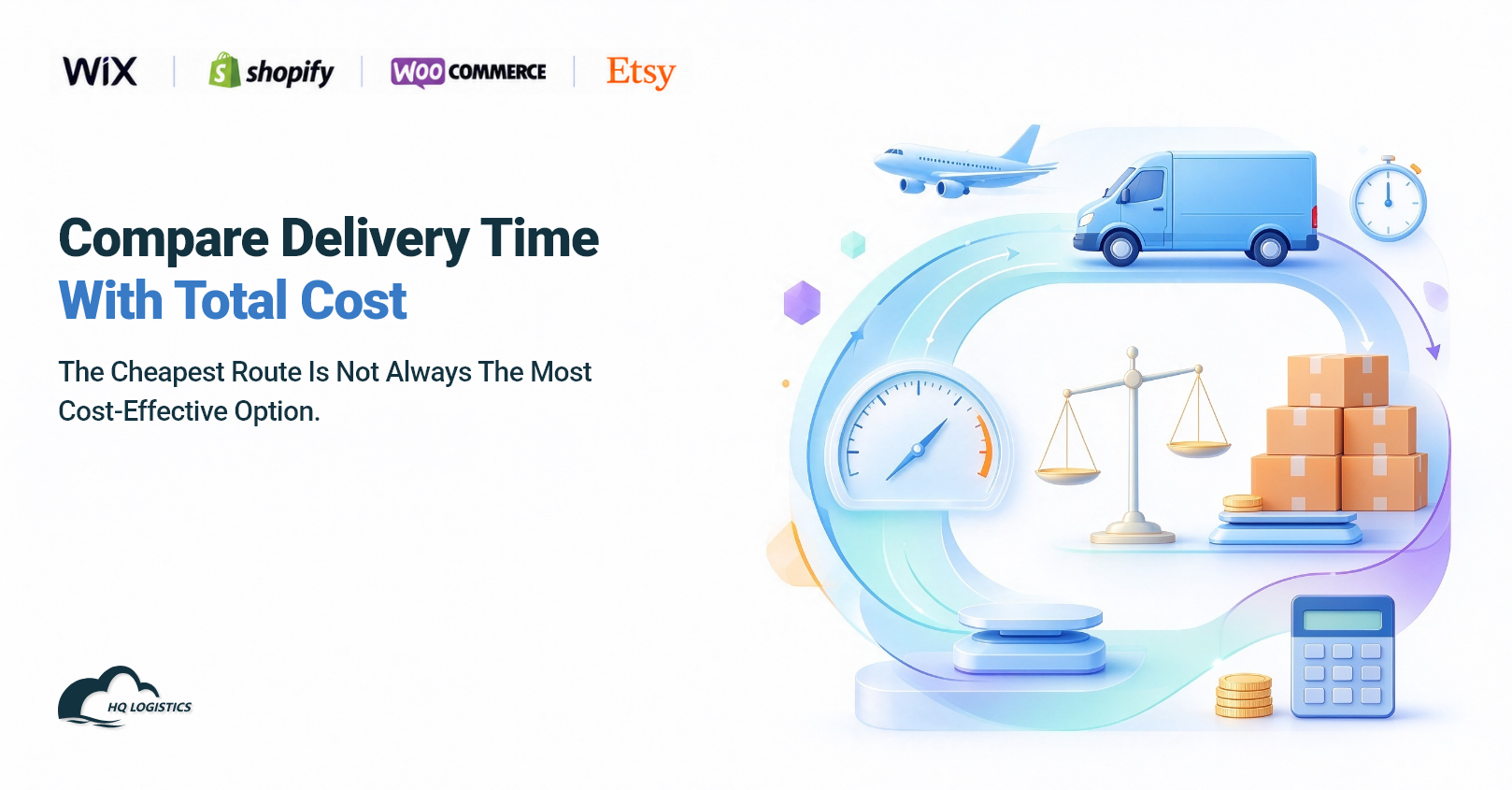
The cheapest route is not always the most cost-effective option.
A low shipping quote may come with longer transit times, limited tracking, additional surcharges, or more complicated handling procedures. These factors can increase customer service workload and affect the customer experience.
When comparing routes, evaluate the full picture:
Transportation charge:
The base cost of sending the parcel
Additional fees:
Fuel, remote-area, handling, or other applicable surcharges
Customs-related costs:
Confirm which duties, taxes, and clearance charges are included, if any
Transit time:
Understand whether the quoted timeframe is an estimate or a service commitment
Tracking quality:
Check where tracking events are available and how delays are communicated
For eligible shipments, HQ Fulfillment offers European shipping options with indicative transit times of around 8–12 days. Actual availability, delivery estimates, and charges depend on the product, destination, parcel details, and selected service. Confirm the current route terms before shipping.
Customs clearance is an essential part of shipping to Europe. Correct product descriptions, accurate declared values, appropriate tariff classifications, and complete documentation help reduce the risk of delays.
Before sending orders, clarify:
Who prepares the customs declaration
What product and shipment information is required
Whether the route uses DDP or another delivery arrangement
How duties and taxes are calculated and paid
Who handles customs requests or clearance issues
DDP generally means Delivered Duty Paid, under which the seller or another agreed party takes responsibility for import clearance and applicable duties and taxes. However, the exact responsibilities depend on the shipping agreement and service terms.
Do not assume that all European routes include duties and taxes. Confirm the terms in writing and ensure your business meets the relevant import and product compliance obligations.
For additional guidance, review the European Commission’s taxation and customs information.
Instead of choosing a route separately for every order without a consistent method, create a simple decision process that your team can follow.
Step 1: Identify the product.
Record its materials, ingredients, dimensions, weight, battery details, and any relevant safety documentation.
Step 2: Confirm route eligibility.
Ask your logistics provider whether the exact item is accepted for transportation and import into the destination country.
Step 3: Define the destination.
Check the available services for each country where you receive regular orders.
Step 4: Compare the complete cost.
Include billable weight, additional fees, customs arrangements, and other charges that apply.
Step 5: Review delivery performance.
Compare estimated transit times, tracking visibility, and the provider’s process for handling exceptions.
Step 6: Test and monitor.
Start with a manageable number of shipments, monitor actual delivery results, and review performance before moving more order volume to the route.
This process helps ecommerce sellers avoid selecting a service that looks attractive on paper but does not fit their products or customer expectations.
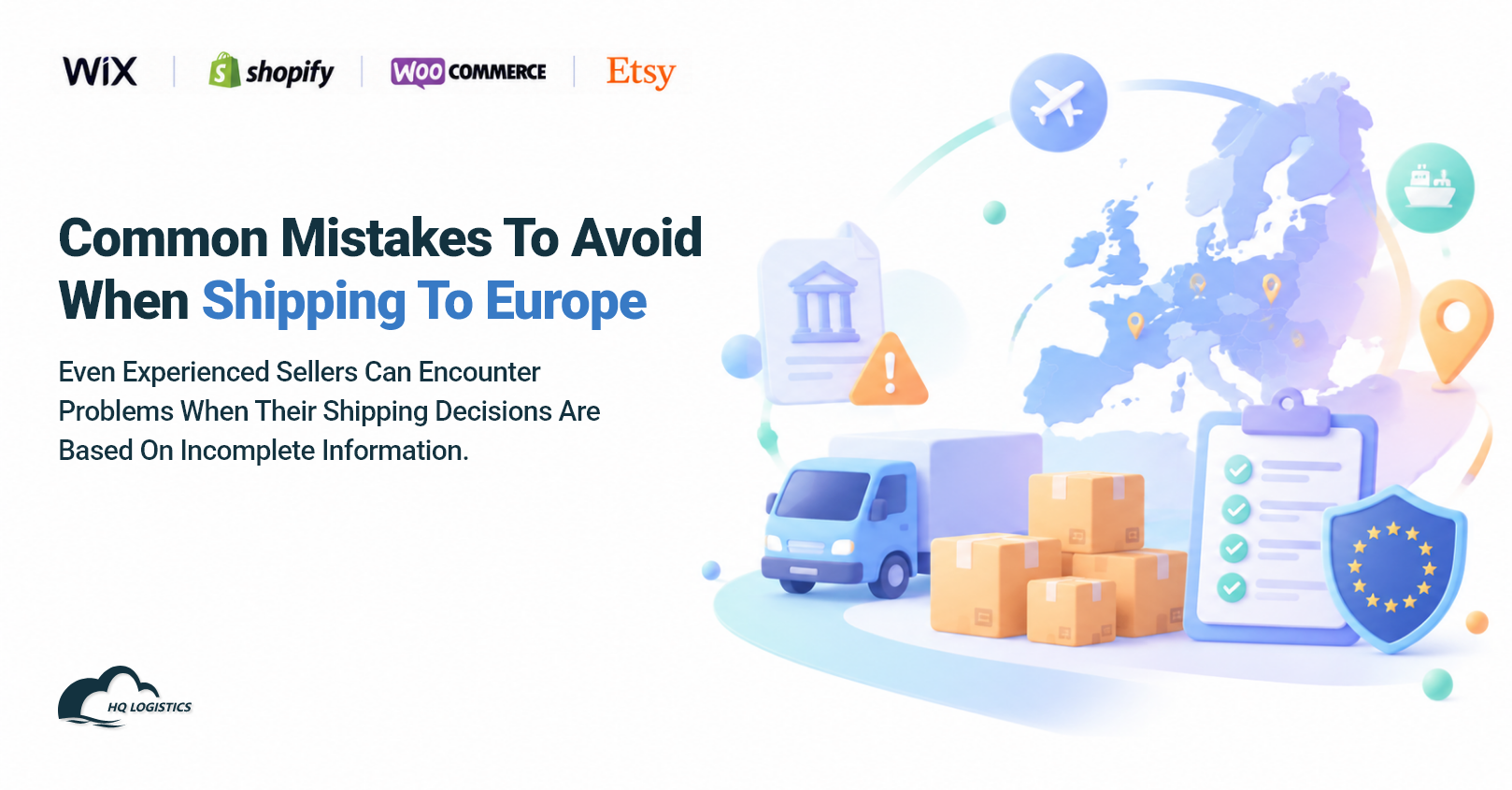
Even experienced sellers can encounter problems when their shipping decisions are based on incomplete information.
A route may offer competitive pricing but reject certain products. Confirm acceptance before sending inventory or placing large shipping orders.
A quoted price may not include every charge. Ask for a complete rate breakdown based on the product, parcel dimensions, destination, and delivery terms.
A route that performs well in one country may not offer the same delivery experience elsewhere. Review performance by destination rather than relying only on an overall average.
Bulky packaging can raise shipping costs and increase the chance of damage. Use packaging that fits the product and meets the carrier’s requirements.
A route that was suitable six months ago may no longer be the best fit as your order volume, product mix, or target markets change. Review delivery times, exception rates, and shipping costs regularly.
Managing multiple products and European destinations can become complicated as your store grows. HQ Fulfillment helps ecommerce brands coordinate product sourcing, warehousing, order processing, and international shipping through one fulfillment partner.
Depending on your products and destination markets, our team can help you:
Evaluate shipping options:
Review product details and identify potentially suitable routes.
Coordinate product sourcing:
Work with suppliers to obtain product information and support more consistent purchasing.
Manage warehousing and fulfillment:
Store eligible inventory, process orders, and coordinate dispatch.
Support quality checks:
Inspect products and packaging before shipment according to the agreed service requirements.
Improve order visibility:
Coordinate order processing and tracking information through the fulfillment workflow.
Plan for growth:
Review shipping options as your product range, order volume, and target markets expand.
For products such as cosmetics, supplements, and battery-powered electronics, route eligibility must be confirmed individually. Our team can review the product information and help you understand which options may be available.
Explore HQ Fulfillment to learn more about our fulfillment services, or visit our China fulfillment service page to discuss your product and shipping requirements.
There is no single best route for every business. The right option depends on product eligibility, destination country, parcel weight, delivery expectations, customs arrangements, and total shipping cost.
It depends on the exact product and carrier requirements. Ingredients, product form, packaging, documentation, and destination-country rules may affect eligibility. Confirm the route before shipping.
No. Shipping arrangements vary by provider and service. Confirm whether duties, taxes, and customs clearance are included, and understand who is responsible for each part of the import process.
Start by comparing complete shipping costs rather than base rates. Review actual and dimensional weight, optimize packaging, compare destination-specific services, and monitor surcharges and delivery performance.
Review your routes when you add new product categories, expand into new countries, experience recurring delays, or see changes in shipping costs and order volume. Regular performance reviews can help you maintain a better balance between cost and customer experience.

Europe-bound ecommerce orders need a shipping strategy built around the products you sell and the markets you serve. By confirming product eligibility, comparing total costs, understanding customs responsibilities, and monitoring actual delivery performance, you can choose routes that better support your business.
As your store grows, a fulfillment partner that can coordinate sourcing, warehousing, quality checks, and shipping options can make logistics easier to manage.
Europe-bound ecommerce orders are easier to manage when every shipping decision starts with the right product information and a route suited to your business.
📩 Email: zoye@fulfillment-cn.com
Previous Recommendations


shipping routes to Europe, ecommerce shipping to Europe, Europe fulfillment services, shipping cosmetics to Europe, China to Europe shipping, Europe-bound ecommerce orders




Don't wait until next year, grab the chance on 2025. Here are some recommended ecommerce topic you can choose.
Thanks to the support and trust from our customers. Flashback with our beloved partners.