 Fulfillment< @ >HQ Group


For ecommerce brands selling to customers in the United States, choosing between a US warehouse and direct shipping from China can have a major impact on delivery speed, fulfillment costs, and inventory management.
A US warehouse can help you deliver orders faster once inventory is available locally. Shipping directly from China allows you to keep products closer to suppliers and maintain more flexibility when testing new products or managing uncertain demand. Neither option is automatically better for every product. The right choice depends on sales volume, product margins, inventory risk, and customer expectations.
For Shopify, WooCommerce, and other ecommerce sellers, the most effective strategy may be to use both models for different products.
In this guide, we'll compare US warehousing with China direct shipping, explain when each model makes sense, and show you how to choose the right fulfillment strategy for your bestsellers.
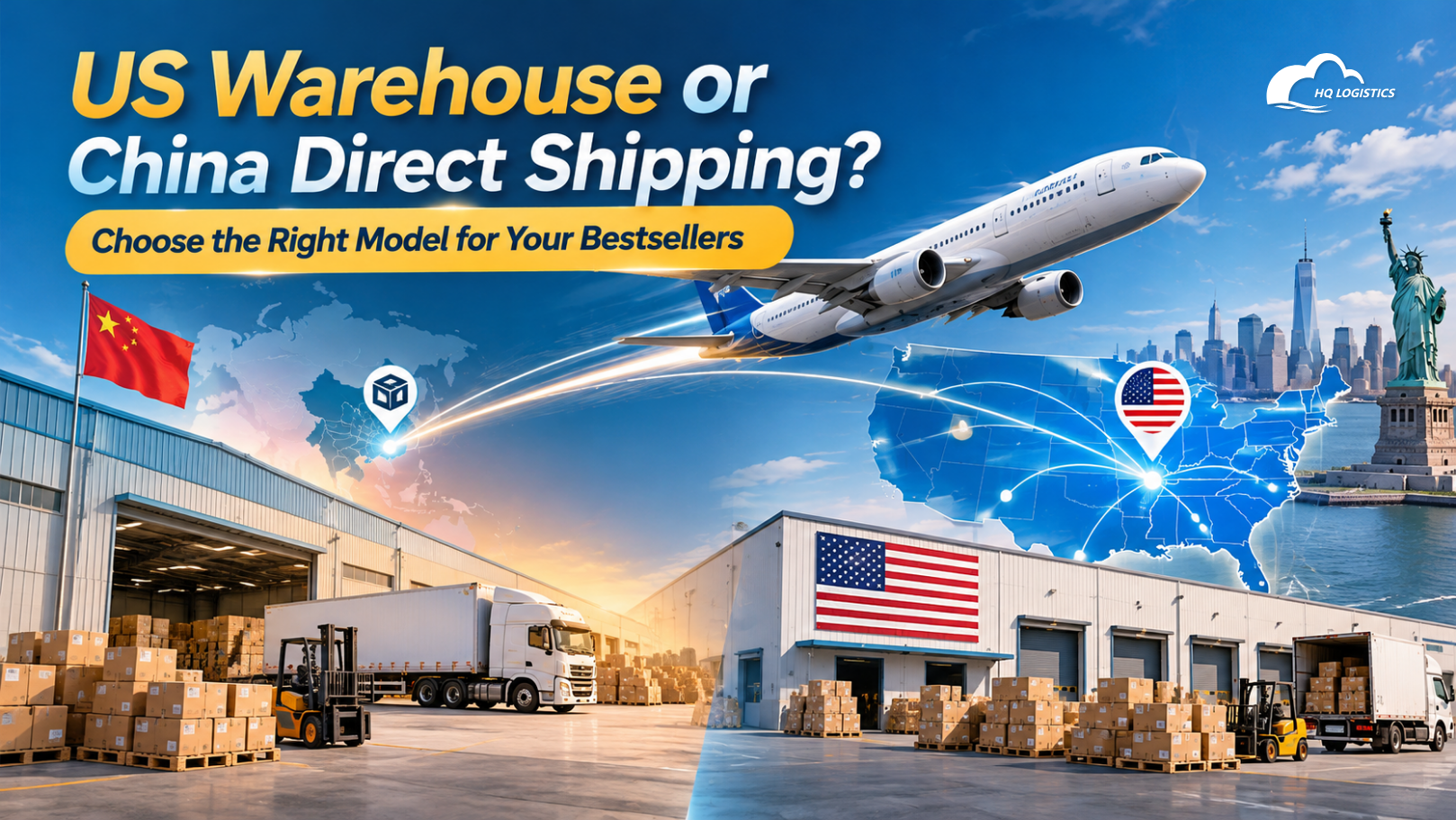
Before choosing a fulfillment model, understand how each one works and where inventory sits before a customer places an order.
With US warehouse fulfillment, products are sourced or manufactured, shipped in bulk to the United States, and stored in a domestic warehouse before individual customer orders arrive.
When a customer places an order, the warehouse picks, packs, and dispatches the parcel through a domestic carrier.
This model can offer several advantages:
Faster domestic delivery:
Orders ship from inventory already located in the US.
More predictable order processing:
Local stock can support consistent picking and packing schedules.
Simpler returns handling:
A domestic return arrangement may make it easier to receive and inspect returned products.
Better support for proven bestsellers:
Popular SKUs can be stocked in advance to meet recurring demand.
However, US warehousing also requires advance planning. You need to account for inbound freight, import costs, warehouse receiving, storage, inventory management, pick-and-pack fees, and domestic shipping.
You also take on the risk of holding inventory that may sell more slowly than expected.
With China direct shipping, products remain in China until customer orders are ready to be fulfilled. The fulfillment provider then prepares each parcel and ships it internationally to the customer.
This model can be particularly useful for ecommerce brands sourcing products from Chinese manufacturers.
Key advantages include:
Greater inventory flexibility:
You can keep a broader product range near your suppliers without moving every SKU into the US.
Lower upfront commitment to US inventory:
You do not need to pre-position every product in a US warehouse.
Convenient supplier coordination:
Sourcing, product checks, and fulfillment can be coordinated closer to the manufacturing base.
More options for product testing:
You can evaluate demand before committing to larger quantities of stock in the US.
The trade-off is that individual orders must cross international borders after purchase. Delivery times, shipping costs, customs procedures, and tracking performance depend on the selected route and product.
Direct shipping does not eliminate inventory risk entirely. You may still need stock in China, and supplier lead times can affect how quickly you replenish products.
A US warehouse is worth considering when your products have established demand and customers expect relatively fast delivery.
Instead of sending every order internationally, you position inventory closer to your largest customer base.
If a product sells regularly and demand is reasonably predictable, holding stock in the US can make fulfillment easier to plan.
For example, a Shopify store selling a popular phone stand or desk organizer may receive consistent orders for the same SKU every week. Shipping a planned quantity to a US warehouse can help the seller serve those orders without sending each parcel separately from China.
Before moving inventory, review:
Recent sales by SKU
Average daily and monthly order volume
Seasonal fluctuations
Supplier replenishment lead times
Product margins and expected inventory turnover
Do not rely on total store revenue alone. One product may account for most sales, while other items remain slow-moving. Warehouse decisions should be based on individual products and their actual demand patterns.
Delivery speed can influence customer satisfaction, repeat purchases, and the number of delivery-related inquiries your team receives.
With inventory already available in the US, you can select domestic shipping services that fit your delivery promise and customer locations.
However, distinguish between the time required to replenish a warehouse and the time required to deliver an individual order. The first order shipped after a stockout may still be delayed if replacement inventory has not arrived.
If fast delivery is central to your brand positioning, plan replenishment before stock reaches a critical level.
US warehousing introduces costs before a product is sold. Your business must pay for inventory, transportation, import-related expenses, and potentially storage for an extended period.
Products with stable sales and sufficient margins may justify these costs, especially when local fulfillment improves delivery performance or reduces the total cost per order.
Calculate the full cost rather than comparing only the domestic postage rate with the international shipping quote.
A domestic warehouse or agreed US returns facility can simplify the physical handling of returned products.
This can be useful for products with higher return rates or brands that need to inspect returned items before deciding whether they can be restocked.
Still, a local return address does not automatically mean every returned product can be resold. Your return policy, product condition, hygiene requirements, and warehouse services all affect the process.
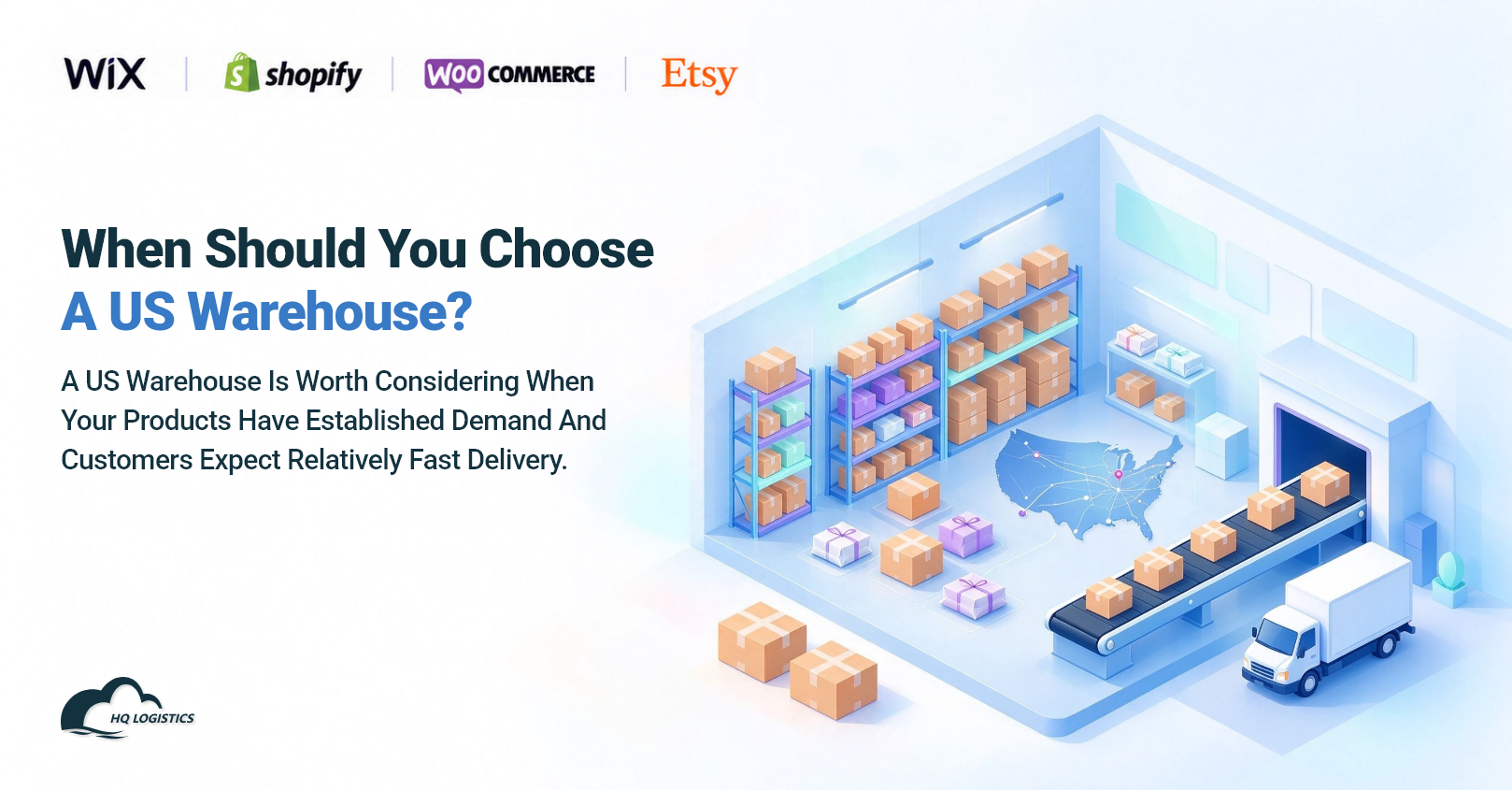
Direct shipping can be a practical choice when flexibility matters more than holding inventory close to US customers.
Launching a new product involves uncertainty. Even if an item looks promising, you may not know its actual conversion rate, customer response, or long-term demand.
Shipping directly from China can help you test products before committing to large quantities of US inventory.
For example, a seller testing several home decor accessories may want to identify the best-performing designs first. Keeping the broader assortment in China allows the seller to adjust product selection based on actual sales rather than moving every design into the US in advance.
Once a product demonstrates consistent demand, the seller can evaluate whether local inventory makes financial sense.
A large catalog often contains a mix of bestsellers, occasional purchases, and products that sell only a few times each month.
Sending the entire catalog to the US can create unnecessary storage costs and tie up working capital in slow-moving products.
China direct shipping can help you maintain a wider product range while limiting how much inventory you position in the US.
This approach may work well for stores offering multiple styles, colors, sizes, or niche products with unpredictable demand.
When products are sourced from Chinese factories, keeping inventory near the supplier base can simplify certain purchasing and replenishment processes.
You may be able to coordinate product sourcing, quality checks, packaging, and order preparation within the same supply chain.
It can also make it easier to review samples or adjust product specifications before committing to a larger inventory shipment.
However, direct shipping should still be evaluated using the full landed cost, including applicable transportation, customs, duties, taxes, and other charges.
Buying inventory in bulk for a US warehouse means committing cash before the products generate sales.
For growing businesses, this can limit the budget available for advertising, product development, and other operating expenses.
Direct shipping may reduce the need to position large quantities of inventory in the US, although it does not remove the need to purchase or replenish stock in China.
The right choice depends on whether the financial benefits of local inventory outweigh the cost of holding it.
One of the most common mistakes is comparing a China shipping quote with a US domestic shipping quote without considering the other costs involved.
Each model has a different cost structure.
Before moving inventory to the US, calculate:
Product purchasing costs
Bulk transportation from the supplier or China warehouse
Applicable import duties, taxes, and customs-related charges
Receiving and warehouse handling
Storage and inventory management
Pick-and-pack fees
Domestic shipping charges
Returns handling and potential unsold inventory losses
Some costs occur before a product is sold, while others are incurred with each order.
If inventory moves slowly, storage and capital costs may reduce profitability even when domestic shipping rates look attractive.
For direct shipping, consider:
Product purchasing and replenishment
Order processing and packing
International shipping charges
Applicable duties, taxes, and customs-related fees
Product-specific handling or transportation requirements
Potential costs associated with delays, replacements, or delivery issues
The key difference is how transportation and inventory costs are distributed across the fulfillment process.
With US warehousing, inventory is moved closer to customers in advance. With China direct shipping, individual orders travel internationally after purchase.
Neither model is automatically cheaper. Compare the total cost for each SKU using realistic sales forecasts, shipping quotations, and inventory assumptions.
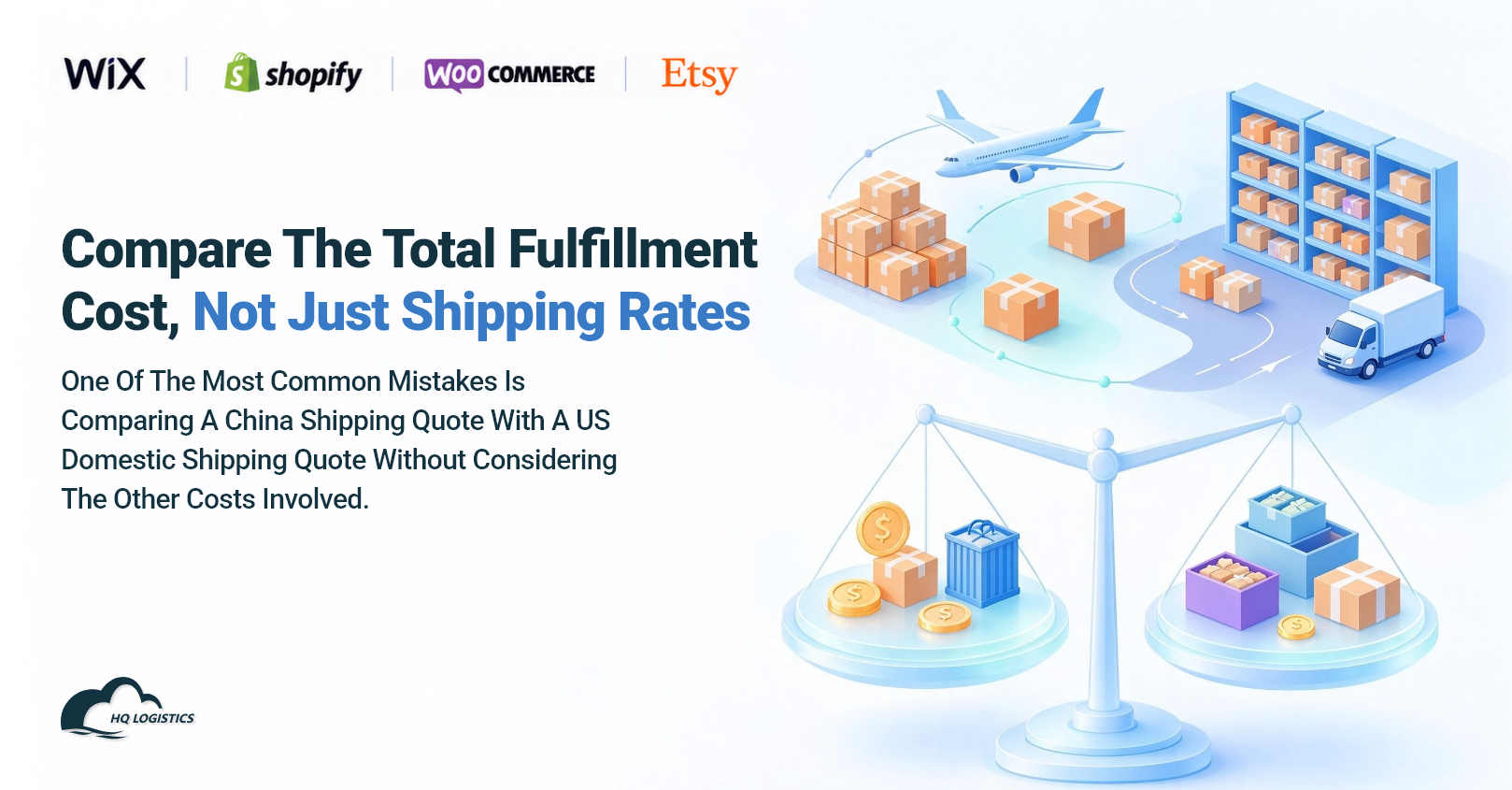
Instead of choosing one fulfillment model for your entire store, evaluate products individually.
Review sales data from the last 60–90 days, or a longer period if your products are seasonal.
Identify products with consistent demand, reliable supplier availability, and sufficient profit margins.
Look beyond order count. A product with many low-margin orders may not justify local inventory as easily as a product with fewer but more profitable sales.
Calculate how much stock you expect to sell during the replenishment period.
For example, if a product sells an average of 15 units per day and replenishment takes 30 days, you may need to plan for approximately 450 units of expected demand during that period, plus an appropriate safety buffer.
This is an illustrative calculation, not a universal inventory rule. Adjust your forecast based on demand variability, supplier reliability, seasonality, and available cash.
Estimate the total landed and fulfillment cost under each model.
For US warehousing, include inbound transportation, import costs, receiving, storage, pick-and-pack, and domestic delivery.
For China direct shipping, include the product and order-processing costs, international shipping, and applicable customs-related expenses.
Use comparable assumptions for the same SKU, order quantity, package dimensions, and destination.
Ask how important fast delivery is to your customers.
If your product competes mainly on price and customers accept a longer delivery window, China direct shipping may remain suitable.
If customers expect quick delivery and the product has consistent demand, local inventory may offer a stronger customer experience.
Make sure the delivery estimates displayed in your store reflect the actual service you can provide.
Product demand changes. A new item may become a bestseller, while a once-popular product may slow down.
Review sales, inventory turnover, shipping costs, and stockout frequency regularly. Move products toward a different fulfillment model when the numbers justify it.
For many growing ecommerce brands, the decision does not need to be US warehouse or China direct shipping.
A hybrid fulfillment model uses both.
You can keep proven bestsellers in the US for domestic orders while maintaining slower-moving products, new product tests, and a broader catalog in China.
This approach combines local delivery advantages with greater sourcing and inventory flexibility. It is also consistent with the SKU-level approach discussed in this fulfillment center comparison.
Products with stable sales and predictable replenishment needs are the strongest candidates for local inventory.
Examples may include popular home accessories, established beauty accessories, compact electronics, and other products that meet the relevant shipping and import requirements.
Select products based on actual demand rather than assuming that every item in a popular category will sell consistently.
New launches and long-tail SKUs may benefit from remaining close to their suppliers until their demand becomes clearer.
This can help you avoid committing too much capital to products that may not perform as expected.
When a product starts selling consistently, review whether moving part of its inventory to the US would improve delivery performance and overall profitability.
A hybrid model needs good inventory visibility. Your team should know which SKUs are available in each location and which orders should be fulfilled from which warehouse.
Establish rules for:
Which products are stocked in the US
Which products remain in China
How inventory is replenished
What happens when a US SKU runs out of stock
Whether orders containing products from different locations can be split
How shipping costs and delivery estimates are communicated
Without clear rules, using multiple warehouses can create additional complexity rather than improve efficiency.
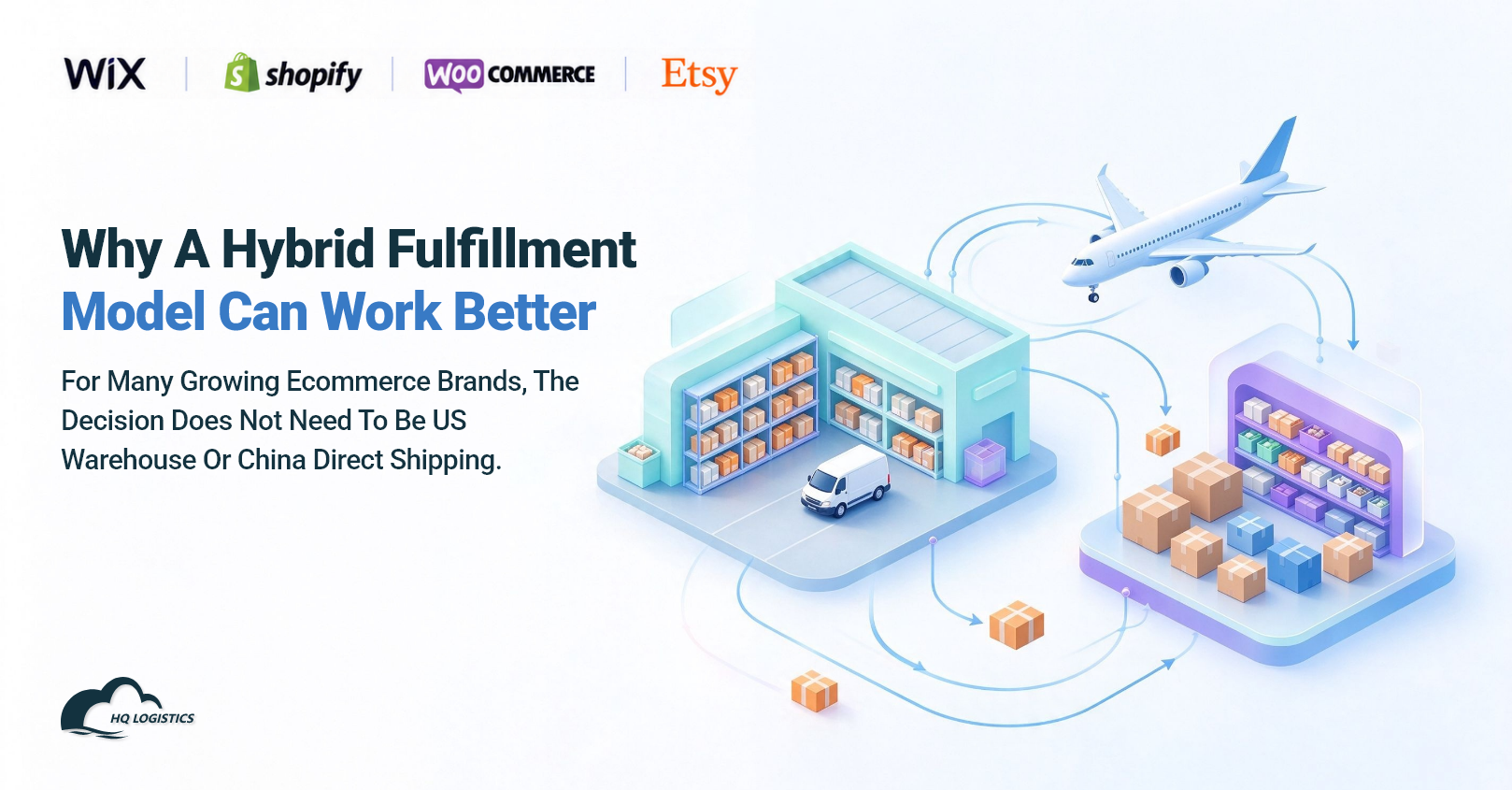
Managing suppliers, inventory, quality checks, and shipping across different locations can become challenging as your ecommerce business grows.
HQ Fulfillment helps ecommerce brands coordinate product sourcing, warehousing, order processing, packaging, and international shipping based on their product and business requirements.
Depending on the selected services and available warehouse arrangements, our team can help you:
Coordinate product sourcing:
Work with suppliers to identify products and review purchasing requirements.
Manage China-side operations:
Coordinate eligible inventory, quality checks, packing, and order preparation closer to suppliers.
Evaluate shipping options:
Compare available routes based on product eligibility, destination, transit time, and total cost.
Plan inventory for bestsellers:
Review sales patterns and replenishment needs when deciding which products may benefit from advance stocking.
Support fulfillment as you grow:
Adjust processes as your SKU range, order volume, and target markets change.
If you are considering a US warehouse, confirm the available warehouse locations, service scope, pricing, import arrangements, and inventory-handling requirements before making a decision.
A good fulfillment strategy should fit the economics of your products, not force every SKU into the same model.
Explore HQ Fulfillment or visit our China fulfillment services to discuss your sourcing and shipping requirements.
Not in every situation. A US warehouse can provide faster domestic delivery, while China direct shipping can offer greater flexibility for new products and uncertain demand. The right choice depends on total cost, inventory turnover, delivery expectations, and product demand.
Consider local inventory when the product has consistent demand, reliable replenishment, sufficient margins, and customers who value faster delivery. Calculate inbound costs, import expenses, storage, and domestic fulfillment costs before committing to inventory.
No. International shipping, applicable customs charges, and other fees can make direct shipping more expensive than expected. Conversely, slow-moving US inventory can create storage costs and unsold-stock risk. Compare the complete cost for each SKU.
Yes, if your fulfillment provider supports the required warehouse arrangements and order-routing process. A hybrid model can keep proven bestsellers closer to US customers while allowing new and slower-moving products to remain in China.
Products with predictable demand, repeat sales, manageable storage requirements, and sufficient margins are often good candidates. However, product eligibility, import requirements, shipping characteristics, and inventory turnover should all be reviewed before stocking.
Choosing between a US warehouse and China direct shipping is ultimately an inventory and supply-chain decision, not just a shipping decision.
US warehousing can help established bestsellers reach customers faster, while direct shipping from China can preserve flexibility for new launches and products with uncertain demand. A hybrid approach may offer the best balance for brands with a mix of proven and developing products.
Start with your sales data, calculate the full fulfillment cost, and review each SKU individually. As your business grows, let demand and profitability guide where your inventory should sit.
US warehouse or China direct shipping?
The right fulfillment model is the one that supports your bestsellers, protects your margins, and gives your business room to grow.
📩 Email: zoye@fulfillment-cn.com
Previous Recommendations


US warehouse fulfillment, China direct shipping, ecommerce fulfillment, hybrid fulfillment, inventory management, fulfillment for Shopify stores,US warehouse vs China direct shipping




Don't wait until next year, grab the chance on 2025. Here are some recommended ecommerce topic you can choose.
Thanks to the support and trust from our customers. Flashback with our beloved partners.