 Fulfillment< @ >HQ Group


Expanding into international markets can help ecommerce brands reach new customers, increase sales, and reduce dependence on a single market. But choosing where to sell is only half the decision. You also need a shipping strategy that matches your products, delivery expectations, profit margins, and operational capabilities.
For cross-border ecommerce sellers, the United States, Europe, and New Zealand each offer different opportunities and logistics challenges. A shipping route that works well for a lightweight fashion accessory may not be the best choice for a fragile home product, a battery-powered device, or a liquid beauty item.
The right approach is not simply to choose the destination with the most customers. It is to identify where your products can compete, calculate the true cost of delivering each order, and build a fulfillment process that can grow with your business.
In this guide, we'll compare the US, Europe, and New Zealand, explain the key factors to consider when choosing a shipping destination, and show how ecommerce brands can develop a more practical international shipping strategy.
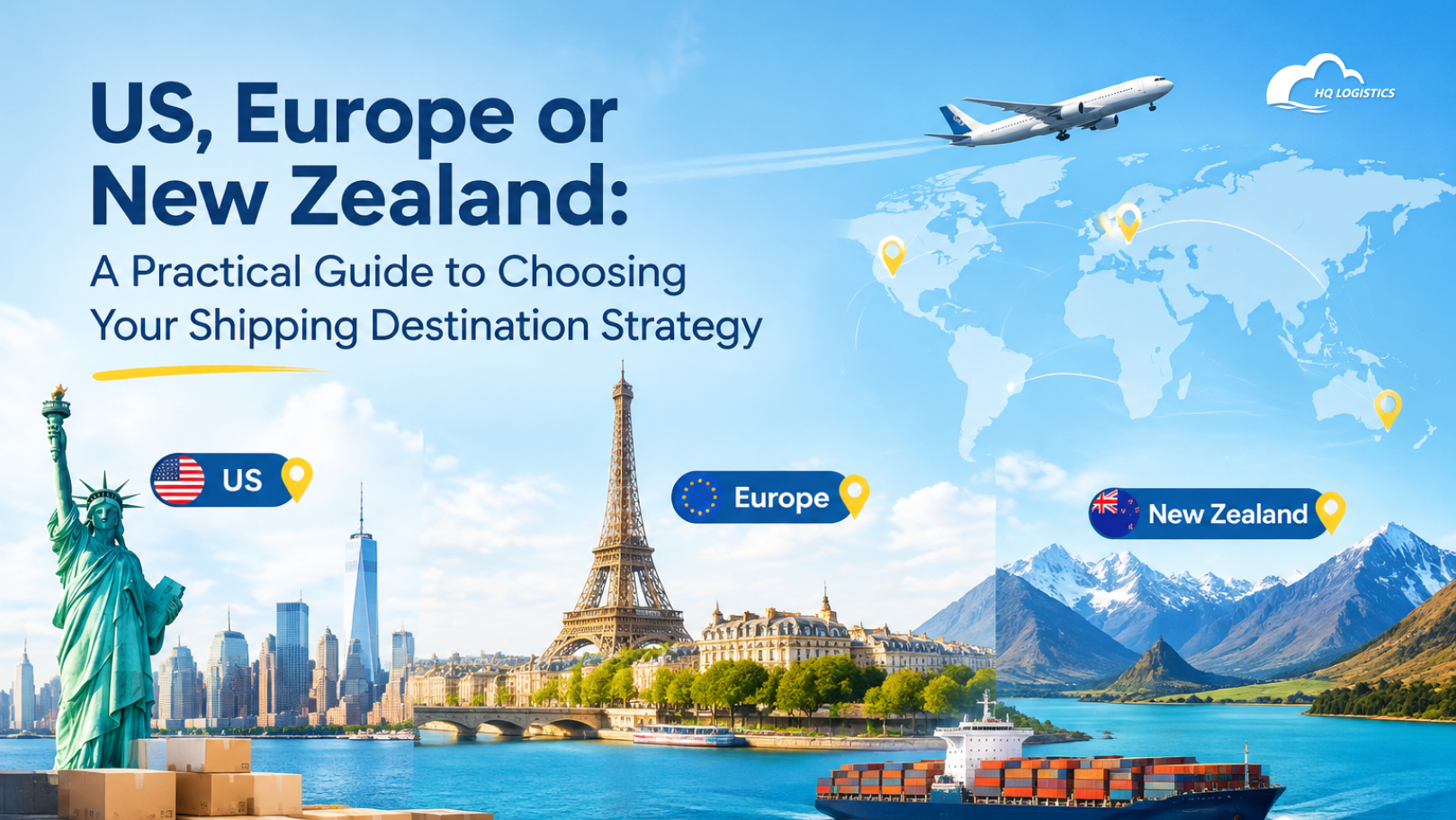
Before deciding where to ship, evaluate whether your products are suitable for each destination.
Different markets can have different customer expectations, import requirements, delivery costs, and restrictions on certain product categories. Understanding these differences before launching a campaign can help you avoid expensive shipping problems later.
Consider these questions:
Product demand:
Is there a clear audience for your products in the destination market?
Shipping cost:
Can you offer competitive delivery without sacrificing too much margin?
Delivery expectations:
Can your shipping method meet the delivery times customers expect?
Product restrictions:
Are your products accepted by the destination country and selected carrier?
Compliance requirements:
Do your products meet applicable labeling, safety, and import requirements?
Return logistics:
Can you handle returns, replacements, and customer complaints efficiently?
For example, lightweight accessories may be suitable for direct international shipping, while bulky home products could benefit from regional inventory or a different shipping arrangement.
Products containing batteries, liquids, powders, or other specially handled materials may require additional checks before a carrier can accept them.
The key principle:
Choose a destination where customer demand, product suitability, shipping costs, and compliance requirements work together.
The United States is an important market for ecommerce brands selling fashion accessories, home products, beauty items, small electronics, and other consumer goods.
Its large customer base offers opportunities for growing brands, but competition can be intense. Delivery speed, product quality, shipping transparency, and total purchase cost can all influence whether customers choose your store.
A broad customer base
The US allows brands to target customers across different regions and product categories. Sellers can test multiple products and use sales data to identify their strongest performers.
Opportunities for product testing
For brands working with suppliers in China, direct shipping can provide a way to test demand before committing large quantities of inventory to an overseas warehouse.
Flexible fulfillment models
Depending on product eligibility, order volume, and delivery requirements, sellers may choose China direct shipping, US-based warehousing, or a combination of both.
1. Total landed cost
Shipping is only one component of the final cost. Product cost, transportation, applicable duties, customs fees, and other expenses should be considered before setting retail prices.
US customs and tariff requirements can change, so sellers should verify the applicable rules for each product's classification and country of origin before shipping.
2. Delivery expectations
Customers may expect predictable delivery estimates and reliable tracking. Long or uncertain transit times can create customer service issues, especially during peak shopping periods.
3. Product-specific shipping restrictions
Battery-powered devices, cosmetics, liquids, and other products may require special handling or additional documentation. Confirm carrier acceptance before committing to a shipping route.
A US warehouse may be worth considering when a product has consistent demand, order volume justifies holding inventory, and faster domestic delivery can improve the customer experience.
However, inventory investment, storage expenses, replenishment planning, and applicable import and compliance obligations must also be considered.
For new products, direct shipping may provide more flexibility. For proven bestsellers, local inventory may offer a better balance between delivery speed and operating costs.
Europe can provide opportunities for ecommerce brands selling clothing, home decor, lifestyle accessories, beauty products, and other consumer goods.
However, Europe should not be treated as one uniform shipping destination. The European Union, the United Kingdom, and other European markets can have different customs, tax, product compliance, and delivery requirements.
A strategy that works for Germany may need adjustments before expanding into the UK or another European country.
Access to multiple markets
A well-planned European expansion can help brands reach customers across several countries. Sellers can start with a smaller group of target markets and expand as demand becomes clearer.
Opportunities for product specialization
Different markets may respond differently to product categories, pricing, packaging, and delivery options. Testing these differences can help sellers build a more focused product strategy.
Potential for regional fulfillment
For brands with stable sales, regional warehousing may shorten delivery times and make local fulfillment more predictable. The benefits should be weighed against storage costs, inventory allocation, and compliance responsibilities.
1. Changing customs rules
European customs requirements are particularly important for cross-border ecommerce in 2026.
As of July 1, 2026, the EU removed the previous €150 customs-duty exemption for low-value imported ecommerce goods and introduced a temporary €3 customs duty for relevant items. Additional changes are scheduled for November 2026, including an EU handling fee and product-identifier requirements for eligible shipments. The exact application depends on the shipment and applicable rules.
For sellers shipping individual orders from outside the EU, these changes can affect landed costs, customs data preparation, and delivery planning.
Before launching or expanding a European shipping route, verify current requirements with your carrier or customs adviser.
2. Country-specific requirements
Product labeling, safety obligations, VAT arrangements, and import procedures may vary according to the product and destination.
Do not assume that shipping a product successfully to one European country automatically means it can be sold and shipped under the same conditions throughout Europe.
3. Accurate customs information
Product descriptions, declared values, origin information, and tariff classifications should be accurate. Missing or inconsistent data can cause delays and additional costs.
China direct shipping can help brands test demand across several markets without distributing inventory in advance.
A European warehouse may become more attractive when sales are predictable and customers need faster delivery. However, sellers should evaluate the location of inventory, cross-border delivery arrangements, VAT obligations, import procedures, and product compliance before moving stock.
For many growing brands, the practical approach is to test a small number of markets first, identify reliable bestsellers, and expand fulfillment coverage based on actual order data.

New Zealand can be worth considering for ecommerce brands that want to diversify beyond larger markets. Its smaller customer base means that sellers should evaluate demand carefully rather than assuming that a shipping route will be profitable simply because it is available.
For brands selling home accessories, fashion products, lifestyle goods, and selected beauty products, New Zealand may offer opportunities when product positioning, pricing, and shipping performance are aligned.
A focused expansion opportunity
Instead of launching across many countries at once, sellers can test New Zealand with a selected product range and measure actual conversion rates, shipping costs, and customer feedback.
Potential for product-market fit
Products with clear differentiation, practical value, or a strong brand identity may justify international shipping when customers see enough value in the offer.
More targeted inventory planning
A smaller initial product selection can make it easier to track demand and identify which items deserve continued investment.
1. Shipping cost per order
Transportation costs can have a significant impact on profitability. Compare the total shipping charge with the product's selling price, weight, dimensions, and expected order value.
For low-priced products, a relatively expensive shipping fee can make the final checkout price less competitive.
2. Product eligibility
New Zealand import and biosecurity requirements can be relevant to particular product categories, ingredients, materials, and packaging. Verify the applicable rules before dispatch, especially for products containing restricted materials or natural ingredients.
3. Delivery times and tracking
Check the estimated transit time, tracking availability, remote-area coverage, and procedures for delayed or returned parcels.
A route with a low advertised rate may not be the best choice if delivery estimates are unreliable or customer support is limited.
4. Inventory positioning
For products with consistent sales, local or regional inventory may improve delivery performance. For products that are still being tested, direct shipping may reduce the need to commit stock before demand is proven.
New Zealand may suit brands that have evidence of customer demand, can maintain competitive delivered prices, and have access to suitable shipping services.
Start by testing selected products and reviewing the results. Expand the range only when sales and fulfillment performance support the investment.
There is no universally best destination. The right choice depends on your product category, order economics, target audience, and operational capabilities.
Here is a practical comparison to guide your decision.
United States
Potential advantage:
A broad customer base and multiple fulfillment options.
Main challenge:
Competition, shipping expectations, and product-specific import costs.
Consider direct shipping when:
You are testing new products or want flexible inventory commitments.
Consider local inventory when:
Bestsellers have consistent demand and faster delivery justifies the expense.
Europe
Potential advantage:
Access to multiple country markets and opportunities for regional fulfillment.
Main challenge:
Different country requirements, customs procedures, taxes, and product compliance.
Consider direct shipping when:
You are testing demand in selected countries and can meet the applicable requirements.
Consider regional inventory when:
Sales are predictable and the cost and complexity of local fulfillment are justified.
New Zealand
Potential advantage:
An opportunity to diversify into a more focused market.
Main challenge:
Shipping economics, market size, and product-specific import requirements.
Consider direct shipping when:
You are testing a focused product range with suitable delivery options.
Consider local inventory when:
Demand is sufficiently stable to justify stock positioning and local fulfillment costs.
Treat these comparisons as a starting point, not a substitute for checking actual shipping rates and destination-specific requirements.
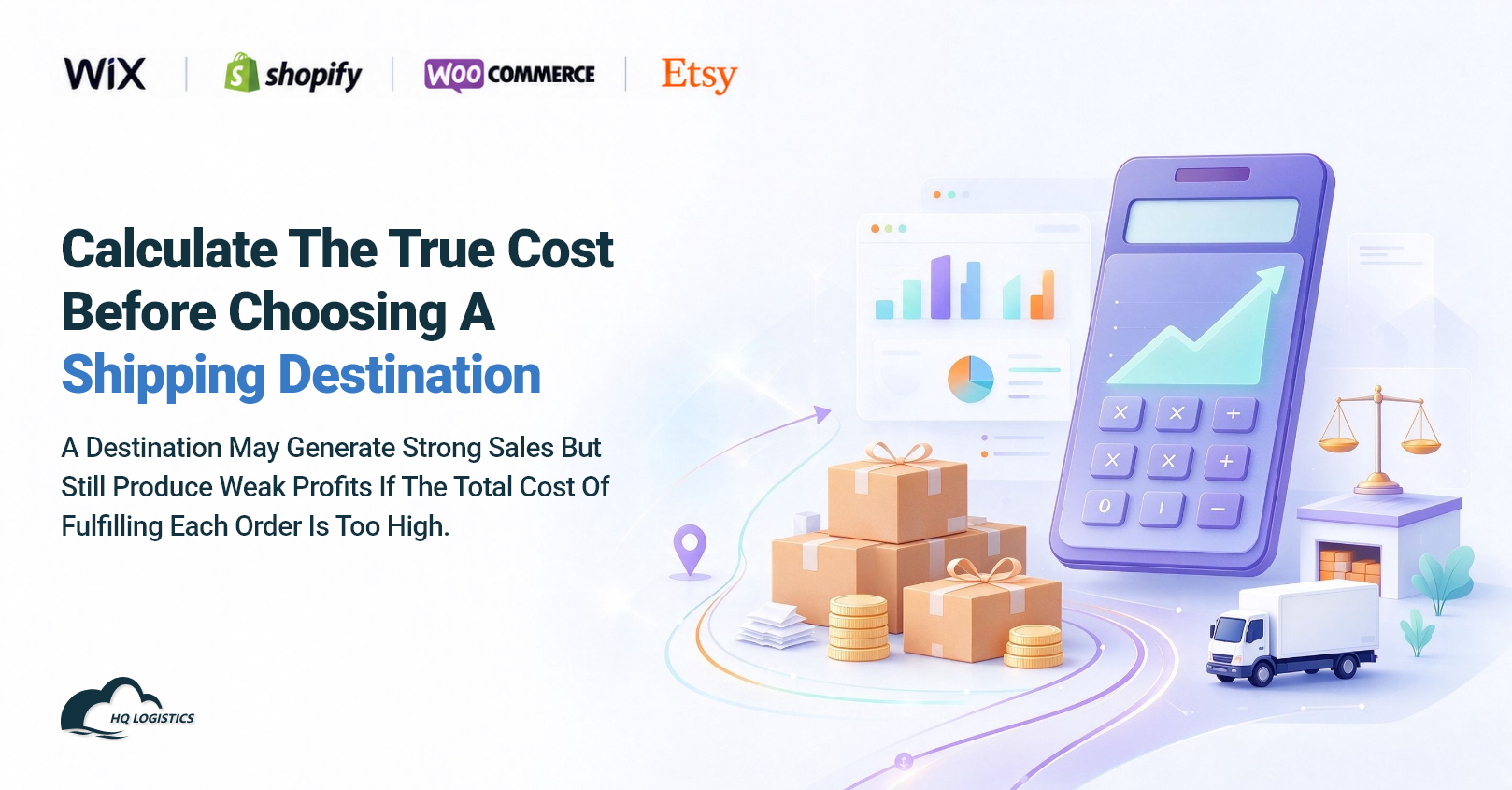
A destination may generate strong sales but still produce weak profits if the total cost of fulfilling each order is too high.
Before choosing a shipping route, calculate the full cost of delivering a product to the customer.
Include:
Product purchase cost
Sourcing and quality inspection
Packaging and labeling
Warehouse receiving, storage, and handling
International transportation
Applicable customs duties, taxes, and clearance fees
Payment processing and marketplace fees
Returns, replacements, and customer support
A simple way to evaluate the impact of shipping is to calculate the contribution margin per order.
Contribution Margin = Selling Price − Product Cost − Fulfillment Costs − Other Variable Costs
For example, imagine that a product sells for $40. After accounting for product cost, shipping, packaging, platform fees, and other variable expenses, the remaining contribution is $10.
If a different shipping method increases fulfillment expenses by $4, the contribution falls to $6 unless the seller adjusts pricing or reduces other costs.
This is why choosing a shipping destination should involve more than comparing postage rates. You need to understand how each route affects the economics of the entire order.
Different products create different shipping challenges. Your product category should influence the carrier, packaging, inspection process, and fulfillment model you choose.
Clothing, jewelry, and small accessories may be suitable for direct international shipping when the route offers competitive rates and acceptable delivery times.
Focus on accurate product descriptions, size and color checks, protective packaging, and return handling.
Decorative items and fragile home products may require stronger outer cartons, protective inserts, and packaging tests.
For heavier or bulky items, compare dimensional weight and actual weight before choosing a route. Packaging that reduces damage without adding unnecessary volume can help control costs.
Cosmetics and personal care products require additional attention to ingredients, labeling, packaging integrity, and carrier acceptance.
Liquids, creams, aerosols, and other specialized products may face different restrictions. Confirm eligibility for the exact product and destination before shipping.
Electronic products may require checks related to battery type, installation, packaging, and transport regulations.
Not every carrier or shipping service accepts every battery-powered item. Verify the permitted product configuration, documentation, packaging, and destination requirements in advance.
The takeaway:
The best shipping route is one that matches your product's characteristics, not simply the one with the lowest advertised rate.
Once you begin selling in more than one country, shipping decisions become part of a wider supply chain strategy.
A flexible fulfillment setup can help you test new markets, manage inventory, and adapt to changing demand without making every decision from scratch.
A practical workflow includes the following steps.
Step 1: Research target markets
Identify customer demand, competitive pricing, applicable regulations, and expected delivery standards.
Step 2: Verify products and suppliers
Confirm product specifications, quality standards, packaging requirements, and documentation before committing to inventory.
Step 3: Compare shipping routes
Evaluate shipping prices, transit estimates, tracking, product eligibility, and customs arrangements.
Step 4: Test before scaling
Launch a selected range and monitor conversion rates, delivered costs, delivery performance, returns, and customer feedback.
Step 5: Optimize inventory placement
Keep flexible inventory arrangements while testing demand. Consider regional warehousing for proven bestsellers when the expected savings and customer benefits outweigh storage and operating costs.
Step 6: Review performance regularly
Reassess routes and fulfillment arrangements as order volumes, product mix, rates, and regulations change.
This approach allows you to make decisions based on real operating data rather than assumptions about which market is most attractive.
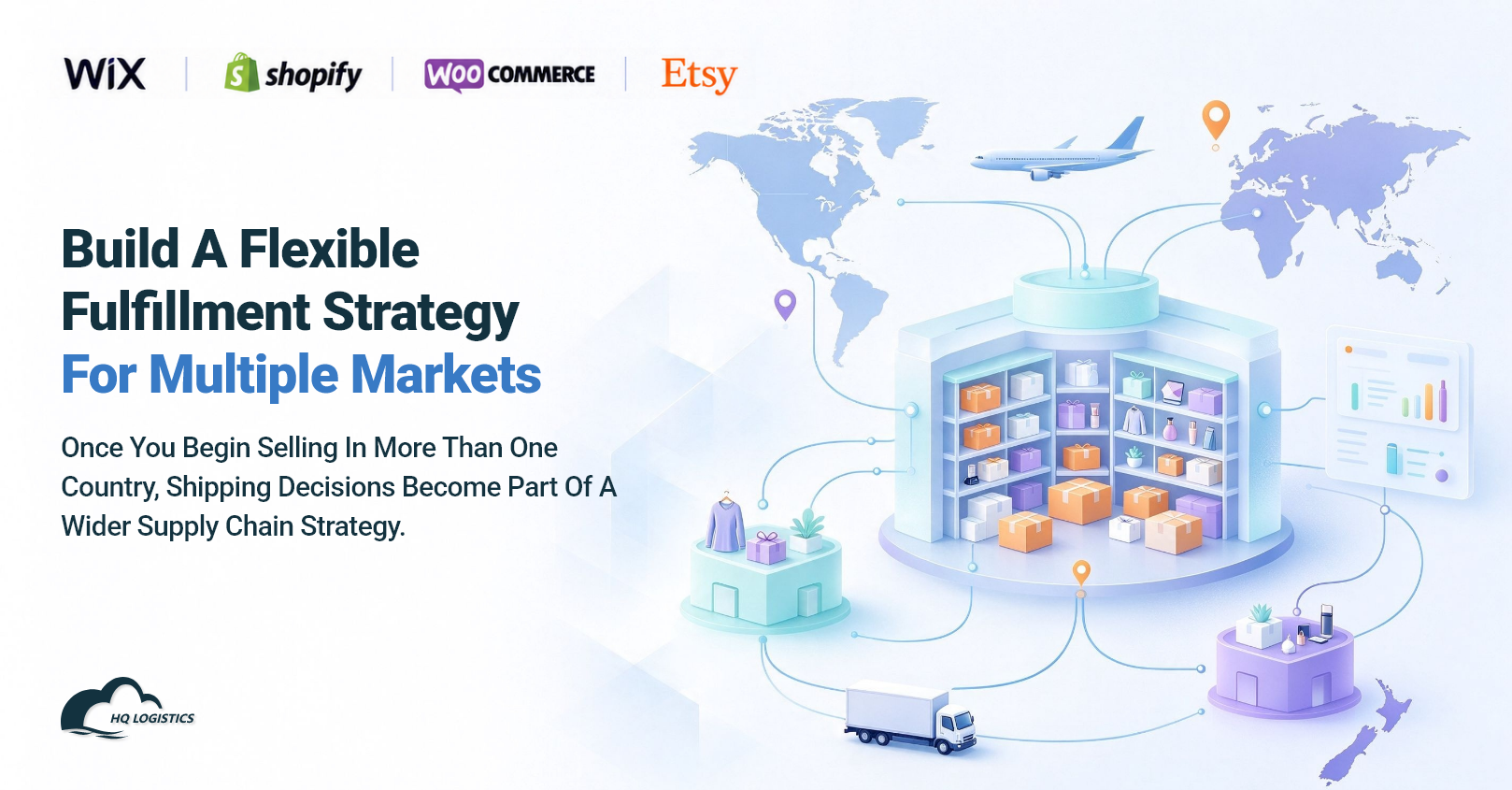
Choosing the right destination is easier when your sourcing and fulfillment operations work together.
HQ LOGISTICS supports ecommerce businesses with sourcing coordination, warehouse fulfillment, quality-check services, customized packaging options, order processing, and shipment tracking.
For brands targeting the US, Europe, or New Zealand, our team can help evaluate product requirements and discuss available shipping options based on the product, destination, and business needs.
Depending on the product and service selected, support may include:
Product sourcing:
Coordinate with suppliers and evaluate product specifications before fulfillment.
Quality checks:
Help inspect product appearance, specifications, and packaging according to agreed requirements.
Shipping route evaluation:
Compare available options based on delivery estimates, cost, and product eligibility.
Warehouse fulfillment:
Coordinate inventory handling, picking, packing, and dispatch.
Customized packaging:
Explore packaging options that align with your brand and product requirements.
Order and tracking support:
Improve visibility into fulfillment and shipment progress.
The right solution depends on your product category, destination, daily order volume, and inventory strategy. Shipping availability and delivery estimates should always be confirmed for the specific products and routes involved.
If you're planning to expand internationally or optimize your current shipping setup, visit HQ LOGISTICS to discuss your sourcing and fulfillment needs.
There is no single best market for every seller. The US may suit brands seeking a broad customer base, Europe can offer opportunities across multiple countries, and New Zealand may be suitable for a focused market expansion. Compare demand, landed costs, delivery expectations, and compliance requirements before deciding.
China direct shipping can provide flexibility when testing products or serving markets with uncertain demand. An overseas warehouse may be more suitable for proven bestsellers when faster delivery and local fulfillment justify the inventory investment.
Compare multiple eligible routes, review packaging dimensions, calculate the full cost per order, and monitor delivery performance. For products with stable demand, evaluate whether regional inventory can reduce transportation costs or improve delivery efficiency.
Check product compliance, customs documentation, VAT arrangements, applicable duties and fees, and the destination country's requirements. EU rules can change, so verify the current requirements for your specific shipment before dispatch.
Potentially, depending on the provider's network, available routes, product acceptance policies, and service coverage. Ask for destination-specific rates, delivery estimates, tracking capabilities, and details of any product restrictions before selecting a partner.

Choosing between the US, Europe, and New Zealand is not just a question of where you can find customers. It is a decision about how your products will move through the supply chain, how much each order will cost to deliver, and whether your fulfillment setup can support long-term growth.
Start with your product and customer demand. Verify compliance requirements, compare the total landed cost, and test shipping performance before committing to large inventory investments.
As your business grows, use order data to determine which products deserve faster shipping, which markets justify local inventory, and where your fulfillment resources will deliver the greatest value.
Looking to expand your ecommerce business internationally?
HQ LOGISTICS can help you explore sourcing, quality checks, warehouse fulfillment, and shipping options for your target markets.
Contact HQ LOGISTICS to discuss a fulfillment strategy that fits your products and business goals.
📩 Email: zoye@fulfillment-cn.com
Our website:
https://www.cnfulfillment.com/
Previous Recommendations


US shipping strategy, Europe shipping strategy, New Zealand shipping, international ecommerce shipping, cross-border ecommerce fulfillment, China direct shipping, overseas warehouse, international shipping costs, ecommerce supply chain, shipping route optimization, product quality inspection, HQ LOGISTICS




Don't wait until next year, grab the chance on 2025. Here are some recommended ecommerce topic you can choose.
Thanks to the support and trust from our customers. Flashback with our beloved partners.