 Fulfillment< @ >HQ Group


When an ecommerce business starts growing, fulfillment becomes more complicated. Managing inventory, coordinating suppliers, comparing shipping options, and keeping orders moving across different markets can quickly become overwhelming.
A traditional third-party logistics provider (3PL) can help with warehousing, picking, packing, and shipping. But what happens when your business needs more than order fulfillment?
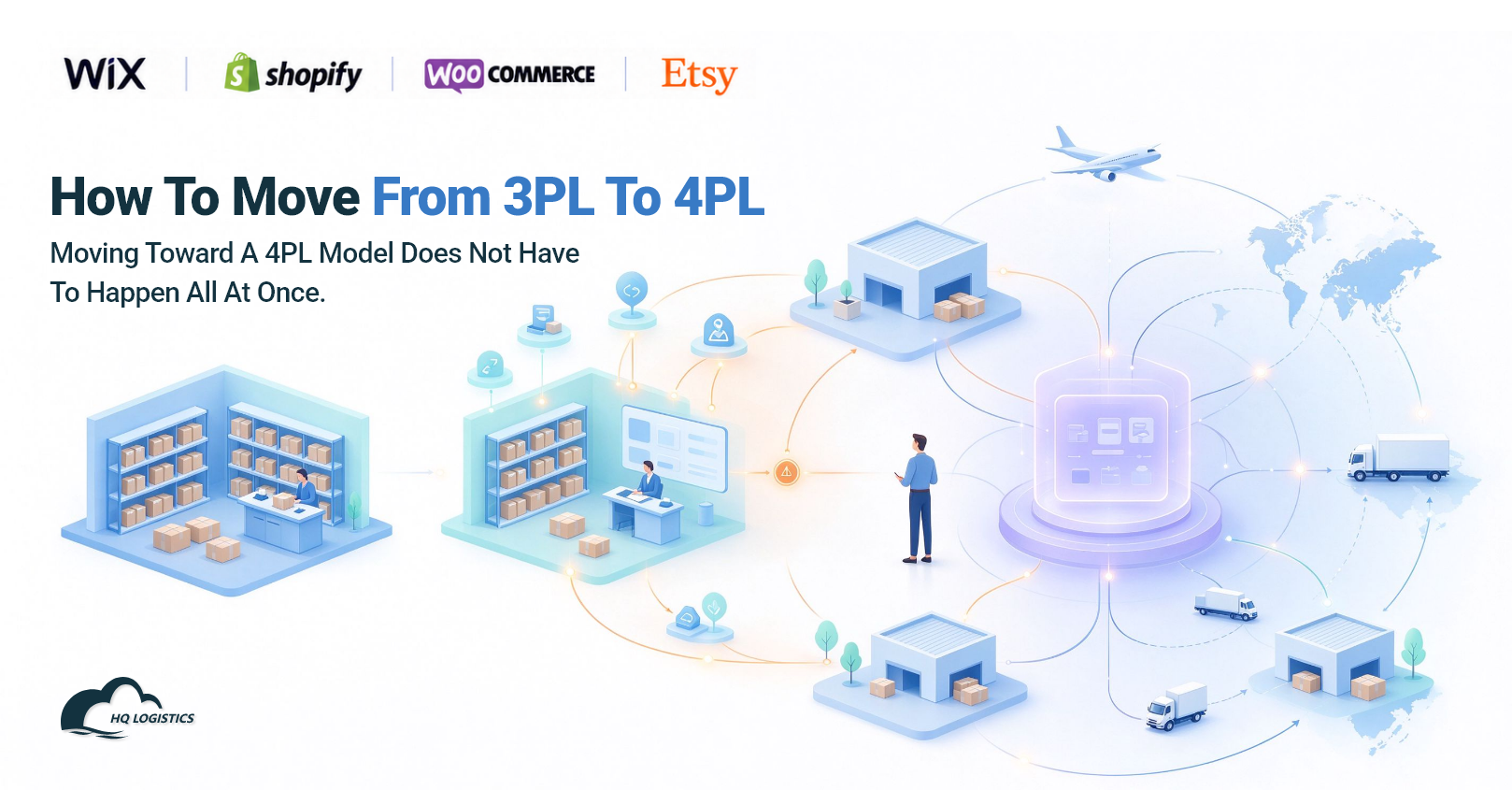
That's where fourth-party logistics (4PL) comes in. It takes a broader approach to supply chain management, helping businesses coordinate multiple logistics activities through a more integrated system.
So, when should your ecommerce business move from 3PL to 4PL?
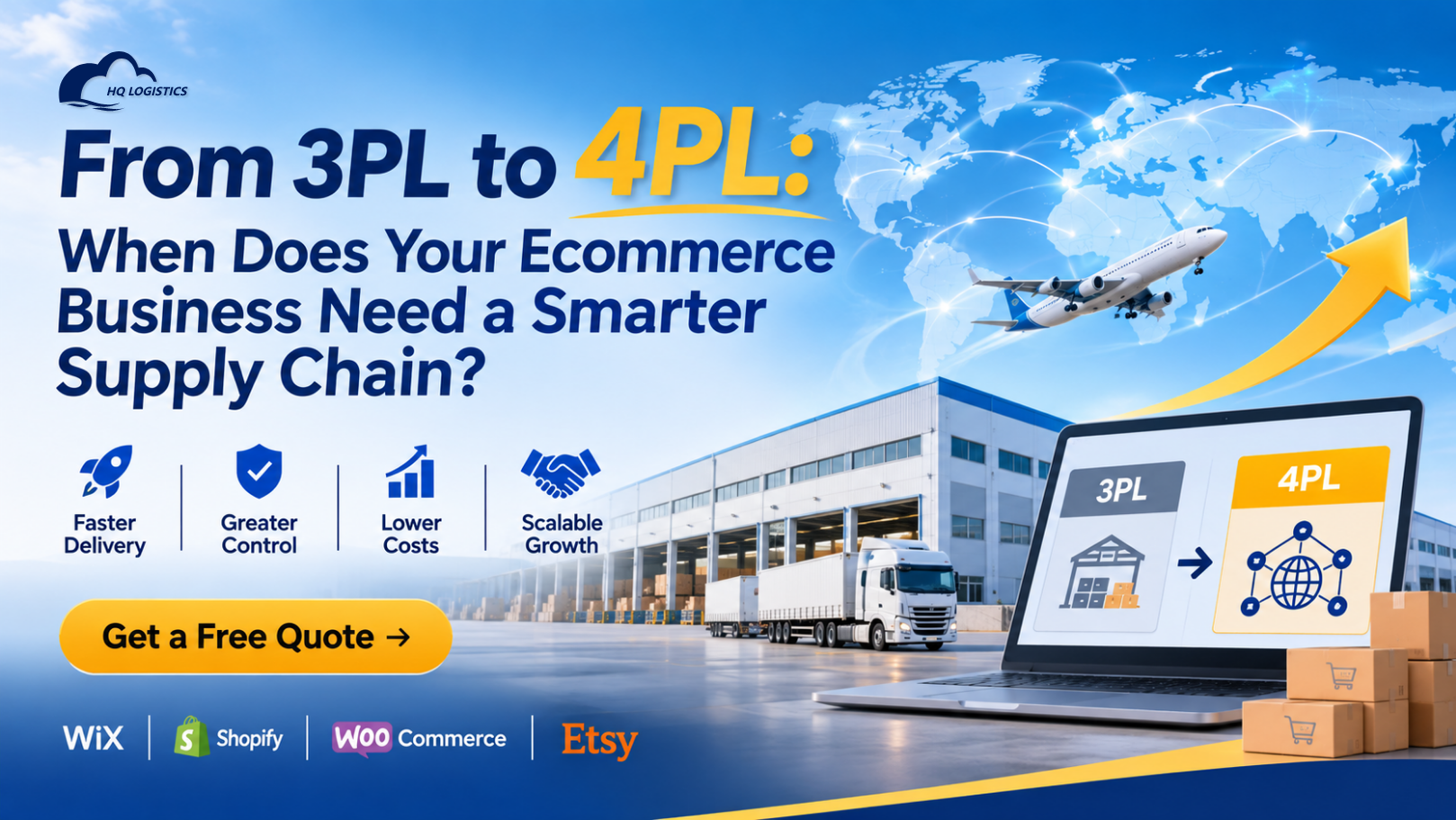
Both 3PL and 4PL services support ecommerce logistics, but they operate at different levels.
A 3PL provider mainly handles logistics operations on behalf of your business. Typical services include:
Warehousing and inventory storage
Order picking and packing
Shipping and delivery coordination
Returns processing
Inventory updates and tracking
For businesses that need reliable storage and order fulfillment, a 3PL provider can be a practical solution.
A 4PL provider takes a broader role by coordinating different parts of the supply chain. Instead of focusing only on warehouse and shipping operations, it helps manage the connections between suppliers, inventory, fulfillment, and transportation.
Depending on the service arrangement, 4PL support may include:
Supplier sourcing and coordination
Purchasing and quality control
Inventory planning and management
Warehouse and fulfillment coordination
Shipping route selection and optimization
Logistics performance monitoring
System integration and process management
In simple terms, 3PL focuses on executing logistics operations, while 4PL focuses on coordinating and optimizing the wider supply chain.
Not every online store needs a 4PL solution. However, as operations become more complex, a broader supply chain partner can make a real difference.
Managing several suppliers can create communication gaps, inconsistent product quality, and different purchasing schedules.
A supply chain partner can help coordinate supplier communication, product sourcing, sample inspection, and quality checks, giving you better visibility before products enter the fulfillment process.
If you sell across multiple platforms or markets, keeping inventory balanced becomes more challenging.
You may need to decide which products should stay in a China warehouse, which bestsellers should be stocked overseas, and when to replenish inventory.
A 4PL approach helps connect inventory planning with purchasing, warehousing, and sales demand.
Choosing the cheapest shipping option does not always mean achieving the lowest total fulfillment cost.
Different products may require different shipping routes, delivery speeds, or handling conditions. Without a coordinated strategy, you may spend more than necessary or experience avoidable delays.
A smarter logistics setup considers product characteristics, destination, delivery expectations, and total costs before selecting a shipping solution.
When suppliers, warehouses, shipping providers, and sales platforms operate separately, your team may spend too much time following up on orders and solving communication problems.
A more integrated supply chain workflow can reduce repeated manual work and help different operations work together more efficiently.
Entering a new country involves more than finding a shipping route. You may also need to consider local warehousing, customs requirements, product restrictions, inventory allocation, and returns.
A 4PL partner can help coordinate these moving parts and build a fulfillment strategy that fits your target markets.
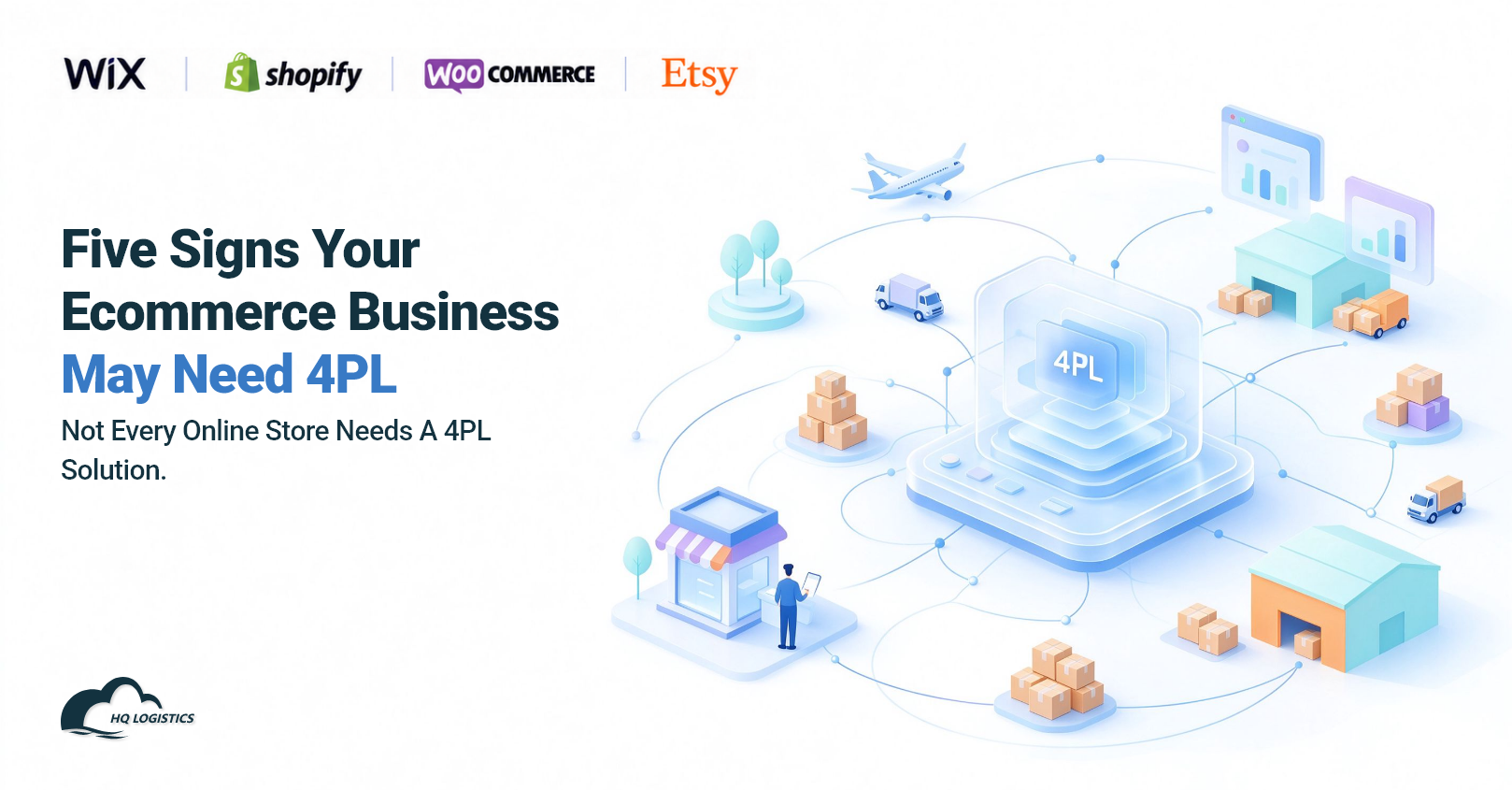
The right model depends on your order volume, supply chain complexity, and growth plans.
Choose 3PL when:
You already have stable suppliers.
Your main requirement is storage and order fulfillment.
You operate with a relatively simple inventory structure.
You need help with picking, packing, and shipping.
Consider 4PL when:
You work with multiple suppliers or logistics providers.
You need sourcing, purchasing, and quality control support.
You manage inventory across China and overseas warehouses.
You want to optimize shipping costs and fulfillment workflows.
Your business needs better coordination across different systems and markets.
You do not necessarily need to replace your existing 3PL provider. In some cases, 4PL management can coordinate multiple logistics partners while allowing each provider to continue handling its specialized operations.
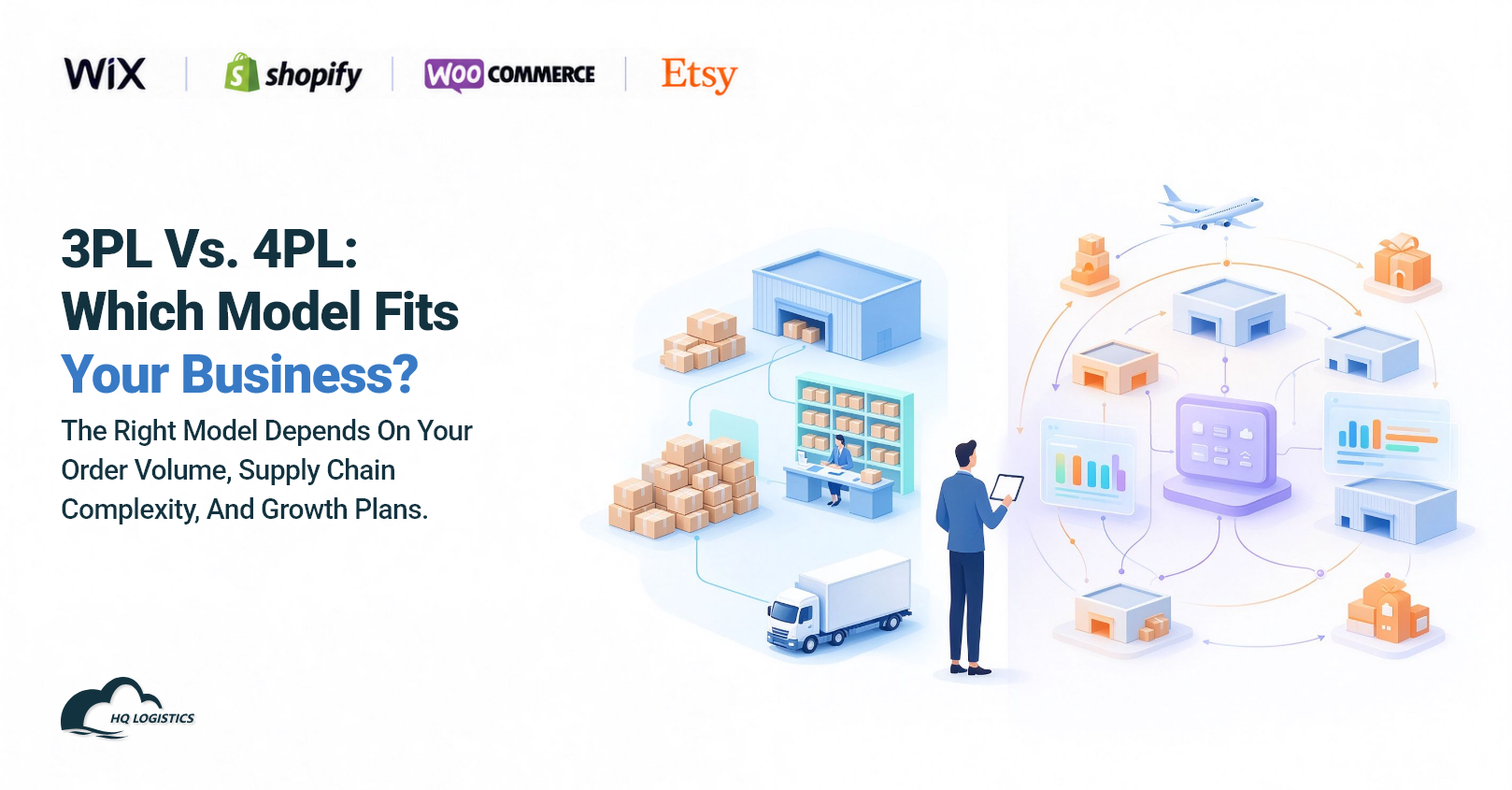
HQ LOGISTICS provides more than basic order fulfillment. By connecting sourcing, quality control, warehousing, inventory management, and global shipping, HQ helps ecommerce businesses build a more coordinated supply chain.
Its services cover several important stages:
HQ supports product sourcing and supplier coordination in China. Sellers can submit product links, request sourcing assistance, and arrange sample purchasing before placing larger orders.
Sample inspection and quality control help sellers review product appearance, materials, dimensions, and functionality. Photo and video feedback can make remote product evaluation easier.
HQ supports inventory management, SKU organization, and warehouse operations. With China-based and overseas warehousing options, sellers can choose where to store products according to sales demand and delivery requirements.
From order synchronization to picking, packing, and international shipping, HQ helps connect fulfillment operations with ecommerce stores and logistics channels.
For businesses with more complex operations, HQ can help coordinate sourcing, inventory, fulfillment, and shipping processes. System integration and operational support can also help reduce disconnected workflows and improve supply chain visibility.
The goal is not simply to ship more orders. It is to help businesses manage the entire process more effectively as they grow.
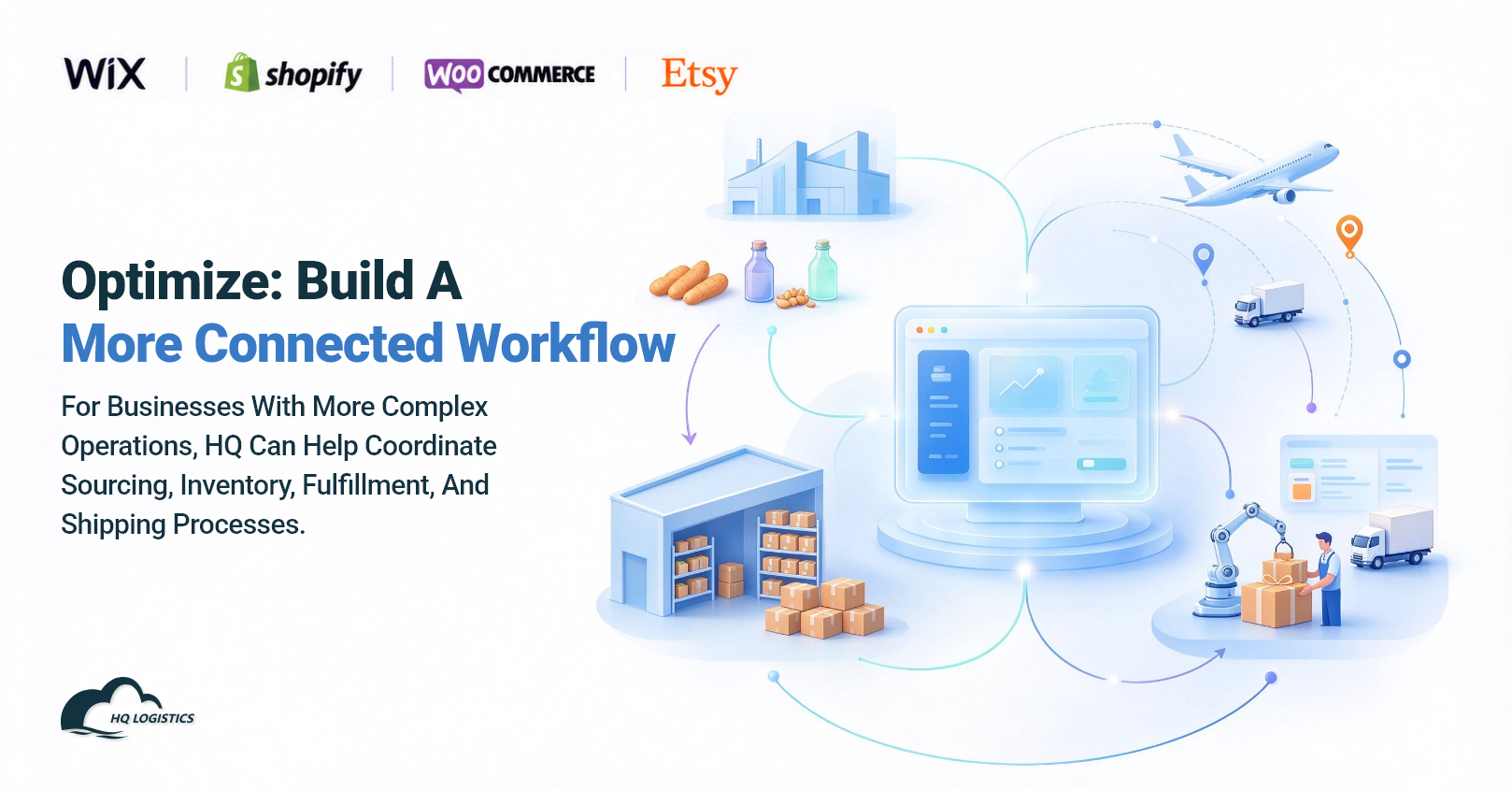
Moving toward a 4PL model does not have to happen all at once. A gradual transition can help avoid disrupting your existing operations.
Step 1: Review Your Current Supply Chain
Identify where delays, extra costs, inventory problems, or communication gaps occur.
Step 2: Identify the Operations That Need Support
You may need help with supplier coordination, quality control, inventory planning, warehouse management, or shipping optimization.
Step 3: Connect Your Existing Workflows
Look for opportunities to connect purchasing, warehouse operations, order processing, and tracking information.
Step 4: Start with a Practical Scope
You can begin by integrating one part of your supply chain, such as product sourcing and sample inspection, before expanding into inventory and fulfillment management.
Step 5: Review Performance and Improve
Monitor fulfillment accuracy, processing time, shipping costs, inventory turnover, and other relevant indicators. Use the results to adjust your supply chain strategy.
Not necessarily. 3PL is suitable for businesses that mainly need warehousing and fulfillment. 4PL is more suitable when businesses need broader supply chain coordination and optimization.
Yes. A 4PL provider can coordinate multiple logistics partners, helping connect their operations and manage the overall supply chain.
Not always. A small store with a few products and simple fulfillment requirements may only need 3PL services. However, businesses working with multiple suppliers or selling in several markets may benefit from broader coordination earlier.
It can help identify inefficiencies in sourcing, inventory, warehousing, and shipping. Actual savings depend on the business model, order volume, product types, and logistics arrangements.
HQ LOGISTICS supports core fulfillment operations, including sourcing, quality control, warehousing, inventory management, order processing, and global shipping. These connected services can support businesses that need more than standalone order fulfillment.

Moving from 3PL to 4PL is not simply about choosing a different logistics provider. It is about recognizing when your business needs better coordination across the entire supply chain.
If supplier management, inventory planning, fulfillment, and international shipping are becoming increasingly difficult to manage separately, it may be time to consider a smarter approach.
With connected sourcing, warehousing, quality control, and fulfillment support, HQ LOGISTICS helps ecommerce businesses build a more organized supply chain and prepare for sustainable growth.
📩 Email: zoye@fulfillment-cn.com
Our website:
https://www.cnfulfillment.com/
Previous Recommendations


3PL vs 4PL 4PL Logistics Ecommerce Supply Chain Supply Chain Management 4PL Fulfillment Services




Don't wait until next year, grab the chance on 2025. Here are some recommended ecommerce topic you can choose.
Thanks to the support and trust from our customers. Flashback with our beloved partners.