 Fulfillment< @ >HQ Group


As an ecommerce business grows, managing suppliers becomes an important part of daily operations. Some sellers prefer working with one reliable supplier to simplify communication and purchasing. Others choose multiple suppliers to access more products, compare prices, and reduce dependency on a single source.
But which model gives your business better control?
The answer depends on your product range, order volume, inventory strategy, and supply chain management capabilities. Let's compare both approaches and explore how to choose the right one.
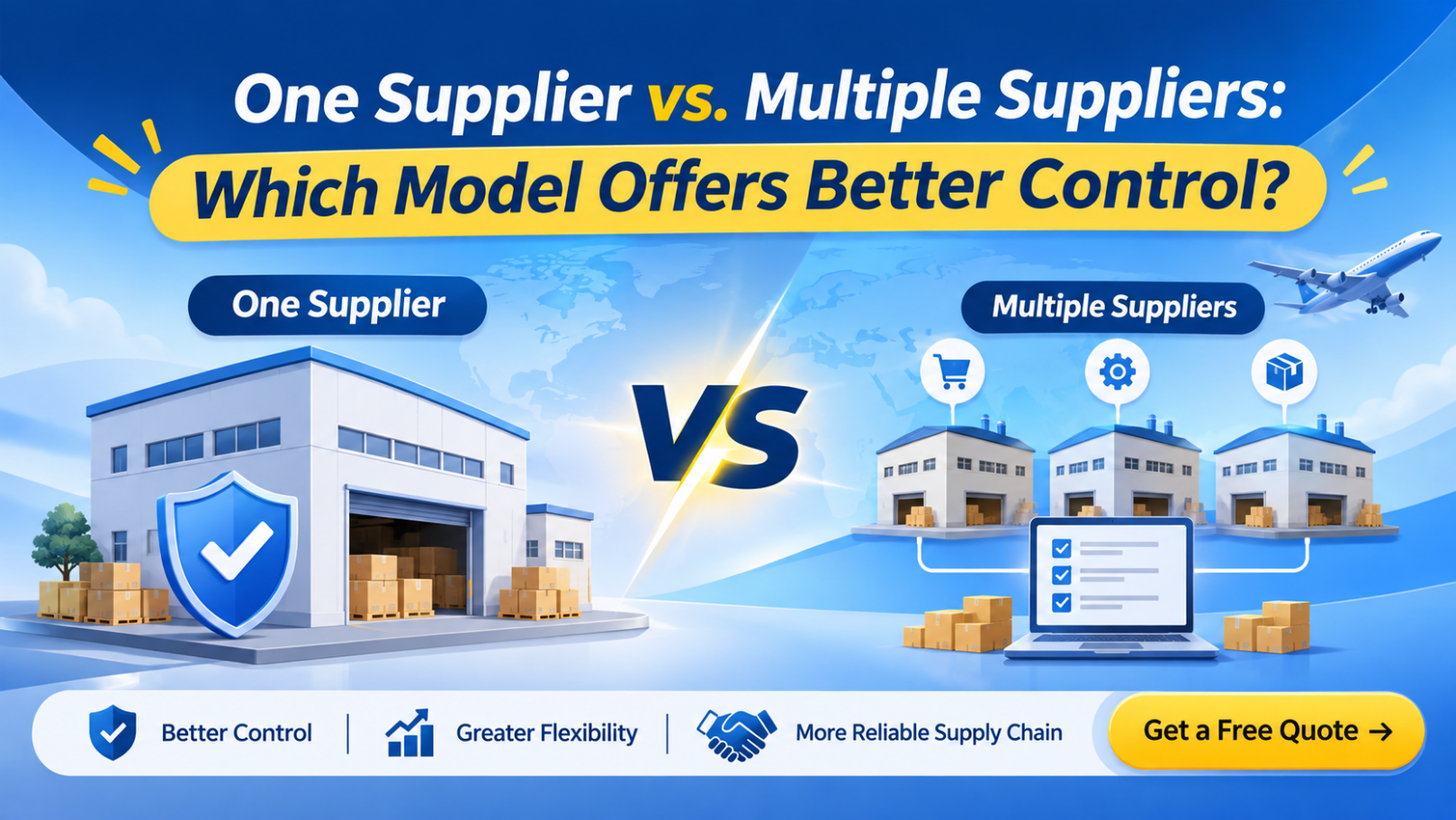
Choosing one main supplier can make your purchasing process easier to manage. Instead of communicating with multiple vendors, you have one primary contact for product orders, updates, and coordination.
Key advantages:
Easier communication:
Fewer contacts mean less time spent following up on orders and production.
More consistent quality:
Working with the same supplier allows you to establish clear product specifications and quality expectations.
Simplified purchasing:
Orders, invoices, and delivery schedules are easier to coordinate.
Stronger relationships:
Long-term cooperation may help improve pricing, production priority, and service flexibility.
Potential challenges:
Limited product selection if the supplier has a narrow catalog.
Greater dependency on one supplier's production capacity and delivery schedule.
Business disruption if the supplier experiences delays, quality issues, or stock shortages.
A single-supplier model can work well for stores with a focused product range and stable purchasing needs. However, relying entirely on one source may create risks as your business expands.
Using multiple suppliers gives ecommerce businesses access to a wider range of products, materials, and production capabilities.
Key advantages:
More product options:
Different suppliers may specialize in different categories or product features.
Better price comparison:
You can compare quotations, materials, and production costs.
Reduced dependency:
If one supplier cannot fulfill an order, alternative sources may be available.
Specialized expertise:
You can work with suppliers that have specific manufacturing or customization capabilities.
Potential challenges:
More communication and follow-up work.
Different quality standards between suppliers.
Complicated purchasing and delivery schedules.
More difficult inventory tracking and order coordination.
Multiple suppliers can offer greater flexibility, but only when the purchasing and quality control processes are well organized.
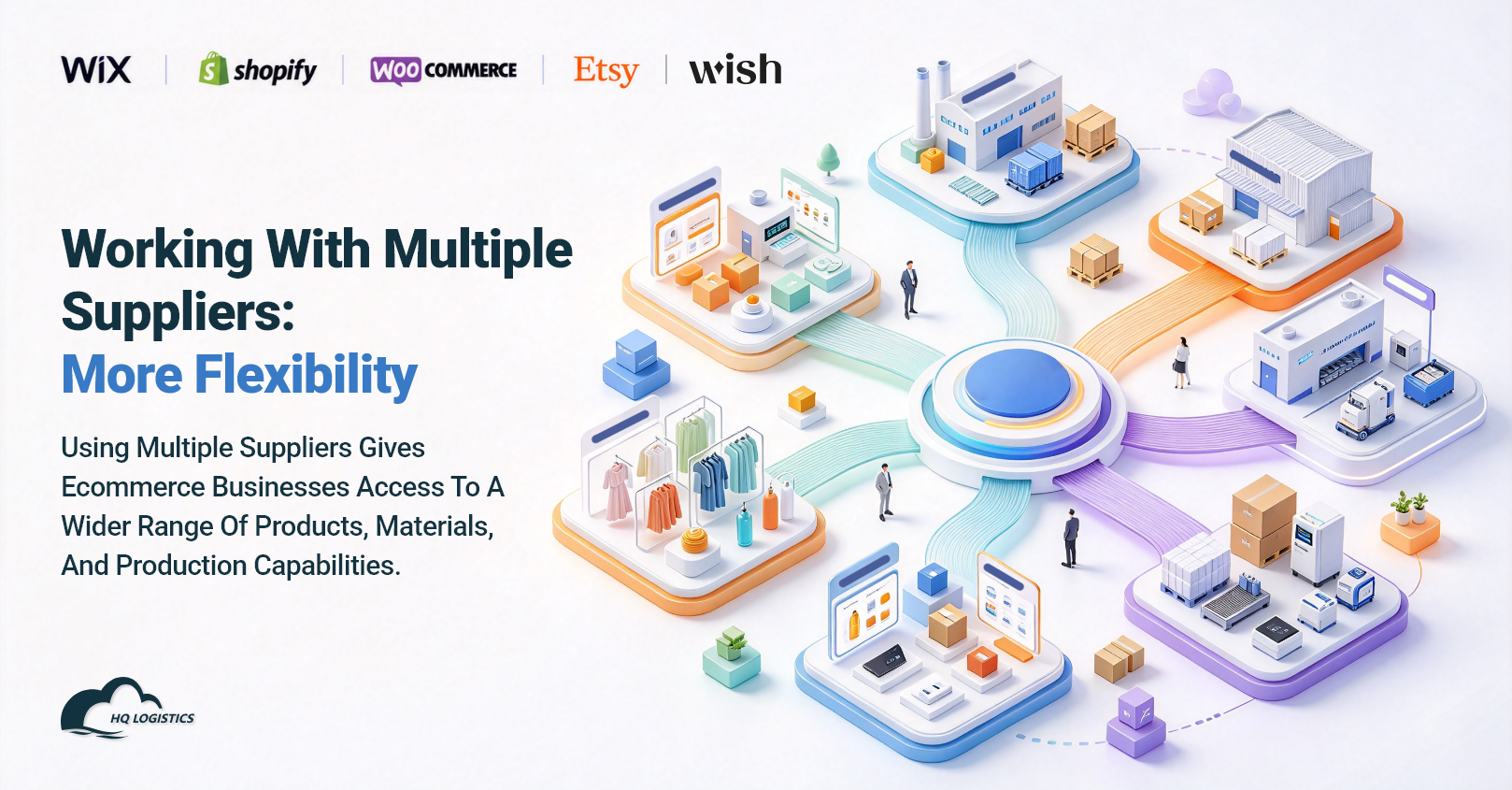
The right model is not simply about the number of suppliers. It is about how effectively you can manage them.
Consider these key factors:
Product Quality
With one supplier, it may be easier to maintain consistent specifications. With multiple suppliers, you need clear quality standards and inspection procedures for every source.
Purchasing Costs
A single supplier may offer better terms through long-term cooperation. Multiple suppliers allow you to compare prices, but the lowest quotation does not always mean the lowest total cost. Product quality, packaging, shipping, and defect rates also matter.
Inventory Management
One supplier may simplify replenishment, while multiple suppliers can make inventory planning more complicated. Accurate SKU records and stock updates are essential.
Supply Chain Risk
Depending on one supplier creates concentration risk. Multiple suppliers provide alternatives, but only if backup sources have been evaluated and are ready to support your orders.
Operational Efficiency
Managing several suppliers independently can take time away from marketing, customer service, and business growth. A centralized purchasing and fulfillment process can reduce this workload.
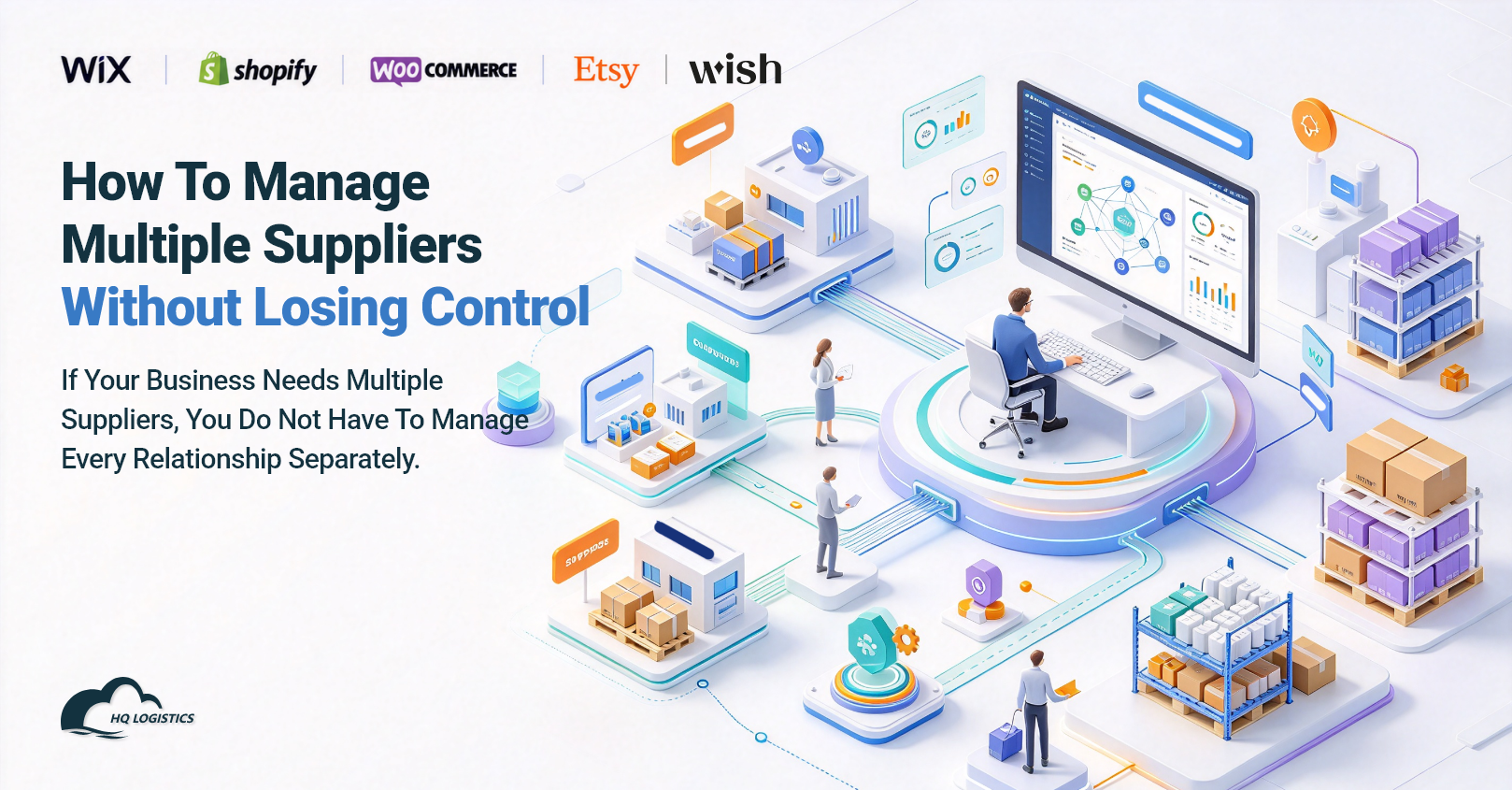
If your business needs multiple suppliers, you do not have to manage every relationship separately. A structured supply chain process can help keep operations organized.
Here are five practical steps:
Set consistent product specifications.
Define materials, sizes, colors, packaging, and other requirements before purchasing.
Evaluate suppliers before placing bulk orders.
Compare samples, production capabilities, communication, and delivery performance.
Inspect products before shipment.
Use sample checks and quality inspections to identify problems early.
Centralize inventory information.
Track SKUs, stock levels, incoming goods, and order allocation in one system where possible.
Coordinate purchasing and fulfillment.
Consolidate products from different suppliers when practical, then manage storage, packing, and shipping through an organized workflow.
These steps help businesses benefit from multiple suppliers while maintaining control over quality, costs, and delivery.
For growing ecommerce businesses, the choice does not always have to be one supplier or multiple suppliers.
You can work with different manufacturers and product suppliers while using one supply chain partner to coordinate the process.
HQ LOGISTICS helps ecommerce sellers connect product sourcing, supplier coordination, sample inspection, quality control, warehousing, and order fulfillment.
Instead of following up with every supplier individually, you can coordinate key operations through one service partner.
Depending on your business needs, HQ can support:
Product sourcing:
Find and compare products from suitable suppliers.
Sample inspection:
Review product samples before committing to bulk purchases.
Quality control:
Check product condition, specifications, and packaging.
Warehousing:
Receive and organize products from different suppliers.
Order fulfillment:
Manage picking, packing, and shipping for ecommerce orders.
This approach gives your business access to multiple product sources without making daily operations unnecessarily complicated.
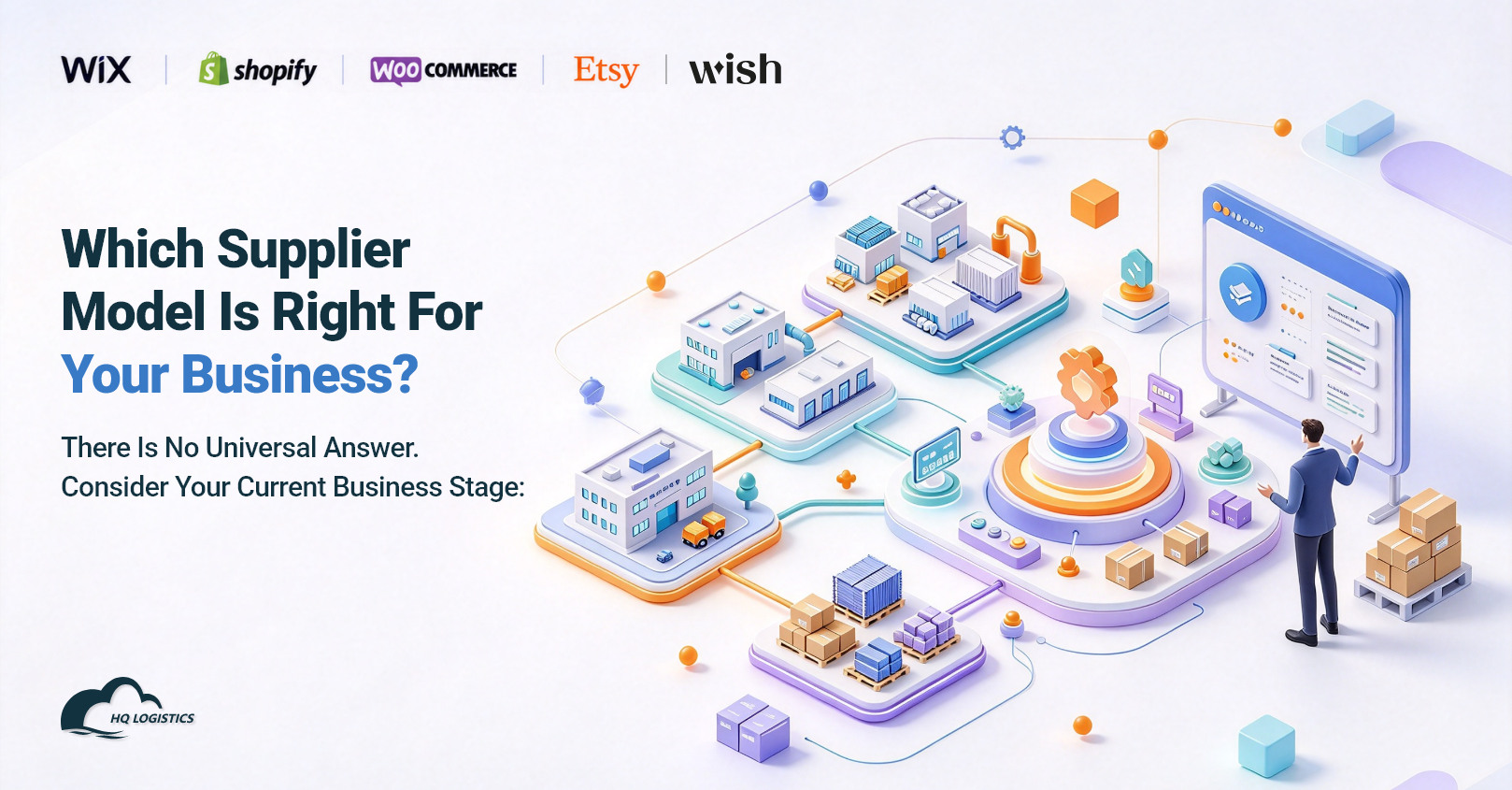
There is no universal answer. Consider your current business stage:
One main product or a focused product range:
A reliable single supplier may be sufficient.
A growing product catalog:
Multiple suppliers can provide more choices and specialized capabilities.
High order volume:
A structured supplier network can help improve purchasing flexibility and reduce dependency.
Complex inventory and fulfillment needs:
Consider working with a supply chain partner to coordinate suppliers, quality checks, warehousing, and shipping.
You can also adopt a hybrid model: keep one main supplier for your best-selling products while maintaining qualified backup suppliers for important SKUs.
This balances stable cooperation with greater sourcing flexibility.
Not necessarily. One supplier may offer better pricing through long-term cooperation, but comparing multiple suppliers can reveal more competitive options. Always consider total costs, including quality, packaging, and shipping.
The main challenges include inconsistent product quality, complicated communication, different lead times, and inventory coordination. Standardized specifications and centralized management can help reduce these risks.
Yes. Having qualified alternatives for important products can help reduce the impact of stock shortages, production delays, or unexpected supplier problems.
Create clear product specifications, review samples, establish inspection standards, and check products before shipment. Keep records of supplier performance to support future purchasing decisions.
Yes. HQ can assist with product sourcing, supplier coordination, sample inspection, quality control, warehousing, and order fulfillment, helping ecommerce sellers manage different product sources through a more organized workflow.

Working with one supplier can simplify operations, while multiple suppliers offer more flexibility and sourcing options. The best model depends on how well your business manages quality, purchasing, inventory, and delivery.
As your ecommerce business grows, you may benefit from combining reliable main suppliers, qualified backup sources, and centralized supply chain management.
Looking for a more organized way to manage suppliers and fulfillment?
Explore HQ's sourcing, quality control, warehousing, and logistics solutions at supply-cn.com.
📩 Email: zoye@fulfillment-cn.com
Our website:
https://www.cnfulfillment.com/
Previous Recommendations


Supplier Management| Multiple Suppliers| Single Supplier Strategy| Ecommerce Supply Chain| Supplier Risk Management| China Product Sourcing




Don't wait until next year, grab the chance on 2025. Here are some recommended ecommerce topic you can choose.
Thanks to the support and trust from our customers. Flashback with our beloved partners.