 Fulfillment< @ >HQ Group


Excess inventory can quietly eat into an ecommerce business's profits. Products that stay in storage for too long tie up cash, take up warehouse space, and may eventually require heavy discounts.
But reducing excess inventory doesn't mean putting everything on sale.
The goal is to move slow-moving stock while protecting as much of its value as possible. With better inventory visibility, smarter promotions, and more flexible supply chain planning, ecommerce sellers can reduce excess stock without sacrificing healthy profit margins.
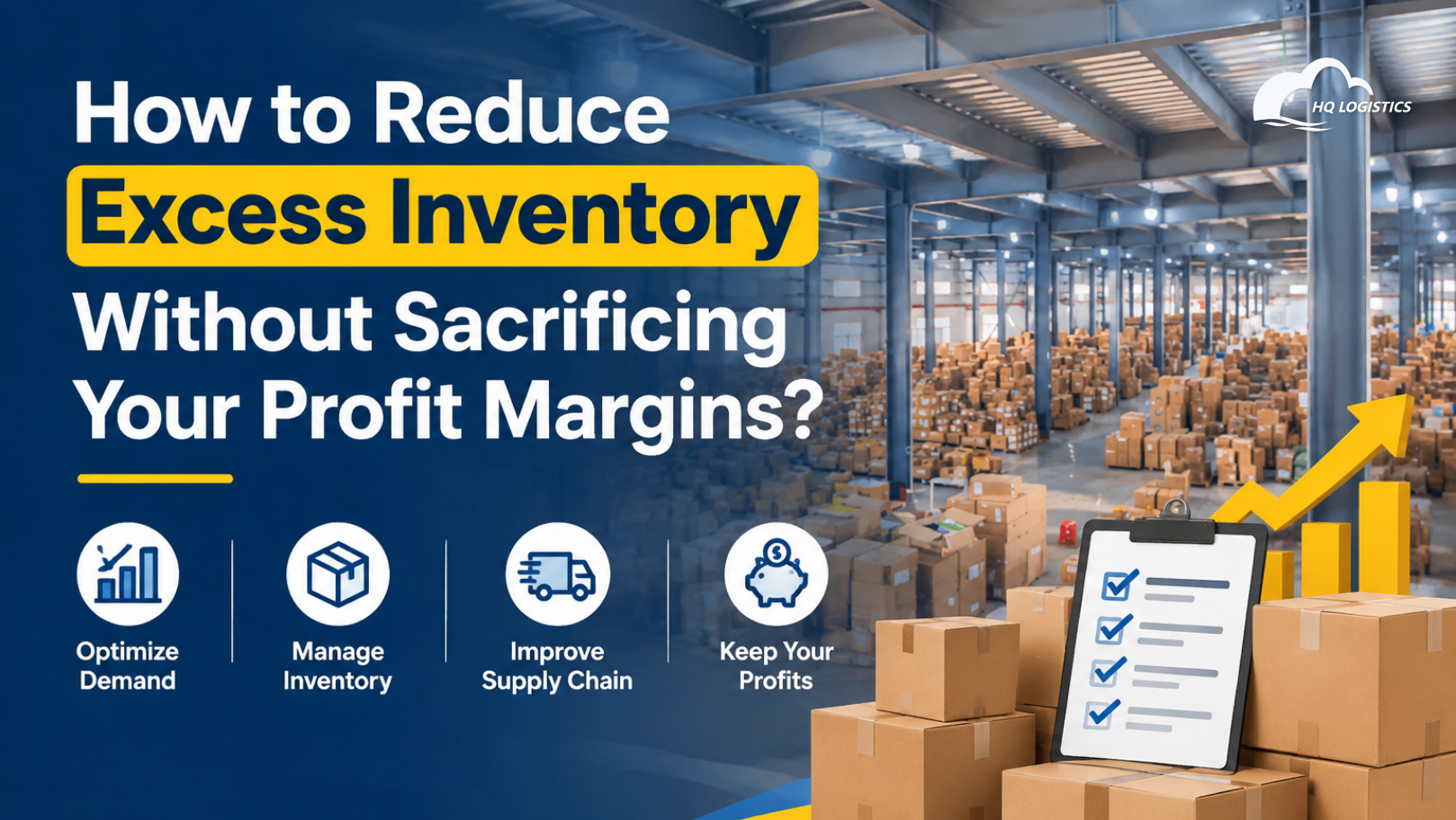
Inventory costs go beyond the original product purchase price. Holding unsold products can create storage, handling, insurance, capital, and obsolescence costs.
The longer a slow-moving SKU stays in your warehouse, the more pressure it can put on your cash flow.
Excess inventory can also:
Tie up working capital
Increase warehouse and handling costs
Reduce space for faster-selling products
Increase the risk of outdated or seasonal stock
Force sellers into deeper discounts later
That's why inventory reduction should be treated as a profit management strategy, not simply a clearance exercise.
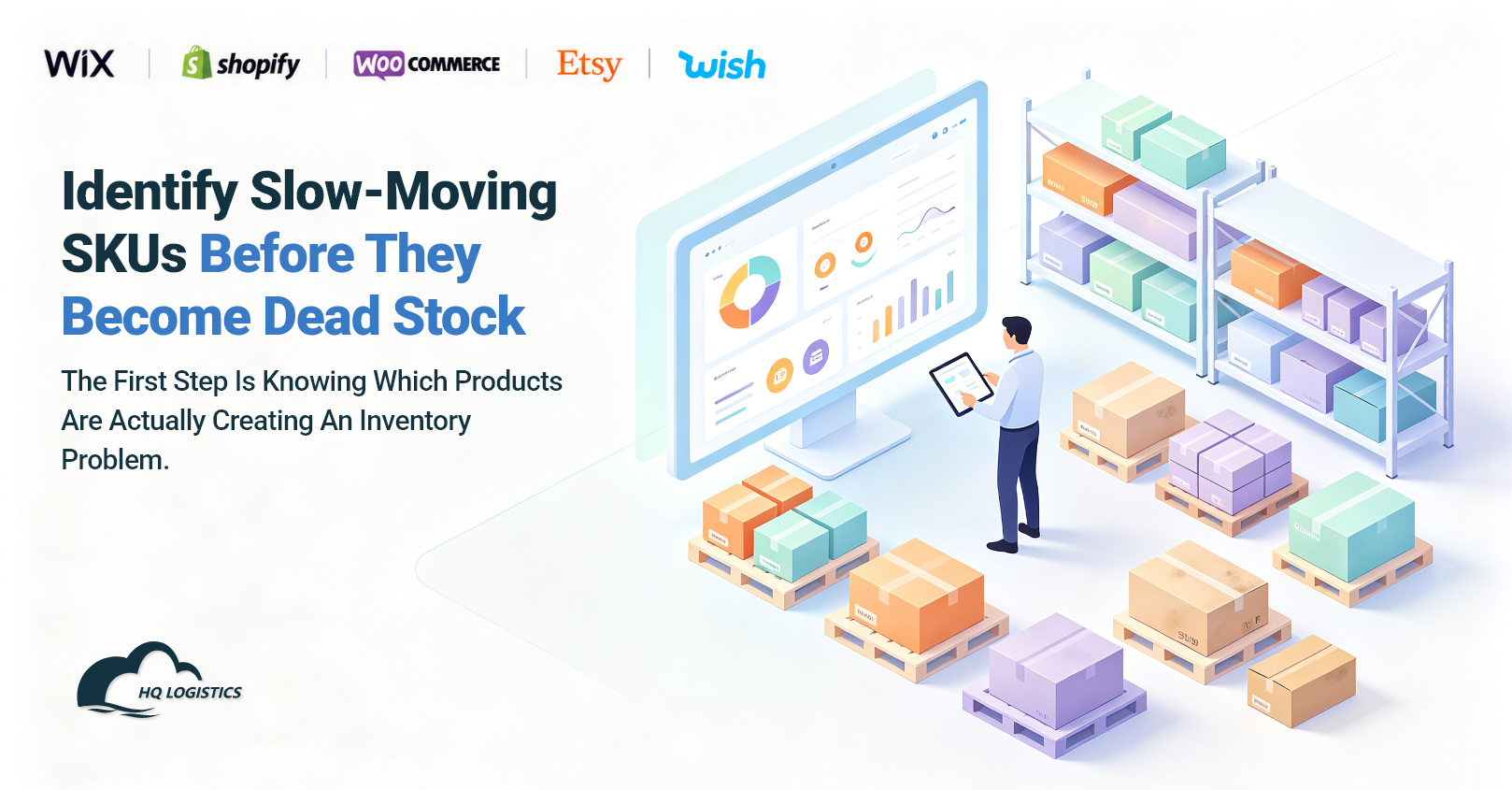
The first step is knowing which products are actually creating an inventory problem.
Review your inventory regularly and compare:
Units currently in stock
Recent sales volume
Sell-through rate
Days of inventory on hand
Product margins
Seasonal demand
Upcoming promotions
Instead of treating all excess inventory the same, divide products into different groups.
Healthy stock:
Products with consistent demand and healthy turnover.
Slow-moving stock:
Products that still sell but are moving more slowly than expected.
At-risk stock:
Products that may become difficult to sell if demand continues to decline.
Dead stock:
Products with little or no realistic sales potential.
This classification helps you choose the right action for each SKU instead of applying the same discount to everything.
One of the easiest ways to move slow-moving inventory without damaging the perceived value of your products is bundling.
For example, instead of reducing a $25 product to $15, you could combine it with a popular $35 product and offer a bundle at a slightly attractive price.
This can help you:
Increase average order value
Move slower products alongside bestsellers
Protect the standalone price of the slow-moving SKU
Give customers a stronger reason to purchase
Bundles can be particularly useful when products naturally complement each other.
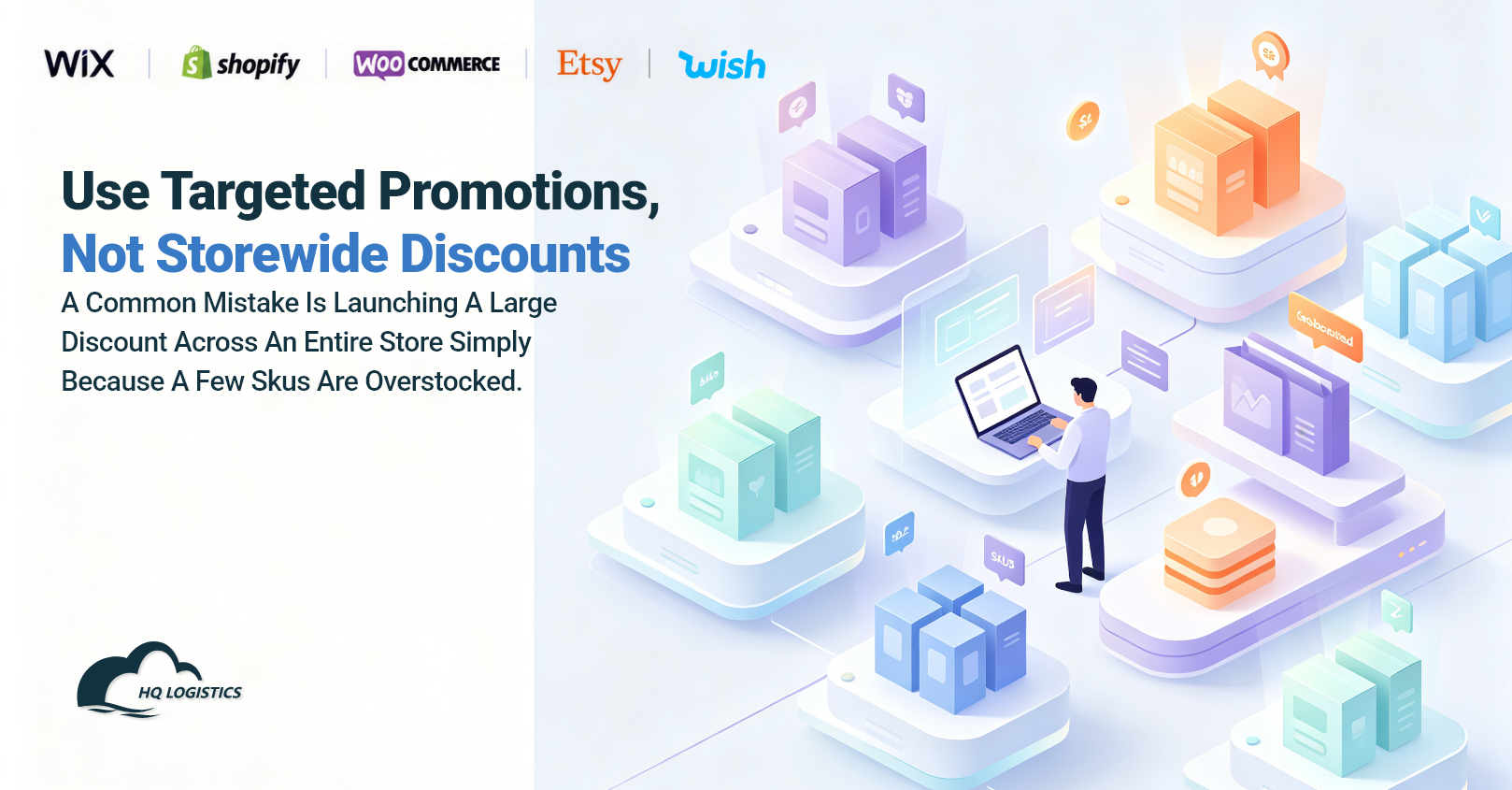
A common mistake is launching a large discount across an entire store simply because a few SKUs are overstocked.
This can unnecessarily reduce margins on products that are already selling well.
Instead, identify specific products that need help and create targeted promotions.
For example:
Best sellers:
Maintain regular pricing.
Healthy but seasonal products:
Use limited-time campaigns.
Slow-moving products:
Offer targeted discounts or bundles.
Dead stock:
Consider alternative sales channels or liquidation.
This approach allows you to reduce excess inventory while keeping stronger margins on products that already have healthy demand.
You can't optimize what you can't clearly see.
An effective inventory management system should give you a clear picture of stock levels, SKU performance, incoming inventory, and order activity.
Better visibility helps sellers answer important questions:
Which SKUs are selling fastest?
Which products have been sitting too long?
How much inventory is already on the way?
Which products should be reordered?
Which products should be promoted?
Where is inventory currently stored?
Inventory management systems can help sellers identify overstock earlier and improve replenishment decisions.
With better data, you can make purchasing decisions based on actual demand rather than assumptions.
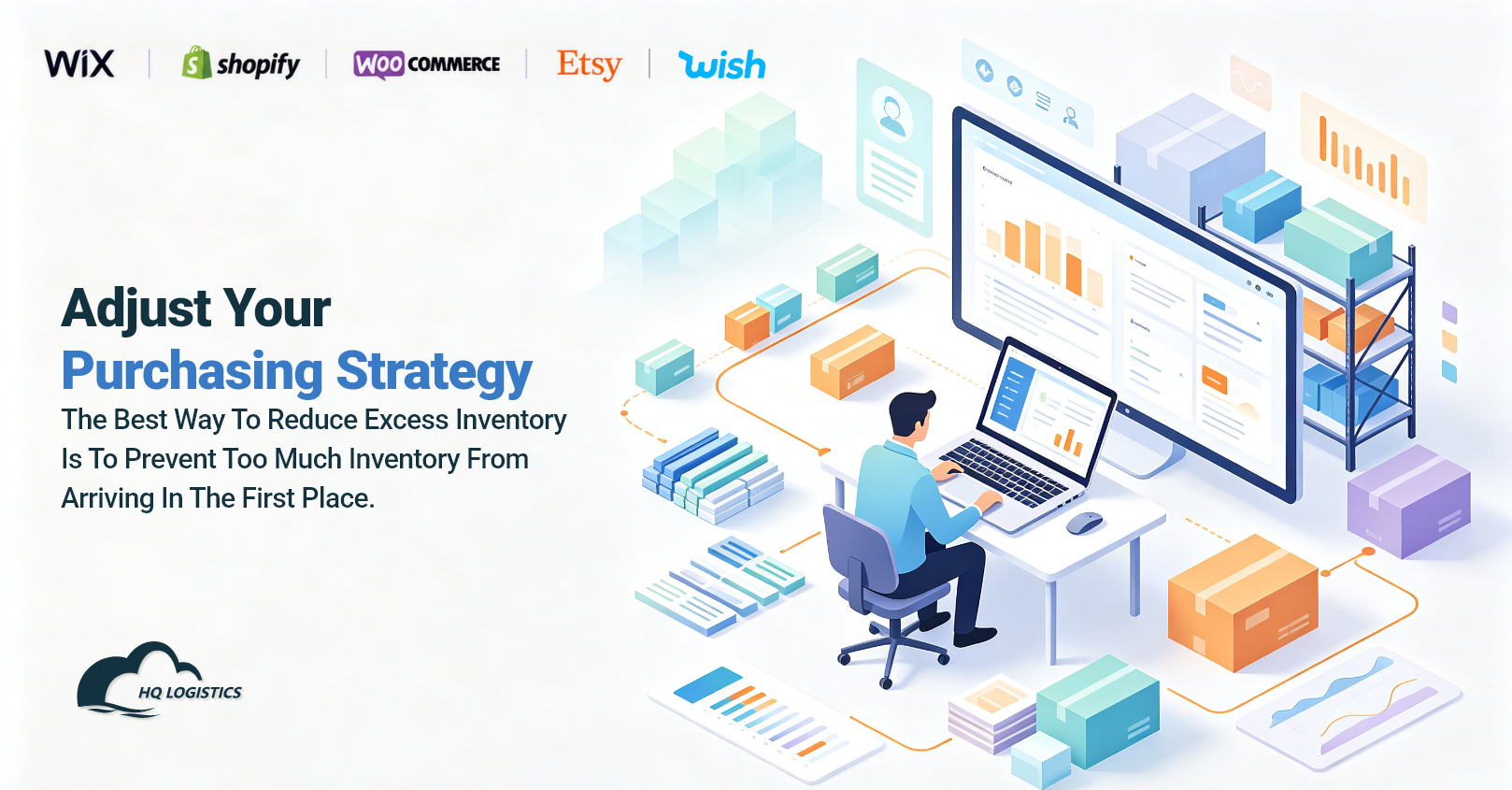
The best way to reduce excess inventory is to prevent too much inventory from arriving in the first place.
Review your historical sales data before placing new purchase orders. Consider:
Recent sales velocity
Seasonal demand
Marketing plans
Supplier lead times
Minimum order quantities
Current warehouse stock
Inventory already in transit
For products with uncertain demand, smaller and more frequent orders may be more flexible than purchasing large quantities upfront. Supplier negotiations can also help sellers improve payment terms or delivery schedules.
The goal isn't to keep inventory as low as possible. It's to keep the right inventory at the right time.
Sometimes excess inventory isn't a product problem. It's a location problem.
You may have too much stock in one warehouse while another market has stronger demand.
Instead of immediately discounting the product, consider whether inventory can be repositioned to a market or sales channel where demand is stronger.
For ecommerce businesses selling across multiple countries, inventory visibility across warehouses and sales channels can make this strategy easier.
This can help turn slow-moving stock into sellable inventory without immediately cutting the price.
If a product isn't performing well on one channel, that doesn't necessarily mean customers don't want it.
Consider whether the product could be suitable for:
Your own ecommerce store
Marketplaces
Social commerce channels
Wholesale buyers
B2B orders
Product bundles
Seasonal campaigns
Different channels attract different customer groups. Expanding the available sales channel can sometimes recover more value than simply applying a deeper discount.

Inventory reduction works best when purchasing, storage, fulfillment, and shipping are connected.
A fulfillment partner can help sellers monitor inventory, organize SKUs, process orders, and identify stock that needs attention.
With centralized inventory information, you can better coordinate:
Sourcing → Inventory → Fulfillment → Shipping → Returns
This creates a clearer picture of how products move through your supply chain and where inventory may be slowing down.
HQ Supply Chain provides solutions including SKU Management, Inventory & Fulfillment, Pick & Pack, Global Shipping, and 4PL Orchestration, helping ecommerce businesses manage inventory and fulfillment as part of a connected supply chain.
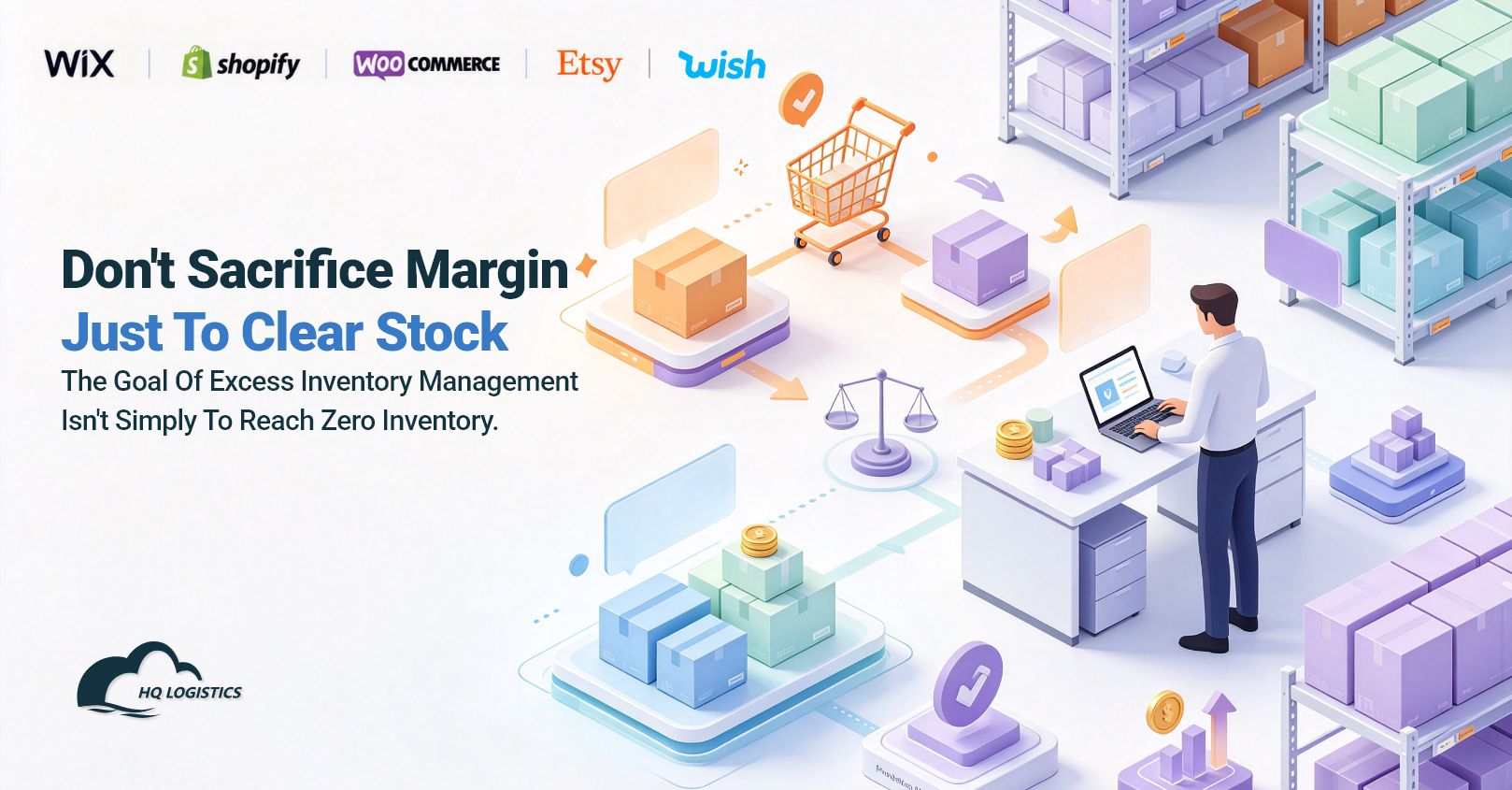
The goal of excess inventory management isn't simply to reach zero inventory.
A product sold at a huge discount may technically be "cleared," but the sale could still damage your overall profitability.
Before launching a clearance campaign, consider:
Product Cost + Storage Cost + Handling Cost + Marketing Cost + Discount = Actual Cost of Selling
Then compare that with the expected selling price.
Sometimes a smaller discount combined with bundling, better positioning, or a different sales channel can generate a better overall result.
The right question isn't:
"How much can we discount?"
It's:
"How can we recover the most value from this inventory?"
Excess inventory should not be addressed only when the warehouse is full.
Create a regular inventory review process and monitor key metrics such as:
Inventory turnover
Sell-through rate
Days on hand
Aging inventory
Stock value by SKU
Gross margin by product
Inventory accuracy
Reorder frequency
Regular reviews make it easier to identify slow-moving products early, when there are still more options for moving them at a reasonable margin.
Start by identifying slow-moving SKUs and understanding why they aren't selling. Then consider targeted promotions, bundles, alternative sales channels, inventory transfers, and adjusted purchasing plans before using deep discounts.
No. Different products require different strategies. Bestsellers should generally not be discounted simply because other SKUs are overstocked.
Improve demand forecasting, monitor inventory regularly, set appropriate reorder points, and adjust purchase quantities based on actual sales performance.
Yes. Better inventory visibility and SKU management can help sellers understand stock levels, identify slow-moving products, and make more informed purchasing and fulfillment decisions.

Reducing excess inventory doesn't have to mean sacrificing your profit margins.
The smarter approach is to identify problems early, protect the value of healthy products, and use the right strategy for each SKU.
From inventory visibility and SKU management to fulfillment and shipping, connecting these processes can give ecommerce sellers greater control over both inventory and costs.
If you're looking for a more organized way to manage your ecommerce inventory, explore HQ Supply Chain Solutions and see how integrated inventory and fulfillment services can support your business.
Manage your inventory smarter. Protect your margins. Keep your supply chain moving.
📩 Email: zoye@fulfillment-cn.com
Our website:
https://www.cnfulfillment.com/
Previous Recommendations


excess inventory management| reduce inventory costs| slow-moving inventory| inventory management for ecommerce| inventory turnover| excess stock




Don't wait until next year, grab the chance on 2025. Here are some recommended ecommerce topic you can choose.
Thanks to the support and trust from our customers. Flashback with our beloved partners.